


By the time many Southwest Florida clients book an acne facial, they're exhausted. Their skin feels oily by noon, makeup slips off, sunscreen seems to sit in the pores, and the breakout pattern keeps returning no matter how many cleansers or spot treatments they try. That cycle is common in Fort Myers, Babcock Ranch, Punta Gorda, and nearby areas because heat, humidity, sweat, sun exposure, and indoor air conditioning all pull the skin in different directions.
A good acne facial treatment spa approach isn't a luxury add-on. It's a methodical way to clear congestion, calm inflammation, and build a routine that matches Florida skin. Professional treatments can deliver measurable improvement, especially when the protocol is adapted to acne that flares in a humid climate instead of copied from a generic skincare article.
Table of Contents
- Your Guide to Professional Acne Facials
- Why Florida Acne Requires a Different Strategy
- Anatomy of a Clinical Acne Facial
- Advanced Modalities That Clear Congestion
- A Look Inside the Deep Purifying Pore Control Facial
- Maintaining Your Results Pre and Post-Treatment Care
- Frequently Asked Questions About Spa Acne Treatments
Your Guide to Professional Acne Facials
Individuals don't need more random products. They need a plan.
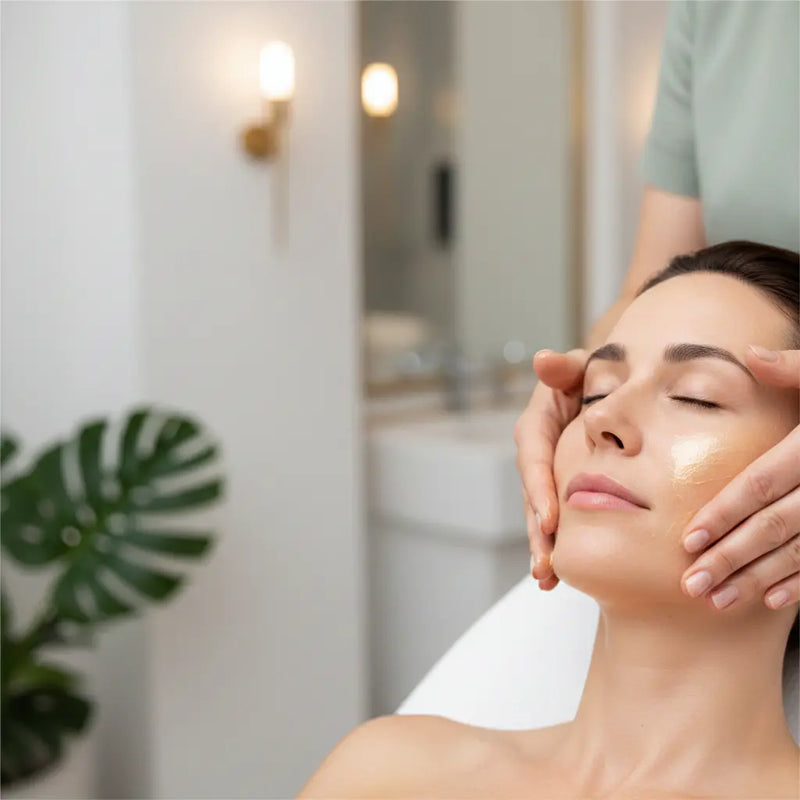
A professional acne facial starts by identifying what's happening on your skin. That means separating active inflamed breakouts from clogged pores, looking at dehydration under surface oil, checking for irritation from overuse of acids, and figuring out whether your barrier is helping or fighting your treatment. If you've never had a clinical facial before, this overview of what happens during a professional facial gives a useful baseline.
What a professional facial is really doing
A true acne-focused facial isn't just cleansing and masking. It uses a sequence of steps that support each other.
- Assessment first: Your esthetician checks congestion patterns, sensitivity, recent product use, and whether the skin can tolerate extractions or exfoliation that day.
- Controlled exfoliation: Dead surface buildup is loosened so oil and debris don't stay trapped.
- Safe clearing of pores: Extractions are done with technique, not pressure for the sake of pressure.
- Calming support: The skin is soothed after active work so it doesn't rebound with more redness and oil.
Acne improves faster when the treatment matches the skin's condition that day, not the menu description from the week before.
What works and what usually doesn't
Professional facials work best when they're part of a pattern, not a one-time rescue move before an event. What usually fails is over-scrubbing at home, skipping moisturizer because the skin feels oily, or treating every breakout as if it's the same kind of acne.
In practice, clients do better when treatment choices are specific. Congested pores need one approach. Inflamed acne needs another. Post-breakout marks need different expectations than active lesions. That difference matters in Florida more than almost anywhere else.
Why Florida Acne Requires a Different Strategy
By late afternoon in Southwest Florida, many clients feel like their skin has changed twice in one day. Morning products feel fine indoors. Then heat, sweat, sunscreen, and humidity build on the surface, pores stay coated longer, and breakouts start to cluster along the forehead, cheeks, and jaw. A few hours in air conditioning can leave that same skin tight and dehydrated underneath the oil.
That cycle changes how acne should be treated.
Southwest Florida skin often deals with several triggers at once. Heat increases perspiration. Humid air keeps sweat and oil sitting on the skin longer. Strong UV exposure adds inflammation and can deepen post-acne marks. Then indoor cooling pulls water from the surface, so people reach for richer creams or scrub harder, which often leads to more congestion instead of less.

Why generic acne plans fail in humid climates
A standard acne routine written for a cooler, drier climate can fall apart quickly here. Heavy moisturizers can feel occlusive by noon. Overuse of drying acids can leave the barrier irritated, which makes skin sting, flush, and produce more visible oil. Basic facials may give temporary improvement, but the results often fade fast if the treatment does not account for sweat, humidity, friction, and daily sun exposure.
I see this pattern often in Florida acne care. The issue is rarely poor hygiene. It is a mix of retained oil, inflamed follicles, barrier disruption, and product choices that do not hold up well in this climate.
What climate-adaptive treatment looks like
A Florida-specific strategy focuses on clearing congestion while keeping the barrier stable enough to recover. That means lighter hydration, disciplined exfoliation, and treatment choices based on how the skin is behaving that day, not how it looked last month.
A climate-adaptive protocol usually includes:
- Weight-conscious hydration: Moisture that supports barrier function without leaving a heavy residue in humid weather.
- Targeted decongestion: Professional pore work and treatment modalities that address compacted sebum more effectively than surface cleansing.
- Inflammation control: Calming steps that reduce the risk of extra redness after exfoliation or extractions.
- UV-aware finishing care: Freshly treated skin needs daily sun protection, especially in Southwest Florida.
- Steady treatment intervals: Consistent appointments usually outperform aggressive, one-off treatments in skin that is constantly exposed to heat and humidity.
One example is the Radiant Glow Clinic Grade Facial With Personalized Skin Consultation For All Skin Types, priced at $55. It is offered as a clinic-grade option for all skin types and includes a personalized consultation, deep cleansing, gentle exfoliation, extraction care when appropriate, a targeted mask and serum treatment, and SPF at the end. For acne-prone Florida skin, that structure matters because the esthetician can adjust the treatment based on congestion, sensitivity, and how much environmental stress the skin is already carrying.
In Florida, acne treatment works better when it respects the climate. Skin needs clearing, but it also needs enough barrier support to handle heat, humidity, and sun without getting more reactive.
Anatomy of a Clinical Acne Facial
You come in after a week of Southwest Florida heat, sunscreen, sweat, and constant humidity, and your skin feels both oily and tight. That combination changes how an acne facial should be performed. A clinical treatment needs to clear congestion without pushing already stressed skin into more redness or peeling.

Consultation and skin analysis
The first step is reading the skin in its current state. I look at breakout patterns, inflamed versus non-inflamed lesions, signs of over-drying from acne products, and whether the barrier is holding up under sun and humidity. Florida clients often arrive with surface oil and hidden dehydration at the same time, which can make acne look straightforward when it is not.
This part also sets limits. If the skin is sensitized from retinoids, recent sun exposure, or overuse of scrubs and spot treatments, the facial has to be adjusted that day.
Cleansing and prep
A proper cleanse removes sunscreen film, makeup, sweat, salt, and oxidized oil so treatment products contact the skin evenly. In this climate, that step matters more than many clients expect. If residue stays on the skin, exfoliation becomes uneven and extractions are harder to perform cleanly.
Prep may also include a gentle softening step around congested areas, especially along the nose, chin, and jaw where humid weather tends to trap sebum and dead cells more quickly.
Exfoliation and softening congestion
Professional exfoliation is chosen based on lesion type, sensitivity, and barrier status. An esthetician may use an enzyme, a beta hydroxy acid such as salicylic acid, an alpha hydroxy acid such as glycolic acid, or a light mechanical method if the skin can tolerate it. The goal is simple. Loosen compacted buildup so extractions are more controlled and less traumatic.
For acne-prone Florida skin, more exfoliation is not always better. Skin that has been exposed to heat, UV, and repeated cleansing can sting fast, even when it still looks oily. A good protocol clears the pore opening while keeping inflammation in check.
Clients who want a broader view of professional options can review Lumina's guide to skin treatments from peels to LED therapy.
A visual walk-through helps if you've never seen these steps in action:
Extractions and treatment finish
Extractions should be methodical. The provider clears what is ready to release and leaves deeper or highly inflamed lesions alone if forcing them would create more swelling, scabbing, or post-acne marks. That judgment is part of the treatment, not a missed step.
The facial usually ends with calming products and daytime protection suited to acne-prone skin. In Southwest Florida, the finish cannot be heavy or greasy, but it still needs to support the barrier after exfoliation and extractions.
| Phase | Purpose | What a good provider watches for |
|---|---|---|
| Analysis | Match the protocol to your current skin condition | Sensitivity, active breakouts, dehydration |
| Exfoliation | Loosen buildup and clear the path for extractions | Barrier strength, sting potential |
| Extractions | Remove congestion with minimal trauma | Pressure, timing, inflammation level |
| Calming and protection | Reduce visible redness and defend the skin | Product weight, SPF compatibility |
A clinical acne facial should leave skin clearer, less congested, and comfortable enough to recover well in heat and humidity.
Advanced Modalities That Clear Congestion
By August in Southwest Florida, I often see the same pattern. Skin feels oily on the surface, tight underneath, and dotted with congestion that keeps returning no matter how carefully someone cleanses at home. Heat, sweat, sunscreen, and humidity change how acne behaves here, so treatment has to do more than strip oil.

Galvanic and high frequency
Galvanic desincrustation helps soften compacted oil and debris before extraction. That matters with Florida skin because congestion is often mixed. Part surface buildup, part deeper impaction, part irritation from over-cleansing in an attempt to stay matte. When the pore contents are softened first, extractions can be more precise and less traumatic.
High-frequency current serves a different purpose. It is commonly used after extractions to support a cleaner treatment field, calm visible inflammation, and reduce the chance that freshly cleared pores become irritated again. In a humid climate where sweat and occlusion can keep follicles reactive, that added support is useful.
Used together, these modalities can improve how skin responds between visits. The goal is not to throw technology at every breakout. The goal is to choose the tool that matches the type of congestion in front of us.
LED and controlled resurfacing
LED can help acne-prone skin, especially when breakouts are inflamed and the barrier is easily aggravated by stronger methods. Blue light is usually selected when bacterial control is the main concern. Red light is often more helpful when the skin looks angry, dehydrated, or slow to recover after breakouts.
Resurfacing also has a place, but only with restraint. In Southwest Florida, I am careful with clients whose skin is already dealing with sun exposure, sweat, friction, and salt air. A light acid session or very controlled exfoliation may improve texture and help prevent pore buildup. Too much resurfacing can increase redness, sting, and rebound oil production. If you want context on how these options compare, Lumina's guide to peels, LED therapy, and advanced skin treatments gives a useful overview.
What these tools do better than home care
Home care keeps acne manageable. Professional modalities address problems that home care often leaves behind.
- They loosen stubborn congestion more effectively: Hardened sebum and compacted debris usually need more than cleanser and spot treatment.
- They let the protocol change in real time: A licensed esthetician can reduce intensity, switch modalities, or stop exfoliation if the skin starts showing signs of irritation.
- They lower the risk of extraction damage: Better prep usually means less squeezing, less swelling, and fewer post-breakout marks.
- They help stabilize reactive, climate-stressed skin: A planned series often works better than sporadic treatment when skin swings between oily, inflamed, and dehydrated.
The trade-off is simple. More intensity is not always better. The best acne treatment for Florida skin clears congestion while keeping the barrier calm enough to handle the next hot, humid day.
A Look Inside the Deep Purifying Pore Control Facial
Many clients feel better once they know what the appointment will feel like. Anxiety usually comes from not knowing whether the facial will be harsh, painful, or leave them red for days.
The first stage of The Deep Purifying Pore Control Facial Treatment is preparation. The skin is cleansed under warm ozone steam so surface debris softens and congested pores become easier to work with. That step doesn't “open” pores in a literal sense, but it does make the skin more pliable and helps the rest of the protocol move more smoothly.
What happens during the treatment
After cleansing, the treatment moves into negative galvanic desincrustation over a clarifying gel. This is the phase designed to liquefy impacted sebum. Clients usually experience this as active but not aggressive. The point is to soften what's trapped in the pore so the esthetician doesn't have to force extraction.
Then the facial shifts to ultrasonic and vacuum extraction work. Ultrasonic cavitation helps lift debris, and vacuum extraction addresses visible blackheads and congestion. When this step is done properly, it should feel targeted. Not every pore needs the same pressure, and not every clogged area should be fully cleared in one visit.
The finishing sequence
Once debris is removed, high-frequency argon therapy is applied to sanitize the skin and support healing. This is often the step clients remember because it gives a very distinct clinical finish to the treatment. It's followed by a clarifying clay mask, then a lighter finishing layer so the skin doesn't feel smothered on the way out.
A few details are worth knowing before you book:
- This is for true congestion: It fits oily, acne-prone skin better than very reactive or freshly over-exfoliated skin.
- It's a process, not a miracle visit: Deep buildup usually improves in stages.
- Home care still matters: If heavy occlusive products go right back on the skin, results won't last.
If your skin keeps feeling “dirty” again a day or two after a basic facial, the issue is often deeper congestion that wasn't fully softened or cleared during treatment.
Maintaining Your Results Pre and Post-Treatment Care
You leave your facial with skin that feels cleaner, smoother, and less swollen. Then Florida does what Florida does. You sweat walking to the car, sunscreen mixes with humidity by noon, and indoor AC dries out the surface by evening. That cycle is exactly why acne care here has to be planned between appointments, not just during them.
A clinical facial can clear buildup and calm inflamed skin, but results last longer when home care matches the treatment. In Southwest Florida, I tell clients to prepare for two things at once: more oil on the surface and more dehydration underneath. That combination is common here, and it leads people to over-cleanse, skip moisturizer, or keep changing products when the skin needs a steadier routine.

Before your facial
Come in with skin your esthetician can work with. If the barrier is irritated from scrubs, strong acids, or too much benzoyl peroxide, a deep acne treatment often has to be scaled back.
- Pause overuse, not every acne product: If your skin is stinging, tight, or peeling, stop the products causing visible irritation for a few days before your visit.
- Bring your routine: Product names matter. A cleanser, acne serum, tinted SPF, or hair product can be part of the breakout pattern.
- Skip picking before your appointment: Recently squeezed lesions are harder to treat safely.
- Plan around sun and heat exposure: If you know you'll be at the beach or pool right before your facial, reschedule. Sun-irritated skin limits what can be done that day.
After your facial
Freshly treated skin needs a quieter 24 to 72 hours. In Florida, heat and sweat make that more challenging, so post-care has to be realistic.
- Keep hands off the skin: Picking after extractions increases inflammation and raises the chance of post-breakout marks.
- Use light, clean layers: Choose breathable hydration and a non-greasy SPF instead of heavy makeup or thick occlusives right away.
- Hold strong actives briefly: Your skin usually does better if exfoliating acids, retinoids, and scrubs wait until tenderness settles.
- Change what touches your face: Pillowcases, workout towels, phone screens, and makeup brushes can reintroduce oil and bacteria.
- Avoid excess heat the same day: Hot yoga, steam rooms, long runs, and sun exposure can keep skin red longer.
Clients often assume “drying out” breakouts will protect their results. In practice, that usually backfires. Over-stripped skin can become more reactive, shinier by midday, and harder to keep clear.
What to use between appointments
The best maintenance routine for acne-prone Florida skin is usually simple, repeatable, and light enough for humidity. It should support the barrier while still controlling congestion.
| Step | What to look for | What to avoid |
|---|---|---|
| Cleanser | Gentle gel or low-foam cleanser that removes sweat, sunscreen, and oil without leaving skin tight | Washing multiple times a day with stripping cleansers |
| Moisturizer | Lightweight lotion or gel-cream that hydrates without a greasy finish | Heavy balms and thick occlusive creams in humid weather |
| Protection | Broad-spectrum SPF you will actually reapply | Skipping sunscreen because previous formulas felt too heavy |
| Treatment | One or two acne actives used on a steady schedule | Rotating through too many serums and spot treatments |
Consistency matters more than product count. If appointments are hard to keep track of, some practices now automate med spa bookings, which helps clients stay on schedule instead of waiting until congestion is severe again.
A good routine should feel sustainable in real life. If your skin stays irritated, greasy, or clogged despite doing all the “right” things, the plan usually needs adjustment, not more products.
Frequently Asked Questions About Spa Acne Treatments
How often should I get an acne facial
For many acne-prone clients, consistency beats intensity. A professional series is often more effective than waiting until the skin is severely congested again. The exact schedule depends on your breakout pattern, sensitivity, and whether the main issue is active acne, clogging, or leftover pigment.
If your skin is very congested, your esthetician may recommend closer early visits and then shift to maintenance once oil flow and pore buildup are more stable. That tends to work better than random appointments spaced around emergencies.
Will one facial fix my acne
No. One facial can absolutely improve the skin. It can reduce congestion, calm visible inflammation, and help reset your routine. But acne is usually a condition that needs management, not a one-visit solution.
That matters even more for post-inflammatory hyperpigmentation. A 2025 study notes that medical laser treatments may resolve PIH in 1 to 2 sessions, while a series of 6 to 8 monthly spa facials is typically needed for equivalent results. The timeline matters when you're deciding whether to choose facials, lasers, or a hybrid plan.
Is a professional facial better than strong at-home products
Usually, it's not an either-or question. They do different jobs.
Home care handles daily maintenance. Professional treatment handles diagnosis, controlled extractions, modality-based clearing, and adjustments based on what your skin is doing right now. Strong home products often fail because clients use too many at once, use them too often, or use formulas that aren't suited to humid, sun-exposed skin.
A good acne plan has two parts. The treatment room clears what home care can't, and home care protects what the treatment room achieved.
How do I book my first appointment
Start with a service that includes skin analysis or a treatment specifically designed for congestion if that's your main complaint. If you're comparing practices, look for clear treatment descriptions, real explanations of aftercare, and a booking system that makes follow-up easy. For owners who want to understand how clinics can automate med spa bookings, that operational side can also shape how smoothly clients get matched to the right treatment path.
From the client side, the simplest first step is to choose a facial with consultation built in, list your current products, and be honest about what you've tried. That makes the first visit far more useful than showing up with no treatment history and hoping for a miracle.
If your skin keeps reacting to Southwest Florida heat, humidity, and sun, a climate-aware treatment plan can make a real difference. Lumina Skin Sanctuary offers clinic-grade facial treatments designed for local skin concerns, with individualized consultation, targeted modalities, and simple home-care guidance to help you maintain clearer, calmer skin.


