


If you are dealing with breakouts, clogged pores, and the occasional painful blemish, it is natural to wonder: should you book an acne facial or go straight to a chemical peel?
Both can be excellent, but they solve acne in different ways. The “best” choice depends on what your skin is doing right now (active inflamed acne vs congestion, sensitivity level, post-acne marks, and how much downtime you can realistically manage in sunny Southwest Florida).
Acne facial vs chemical peel (quick decision guide)
Here is the simplest way to decide:
- Choose an acne facial if you want a gentler reset, you have sensitive or reactive skin, you need extractions, or you want minimal downtime.
- Choose a chemical peel if your main goals are faster resurfacing, stubborn congestion, post-acne marks, rough texture, or you want results in a structured series.
| If your main issue is… | Usually better first step | Why |
|---|---|---|
| Blackheads, closed comedones, bumpy texture | Chemical peel or acne facial (depends on sensitivity) | Peels improve cell turnover; facials can safely decongest and extract |
| Inflamed pimples, tenderness, barrier irritation | Acne facial | Calms inflammation and supports the barrier while treating congestion |
| Post-acne dark marks (PIH) | Chemical peel (selected carefully) | Targeted exfoliation can help fade discoloration over time |
| You are new to professional treatments | Acne facial | Lower risk entry point and great for building a customized plan |
| You cannot have visible peeling this week | Acne facial | Minimal downtime (often some short-lived redness) |
What an acne facial actually does
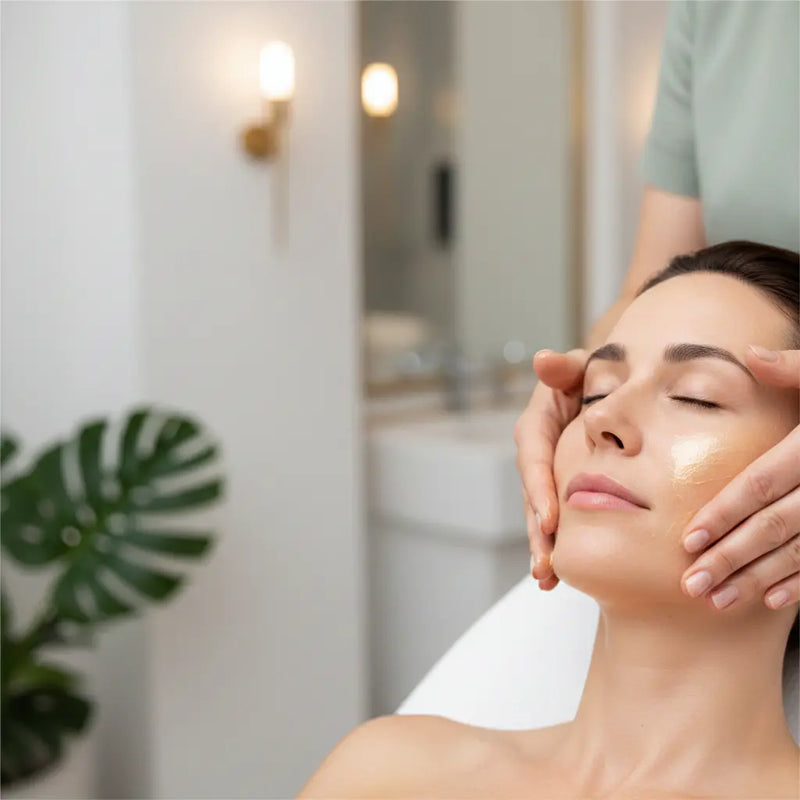
An acne facial is a customized professional facial focused on decongestion and inflammation control. The goal is to clear what is clogging pores while keeping your skin barrier strong (a major factor in how “angry” acne becomes).
A professional acne facial often includes:
- Deep but gentle cleansing to remove sunscreen, sweat, and buildup
- Targeted exfoliation (often enzyme-based or carefully chosen acids)
- Extractions when appropriate (performed with sterile technique and the right amount of pressure)
- Soothing and anti-inflammatory steps (hydration, calming mask, barrier support)
- Optional LED therapy to support calmer-looking skin
In humid climates like Babcock Ranch, congestion can be driven by sweat, occlusive layers, and heavier SPF choices. A well-designed acne facial can address that “Florida mix” without pushing the skin into a spiral of over-exfoliation.
Pros of an acne facial
- Typically little to no downtime
- Great for congested pores and blackheads
- Can be tailored for sensitive, teen, or first-time clients
- Helps you build a realistic plan (home routine plus in-clinic cadence)
Possible downsides
- If you want major change in texture or marks, an acne facial may be slower than peels
- Overly aggressive extractions (in general, not at a reputable practice) can irritate skin or worsen redness
What a chemical peel actually does
A chemical peel is a controlled exfoliation using acids to improve how dead cells shed from the surface and how pores clear. Peels can be superficial or more intensive, and the depth matters a lot for both results and downtime.
Common peel categories include:
- Superficial peels: often used for acne, congestion, mild discoloration, and overall brightness
- Medium-depth peels: may be used for more pronounced discoloration and texture concerns (requires careful screening and aftercare)
The American Academy of Dermatology describes chemical peels as a method to improve skin texture and tone by removing damaged outer layers (depth and suitability vary by skin type and concern). You can read more in the AAD overview of chemical peels.
Pros of a chemical peel
- Strong option for persistent congestion, dullness, and uneven texture
- Often helpful for post-acne marks when chosen correctly
- Can deliver visible change in a series
Possible downsides
- Downtime varies (from mild dryness to visible peeling)
- Higher risk of irritation if you are already overusing acids/retinoids at home
- In high-UV areas like Southwest Florida, aftercare and sun avoidance are non-negotiable to reduce the risk of post-inflammatory hyperpigmentation

The real difference (mechanism, results, and downtime)
Think of it like this:
- An acne facial is a precision cleanup and calming session, especially useful when skin is congested and reactive.
- A chemical peel is a planned resurfacing strategy, especially useful when you need to change texture, buildup patterns, and discoloration over time.
| Category | Acne facial | Chemical peel |
|---|---|---|
| Best for | Active breakouts, congestion, sensitivity, maintenance | Texture, stubborn clogs, post-acne marks, uneven tone |
| How fast results show | Often immediate “cleaner pores, calmer feel” | Often gradual across a series (some see quick brightness) |
| Downtime | Usually minimal | Mild to moderate depending on peel |
| Risk level | Lower when customized properly | Higher if wrong depth, wrong timing, or poor aftercare |
| Great add-ons | LED, hydration, barrier support | Post-peel barrier care, pigment-safe protocols |
Which is best for active acne (blackheads vs inflamed pimples)
If you mostly have blackheads and clogged pores
You can do well with either option.
- If your skin is tough and not easily irritated, a well-chosen superficial peel may clear congestion efficiently.
- If you are sensitive, dehydrated (even if oily), or prone to redness, an acne facial is often a smarter first move to calm skin and reduce the risk of peeling too aggressively.
If you have inflamed acne (red, painful, cystic bumps)
Start more conservatively.
An acne facial that prioritizes anti-inflammatory support and gentle decongestion is often the better first step, especially if your skin barrier is already compromised.
Also, it is important to be realistic: deep, cystic acne can require medical management. The AAD outlines a range of evidence-based acne treatments (including prescriptions when needed) in its acne resource center.
Which is best for acne scars and post-acne marks
This is where peels often shine, but they must be chosen carefully.
- Post-acne marks (PIH): many clients see improvement from a series of appropriately selected superficial peels plus strict daily sunscreen.
- Indented scars (true acne scarring): peels alone may not fully resolve deeper scarring, and your provider may recommend other modalities depending on scar type and skin tone.
If you are prone to hyperpigmentation, have melasma, or tan easily, talk through peel selection and pre/post care in detail. In Florida, UV exposure is intense year-round, and sun plus inflammation can keep discoloration “stuck” longer.
Safety and timing (what to disclose before booking)
The best results come from the right treatment at the right time. Before either service, be prepared to share:
- Current acne medications (especially prescription retinoids)
- Any recent or current isotretinoin use
- If you are pregnant or nursing
- Recent sunburn, heavy sun exposure, or upcoming outdoor events
- Recent waxing, lasers, or other resurfacing
- A history of eczema, rosacea flares, or contact allergies
If you are the kind of person who likes systems, it helps to keep your skincare plan streamlined and consistent, similar to how businesses reduce mistakes by using an all-in-one payment hub instead of juggling disconnected tools. In skincare, fewer moving parts usually means fewer irritation surprises.
Downtime and aftercare in Southwest Florida (what changes here)
Florida climate changes how you should plan.
After an acne facial
Most people can resume normal life quickly, but avoid the common triggers for 24 to 48 hours:
- Heavy sweating workouts (if you flare easily)
- Sauna and very hot showers
- Picking at pores that were extracted
- “Catching up” on strong acids or scrubs
After a chemical peel
Treat the first week as an intentional recovery window.
- Sun protection is mandatory: broad-spectrum SPF, hats, and avoiding midday sun
- Keep routines simple: gentle cleanser, bland moisturizer, sunscreen
- Avoid exfoliants and retinoids until your provider says it is safe
If you have an outdoor-heavy lifestyle (walking trails, golf, boating, pool days), you may need to schedule peels more strategically or choose a gentler peel series.

Can you do both? Often, yes (and it is commonly the best plan)
Many clients do best with a stepwise approach rather than choosing one forever.
A practical strategy looks like:
- Start with an acne facial if your skin is irritated, congested, or you are unsure what your skin can tolerate.
- Move into a chemical peel series if your main goals are texture refinement, fewer clogs, and fading marks.
- Use maintenance facials between peels (or after a peel series) to keep pores clear and support the barrier.
The key is spacing and customization. Doing too much too fast is one of the most common reasons people end up with dehydration, irritation, and rebound breakouts.
Frequently Asked Questions
Do chemical peels help acne or just acne marks? Chemical peels can help both, depending on the peel type and your acne pattern. Many superficial peels support clearer pores, while also helping discoloration over time.
Is an acne facial safe if I have active breakouts? Often, yes. A good acne facial is designed to work with active acne by calming inflammation and addressing congestion. Extractions may be limited if lesions are very inflamed.
How often should I get an acne facial? Many people do well every 4 to 6 weeks, then adjust based on results and season. Your ideal cadence depends on how quickly you clog and how sensitive your skin is.
How often should I get a chemical peel for acne? Peels are commonly done as a series with several weeks between sessions. The exact timing depends on the peel depth, your skin response, and sun exposure.
Will I purge after an acne facial or a peel? Some people experience a short-term “purge,” especially if congestion is being brought to the surface. True purging should be temporary. If you develop widespread irritation, burning, or worsening rash-like bumps, you may be reacting instead.
Should I stop retinoids or acne actives before my appointment? Possibly. Many providers recommend pausing certain actives before peels (and sometimes before extractions) to reduce irritation risk. Always follow your professional’s pre-care instructions.
Book the right acne treatment in Babcock Ranch (without guessing)
If you are stuck choosing between an acne facial vs chemical peel, the fastest path is a professional skin assessment and a plan built around your acne type, sensitivity, lifestyle, and sun exposure.
Lumina Skin Sanctuary in Babcock Ranch, Florida specializes in customized, clinically informed skincare that blends results-driven aesthetics with a holistic approach. To get a clear recommendation (and the safest treatment sequence), book a consultation at Lumina Skin Sanctuary.


