




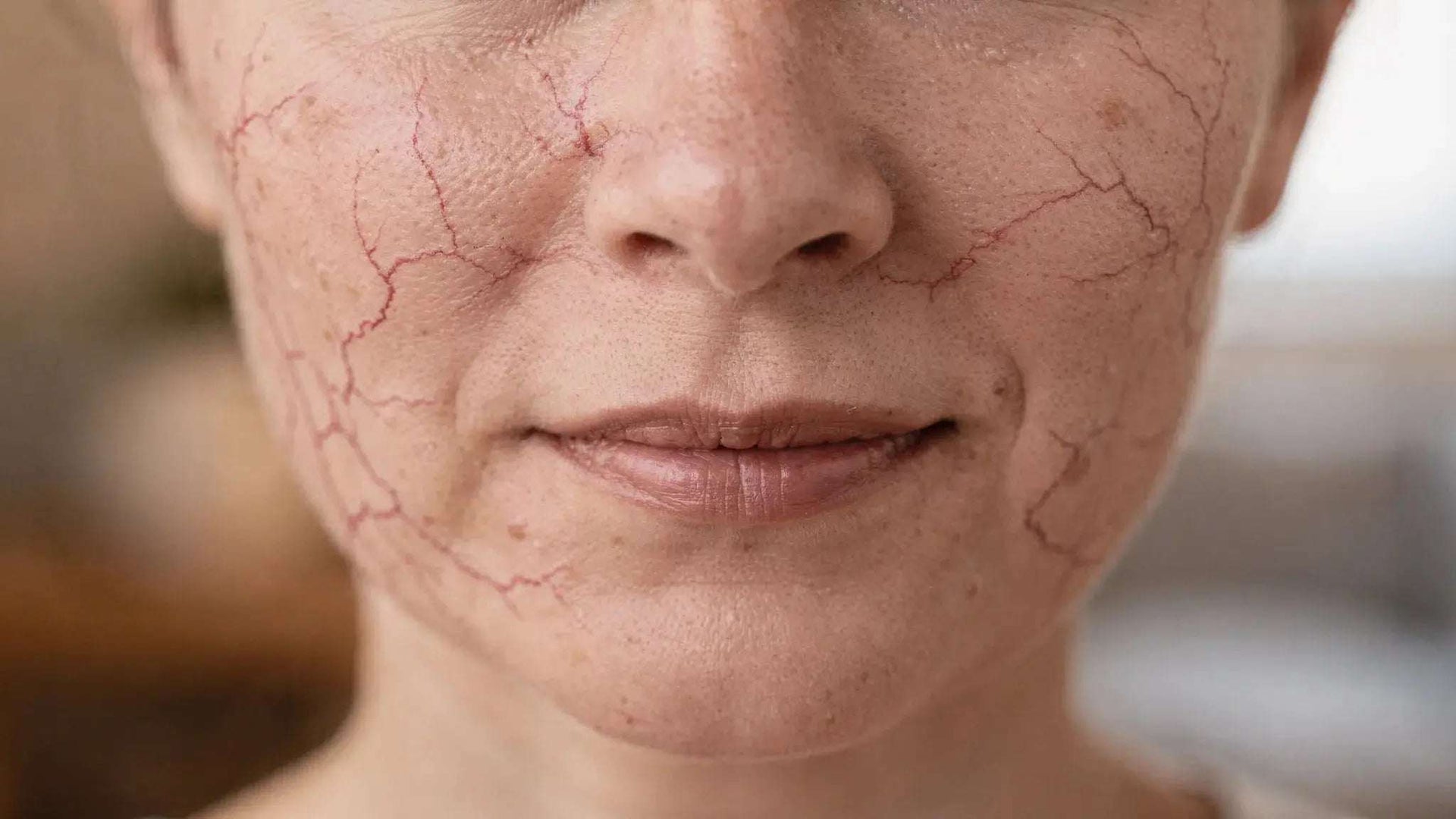
If you’re noticing tiny red lines on your cheeks, around your nose, or across your chin, you’re not alone. What most people call “broken capillaries on the face” are usually visible, widened surface blood vessels (often called telangiectasias). They can be frustrating because they don’t behave like a pimple or a rash, they tend to linger, and they’re often tied to triggers like sun, heat, and inflammation that are hard to avoid in sunny climates like Southwest Florida.
The good news is that you can usually reduce how noticeable they look, prevent new ones from forming, and, when desired, treat them effectively with the right in-office technology.
What “broken capillaries” on the face usually are (and what they are not)
Despite the name, most “broken capillaries” are not vessels that have literally ruptured. They’re typically dilated superficial blood vessels close to the skin’s surface. Depending on the pattern, you might see:
- Fine red thread-like lines (often on cheeks or around the nose)
- A web-like pattern of redness
- Small clusters that flare with heat, exercise, or alcohol
It’s also easy to confuse telangiectasia with other common redness concerns. Here’s a quick clarification guide.
| What you see | Common name people use | What it may be | What helps most |
|---|---|---|---|
| Thin red lines, especially around nose/cheeks | Broken capillaries | Telangiectasia (visible superficial vessels) | Daily sun protection, trigger control, IPL or vascular laser for best removal |
| Diffuse pink/red cheeks that come and go | “Sensitive skin” redness | Flushing or rosacea inflammation | Barrier-first routine, rosacea-friendly actives (like azelaic acid), professional guidance |
| Small red bump that stays in one spot | “Red mole” | Cherry angioma | Dermatology evaluation, removal if desired |
| Sudden bruised-looking red/purple patch after squeezing or rubbing | Broken capillaries | Bruising or trauma to vessels | Time, cold compress early, avoid picking, evaluate if recurrent |
If you suspect rosacea or have persistent facial flushing, the American Academy of Dermatology’s rosacea overview is a solid starting point for understanding patterns and triggers.
Causes of broken capillaries on face: the most common drivers
Visible facial capillaries usually come from a mix of skin thinning, chronic inflammation, and repeated vessel dilation over time. The most common causes include:
Sun exposure (photoaging)
UV exposure is one of the biggest contributors because it accelerates collagen breakdown and weakens the skin’s supportive structure. When the dermal “scaffolding” thins, surface vessels become easier to see and more likely to stay permanently dilated.
In Florida, high UV is a year-round reality, even on “cloudy” days. That makes daily broad-spectrum sunscreen a non-negotiable prevention step.
Rosacea and chronic flushing
Rosacea can create ongoing inflammation and repeated flushing that eventually leads to visible vessels. If you notice burning, stinging, bumps, or frequent flushing in addition to capillaries, rosacea should be on the shortlist.
For a medical overview of telangiectasia and related conditions, Cleveland Clinic offers a helpful reference on telangiectasia.
Heat, humidity, and repeated vasodilation
Hot showers, saunas, intense workouts, spicy foods, and alcohol can cause facial vessels to repeatedly expand. Over time, those vessels may lose their ability to “snap back,” leaving them visible.
Topical steroid overuse
Long-term or inappropriate use of topical steroids on the face can thin skin and contribute to visible vessels. If you’ve been using steroid creams (even intermittently) on facial skin, it’s worth discussing alternatives with a clinician.
Skin trauma and over-aggressive skincare
Broken capillaries can be triggered or worsened by repeated mechanical stress, including:
- Picking, squeezing, or rough extractions
- Harsh scrubs
- Overuse of strong exfoliants
- Too-frequent, high-suction devices used incorrectly
Genetics, aging, and skin tone factors
Some people are simply more prone due to genetics, fair skin, and age-related thinning. Telangiectasias can occur in many skin tones, but the way redness appears varies, and treatment selection should be tailored accordingly.
Less common medical contributors
Sometimes visible vessels are associated with underlying conditions (for example, certain connective tissue disorders) or appear as “spider angiomas.” If vessels appear suddenly, multiply quickly, or come with other systemic symptoms, it’s best to get evaluated.
What you can do at home: care that reduces redness and prevents new vessels
Topicals generally cannot erase established telangiectasia, but they can make redness less obvious and reduce the inflammatory and environmental stress that helps new vessels form.
1) Make sun protection your daily baseline
This is the most effective prevention step.
- Use broad-spectrum SPF 30+ daily (SPF 50 is a great choice in high-UV regions).
- Reapply when outdoors, sweating, or driving long periods.
- Consider mineral filters (zinc oxide, titanium dioxide) if you’re easily reactive.
- Add UV-protective habits like hats and shade.
2) Keep your routine barrier-first (especially if you flush easily)
When the barrier is irritated, skin is more reactive, redness looks stronger, and flushing triggers are harder to control.
A simple, capillary-friendly routine usually includes:
- Gentle cleanser (no harsh scrubs)
- Moisturizer with barrier-support lipids (ceramides, cholesterol, fatty acids)
- Daily sunscreen
3) Use redness-supportive ingredients strategically
These ingredients can help with overall redness and sensitivity, even if they don’t “remove” visible vessels.
- Niacinamide: supports barrier function and can reduce visible blotchiness for many people.
- Azelaic acid: widely used for redness-prone and rosacea-prone skin.
- Vitamin C (well-formulated): supports antioxidant defense against UV-driven oxidative stress. If you’re very sensitive, choose gentler derivatives and build slowly.
- Centella asiatica, colloidal oatmeal, green tea: calming support for reactive skin.
If your skin stings easily, introduce only one new active at a time and increase slowly.
4) Identify and reduce your personal flushing triggers
Common triggers include heat, alcohol, spicy foods, very hot showers, and intense temperature swings (for example, going from air conditioning to outdoor heat). You don’t have to avoid everything forever, but even small adjustments can reduce the day-to-day “flushing load.”
5) Be careful with exfoliation
Over-exfoliation is a common, avoidable way to worsen facial redness.
Signs you’re overdoing it include tightness, burning with water, shiny sensitized skin, and redness that lingers. If that’s you, pause strong actives and reset to a gentle routine for a couple of weeks.

The treatments that actually work: IPL and vascular lasers (what to expect)
If you want to truly remove or significantly reduce visible facial capillaries, energy-based treatments are the gold standard because they target hemoglobin within the vessel.
The best choice depends on the vessel size, depth, distribution, your skin tone, and whether you also have background redness or pigmentation.
IPL (Intense Pulsed Light)
IPL is not a laser, but it can be very effective for diffuse redness, flushing patterns, and mixed concerns (like sun spots plus redness). It’s commonly used for “photo-rejuvenation” style improvements.
Typical experience:
- Often done as a series
- Mild swelling or warmth after treatment is common
- Strict sun avoidance is important during the treatment window
Pulsed Dye Laser (PDL)
PDL is a classic vascular laser often used for facial redness and visible vessels, including those associated with rosacea. It can be very targeted.
KTP and Nd:YAG vascular lasers
These options may be used for specific vessel types, sizes, and depths. Nd:YAG, for example, can target deeper vessels but requires careful settings and provider selection.
Electrocautery or thermocoagulation (select cases)
Some isolated vessels can be treated with heat-based methods, though risk profiles vary, and it’s highly technique-dependent.
Here’s a practical comparison you can use when discussing options with a provider.
| Treatment | Best for | What it can improve | Common short-term effects | Key notes |
|---|---|---|---|---|
| IPL | Diffuse redness, sun damage combo | Background redness, some visible vessels, uneven tone | Warmth, mild swelling, temporary darkening of pigment | Great for “overall refresh” when redness and sun damage coexist |
| PDL | Facial redness, rosacea-related vessels | Targeted vessels and redness | Swelling, temporary purple bruising in some protocols | Often very effective for vascular concerns, technique matters |
| KTP | Superficial red vessels | Small surface vessels | Temporary redness, swelling | Often used for finer superficial vessels |
| Nd:YAG | Deeper/bluer vessels | Select deeper vessels | Redness, swelling, rare pigment change | Requires experienced provider, especially in darker skin tones |
| Electrocautery (select cases) | Single, isolated vessels | Spot treatment | Crusting, temporary redness | Not ideal for widespread redness patterns |
Because device selection and settings matter a lot, it’s worth choosing a provider who treats vascular concerns routinely (dermatology or a qualified medical aesthetics practice).
How to prep and care after treatment (so results last)
Whether you do IPL or a vascular laser, long-term success is usually about two things: good aftercare and not feeding the triggers that created the problem.
General best practices (always follow your provider’s instructions):
- Avoid tanning and heavy sun exposure before and after sessions.
- Pause irritating actives (often retinoids and strong acids) as directed.
- Use gentle cleanser, bland moisturizer, and diligent sunscreen.
- Skip hot yoga, saunas, and very hot showers for the first couple of days if you’re prone to flushing.
If you’re in Southwest Florida, post-treatment sun habits matter even more because incidental UV exposure adds up quickly.
Where facials fit in (and where they do not)
A well-designed facial can be extremely helpful for calming, barrier repair, and reducing the “angry redness” look that makes vessels appear more prominent.
At Lumina Skin Sanctuary, a customized, barrier-forward approach with medical-grade skincare can support:
- Reduced sensitivity and reactive flushing patterns
- Better hydration and a stronger barrier (so redness is less noticeable)
- Smarter at-home routines that don’t accidentally worsen redness
What to know: facials and skincare can improve the environment around the vessel, but they typically do not remove established telangiectasia the way IPL and vascular lasers can. For true vessel removal, you’ll usually want a consult for light-based vascular treatment, and a supportive skincare plan that keeps results stable.
A surprisingly common culprit: expired or unstable skincare (especially actives and SPF)
If you’re using vitamin C, retinoids, exfoliating acids, or even sunscreen past its best window, you can end up with more irritation, more flushing, and a more reactive barrier. That can make facial redness look worse, even if it didn’t cause the vessels in the first place.
Two practical habits help:
- Check the PAO symbol (the little open jar icon like “6M” or “12M”) and replace products that are well past that point.
- Store actives properly (cool, dry, tightly closed) and discard formulas that change color, smell, or texture.
For teams who must track expirations and compliance deadlines at scale, tools like ExpiryEdge expiry reminder software exist to automate reminders and prevent missed dates. At home, a simple calendar reminder can do the same job for SPF and high-performance actives.
When to see a dermatologist (don’t ignore these situations)
Book a medical evaluation if:
- Redness or vessels appear suddenly or spread rapidly
- You have eye irritation, frequent styes, or gritty eyes along with facial redness (possible ocular rosacea)
- Vessels are accompanied by unexplained bruising, bleeding, or sores that don’t heal
- You’re using topical steroids on the face and notice increasing redness or visible vessels
- You have systemic symptoms (fever, joint pain, fatigue) along with a new rash or redness
A clear, realistic path forward
Broken capillaries on the face are common, and they’re treatable, but the strategy has to match the biology.
- If your goal is prevention and calmer-looking skin, focus on daily sunscreen, trigger control, and a barrier-first routine.
- If your goal is removal, talk to a qualified provider about IPL or vascular laser options.
- For the best long-term outcome, combine professional treatment with a personalized plan that keeps inflammation low and the barrier strong.
If you’re local to Babcock Ranch, Lumina Skin Sanctuary can help you pinpoint what’s driving your redness, build an at-home routine that doesn’t worsen it, and map out the most appropriate next steps based on your skin’s sensitivity and goals.


