


Pubic waxing can feel intimidating the first time, especially because the skin in the bikini and pubic area is thinner, more sensitive, and more prone to friction than many other areas of the body. The good news is that a safe, comfortable wax is not about being fearless. It is about choosing a clean professional setting, preparing your skin properly, and caring for the area afterward so your skin barrier can recover.
Whether you are booking a bikini line wax, an extended bikini, or a Brazilian, the basics are similar: healthy skin, the right hair length, sanitary technique, realistic expectations, and gentle aftercare. If you are searching for pubic waxing near me in Babcock Ranch, Punta Gorda, or the surrounding Southwest Florida area, use this guide to know what to ask before you book and how to support smooth, calm skin after your visit.
What pubic waxing includes
Pubic waxing is a broad term. It can mean removing hair only along the bikini line, shaping the front, removing more hair from the labia or pubic mound, or choosing a Brazilian-style wax that removes most or all pubic hair. The exact service depends on your comfort level, anatomy, and the studio’s service menu.
Before your appointment, ask what is included and what is not. A professional esthetician should explain the areas being waxed, discuss your preferences privately, and make sure you understand the process before the service begins. You should never feel rushed into a style or level of hair removal that you did not request.
If you are unsure which option fits your comfort level, start smaller. A basic bikini line wax can help you learn how your skin responds before moving to more extensive hair removal.
Safety basics before you book
The most important safety factor is the condition of your skin. Wax adheres to hair, but it can also affect the top layer of skin, especially when skin is already irritated, sunburned, over-exfoliated, or sensitized by certain products or medications.
Postpone pubic waxing if you have active infection, open cuts, sores, blisters, unexplained rash, severe chafing, fresh sunburn, or a recent chemical peel or laser treatment near the area. If you have a skin condition, are prone to folliculitis, are pregnant, have diabetes, are immunocompromised, or take medication that affects skin healing, check with a qualified professional before waxing.
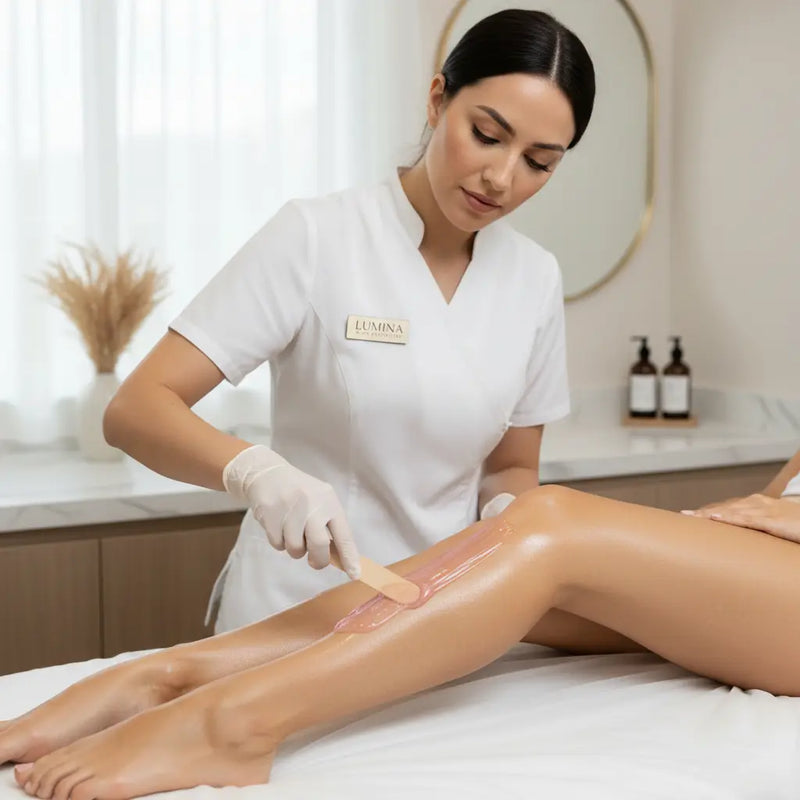
Sanitation matters just as much as technique. Your esthetician should wash or sanitize their hands, wear gloves, use clean linens or disposable table coverings, and never double-dip applicators into wax. Tools should be single-use or properly disinfected. A clean studio should be willing to answer hygiene questions without making you feel awkward.
For a broader local checklist on sanitation and studio selection, Lumina’s guide to choosing a clean body waxing studio is a helpful companion before you schedule.
How to prepare for pubic waxing
Preparation starts several days before the appointment, not when you arrive at the studio. The goal is to reduce unnecessary irritation while giving the wax enough hair to grip cleanly.
Most waxing professionals recommend hair that is about one-quarter inch long, roughly the length of a grain of rice. If hair is too short, the wax may not remove it evenly. If it is very long, trimming may make the service more comfortable, but avoid trimming too short.
In the days before your appointment, keep the area clean and moisturized, but do not apply heavy oils, thick creams, or occlusive balms right before your wax. Avoid harsh exfoliants, scrubs, retinoids, strong acids, and fragranced products near the area if your skin is easily irritated. For a deeper appointment timeline, review Lumina’s guide on how to prep for waxing the right way.
| Timing | What to do | Why it helps |
|---|---|---|
| 5 to 7 days before | Avoid aggressive exfoliation, tanning, and new active products near the area | Reduces the chance of sensitivity or lifting |
| 2 to 3 days before | Gently exfoliate if your skin tolerates it | Helps loosen trapped hairs without overworking skin |
| 24 hours before | Skip hot tubs, heavy sweating, and strong fragrance in the area | Keeps skin calmer before waxing |
| Day of appointment | Shower, wear loose breathable clothing, and avoid body oils on the area | Supports hygiene and helps wax adhere properly |
If you are menstruating, you may still be able to wax depending on your comfort and the studio’s policy, but many people feel more sensitive during that time. If you proceed, use a tampon or menstrual cup and let the esthetician know privately if you have concerns.
What to expect during the appointment
A professional pubic waxing appointment should begin with a brief consultation. You may be asked about allergies, medications, recent skin treatments, sensitivity, and your desired level of hair removal. This is also the time to mention past reactions, ingrown hairs, bruising, or anxiety about pain.
You will be given privacy to undress as needed. During the service, the esthetician will cleanse or prep the area, apply wax in sections, remove the hair, and may tweeze small remaining hairs depending on the service. They should communicate clearly, maintain draping when appropriate, and check in if your skin appears reactive.
Some discomfort is normal because hair is being removed from the root. Pain level varies based on hair density, hormones, hydration, stress, cycle timing, and how often you wax. The first appointment is often the most intense because more hair is removed at once. With consistent waxing, many people find the process becomes more manageable.
Your mental state can influence how tense your body feels during a service. Slow breathing, a calm setting, and working with an esthetician you trust can make a real difference. If stress or burnout is affecting your self-care routines more broadly, exploring personalized wellbeing support can be a useful reminder that skin care and body care often feel easier when your nervous system is supported too.

Aftercare for the first 48 hours
After waxing, the follicles are temporarily open and the skin barrier may feel more vulnerable. Redness, mild tenderness, and small bumps can happen, especially after a first wax or when hair is coarse. These reactions usually calm with gentle care.
For the first 24 to 48 hours, avoid heat, friction, and bacteria-prone environments. This means skipping hot baths, saunas, steam rooms, pools, hot tubs, intense workouts, tight leggings, and sexual activity that causes rubbing in the waxed area. Choose loose cotton underwear and breathable clothing.
Do not exfoliate immediately after waxing. Avoid fragranced lotions, deodorizing sprays, alcohol-based products, and strong active ingredients near the area. If you need comfort, use a cool compress for short intervals and follow the aftercare instructions provided by your esthetician.
| After waxing | Best choice | Avoid |
|---|---|---|
| First day | Loose clothing, cool compresses, gentle cleansing | Heat, sweat, friction, fragrance |
| Days 2 to 3 | Continue gentle care if skin is pink or tender | Scrubs, acids, retinoids, picking bumps |
| After skin calms | Light exfoliation if tolerated | Over-exfoliating or shaving between waxes |
| Between visits | Moisturize with a non-irritating product | Tight clothing that traps sweat and friction |
If redness worsens instead of improving, or you notice spreading warmth, pus, severe swelling, fever, or increasing pain, contact a healthcare professional. These symptoms are not typical post-wax irritation and may need medical attention.
Preventing ingrown hairs between waxes
Ingrown hairs happen when a hair grows back into the skin or becomes trapped under dead skin cells. The pubic area is prone to them because hair is often curly or coarse, and the area experiences frequent friction from underwear, exercise, and sitting.
Once your skin has fully calmed, gentle exfoliation can help. The key word is gentle. Over-scrubbing can create more inflammation, which may make bumps worse. A soft washcloth or mild exfoliating product used a few times per week may be enough for many people. Moisturizing also matters because dry, tight skin can make it harder for new hair to emerge cleanly.
Avoid picking, squeezing, or digging at ingrown hairs. This can lead to irritation, dark marks, scarring, or infection. If you repeatedly develop painful bumps after waxing, tell your esthetician before your next appointment so they can adjust technique, wax type, or aftercare recommendations. If your skin is highly reactive, Lumina’s guide to waxing sensitive skin safely offers additional considerations.
How often should you wax?
Many people schedule pubic waxing every 4 to 6 weeks, but timing depends on your hair growth cycle, goals, and skin response. Waxing too soon can mean hair is too short for clean removal. Waiting too long may make the next appointment feel more uncomfortable because more hair is removed at once.
Try not to shave between waxing appointments if your goal is smoother, longer-lasting results. Shaving cuts hair at the surface and can disrupt the more even regrowth pattern that regular waxing may support. If you feel tempted to shave because of regrowth, talk with your esthetician about the best schedule for your skin and hair type.
Choosing a pubic waxing provider near you
When comparing studios, look beyond convenience. A safe pubic waxing provider should offer privacy, professional communication, clean technique, and a consultation that respects your boundaries. This is especially important for intimate waxing, where trust and comfort are part of the service.
Ask these questions before booking:
- Is the esthetician licensed and trained in intimate waxing?
- Are gloves, clean linens, and single-use applicators used for every client?
- Does the studio have a no double-dipping policy?
- Will there be a consultation before the wax begins?
- What should I do if I use retinoids, acne medication, or have sensitive skin?
- What aftercare instructions will I receive?
At Lumina Skin Sanctuary in Babcock Ranch, waxing is approached with skin health, privacy, and comfort in mind. If you want a professional service that begins with a personalized discussion of the area, sensitivity, and concerns, explore Silk Hair Removal, Waxing Ritual for Silk-Smooth Skin.
Frequently Asked Questions
How long should pubic hair be before waxing? Aim for about one-quarter inch, similar to a grain of rice. Hair that is too short may not lift cleanly, while hair that is very long can make the service more uncomfortable.
Is pubic waxing safe for sensitive skin? It can be, but sensitive skin needs extra screening and gentler prep. Avoid waxing over irritated, sunburned, broken, or inflamed skin, and tell your esthetician about allergies, medications, or past reactions.
Can I work out after a pubic wax? It is best to avoid intense workouts for 24 to 48 hours. Sweat, heat, and friction can irritate freshly waxed follicles and increase the chance of bumps.
What is normal after pubic waxing? Mild redness, tenderness, or small bumps can be normal for a short time. Worsening pain, pus, spreading warmth, fever, or severe swelling is not typical and should be evaluated by a medical professional.
How do I reduce pain during a wax? Arrive hydrated, avoid caffeine if it makes you jittery, breathe slowly, and schedule when your skin is less sensitive if possible. Consistent appointments may also feel easier over time.
Ready for a smoother, safer waxing experience?
Pubic waxing is personal, and the right provider should make you feel informed, respected, and comfortable from consultation through aftercare. If you are in Babcock Ranch or nearby Southwest Florida, Lumina Skin Sanctuary offers a private, skin-focused approach to waxing and beauty services.
Book a consultation when your skin is calm, your hair is the right length, and you are ready to discuss the best option for your comfort level and goals.


