


TL;DR:
- Facial serums deliver high concentrations of active ingredients deeper into the skin, targeting specific concerns. They outperform moisturizers due to their smaller molecular size, which allows for better absorption into the epidermis. Proper use involves gentle pressing after cleansing and toning, with consistent, targeted application to achieve visible skin improvements over time.
Facial serums are defined as lightweight, high-concentration formulations designed to deliver active ingredients deeper into the skin than traditional moisturizers can reach. The role of serums in facial treatments goes well beyond surface hydration. Serums carry active ingredients like peptides, retinoids, and vitamins directly to the layers where real skin changes happen. For anyone in Fort Myers, Florida dealing with sun damage, humidity-related breakouts, or early signs of aging, understanding how serums work is the first step toward a routine that actually delivers results.
How do serums work to benefit the skin beyond moisturizers?
Serums outperform moisturizers because of their molecular structure. Smaller molecular structures allow serums to pass through the outer skin barrier and reach the epidermal layers where active ingredients can do corrective work. Moisturizers sit on the surface and lock in hydration. Serums go deeper and target specific concerns.
The concentration of actives in a serum is significantly higher than in a standard cream. That concentration is what makes serums corrective treatments rather than cosmetic products. A Vitamin C serum, for example, does not just brighten the surface. It interrupts melanin production at the cellular level, which is why consistent use reduces dark spots over time.
Key active ingredients and what they target:
- Peptides: Signal the skin to produce more collagen, reducing fine lines
- Retinoids: Speed up cell turnover, improving texture and reducing wrinkles
- Hyaluronic Acid: Draws moisture into the skin for deep, lasting hydration
- Vitamin C: Neutralizes free radicals and reduces pigmentation
- Niacinamide: Repairs the skin barrier and reduces redness
- Salicylic Acid: Clears pores and controls acne-causing bacteria
Modern serums replace older biological-based preparations with scientifically formulated compounds. That shift means today’s serums are built for precision, not just general skin maintenance.
What are the different types of facial serums?
Serums fall into five main categories based on their primary function. Knowing which category fits your current skin concern is the fastest way to get visible results.
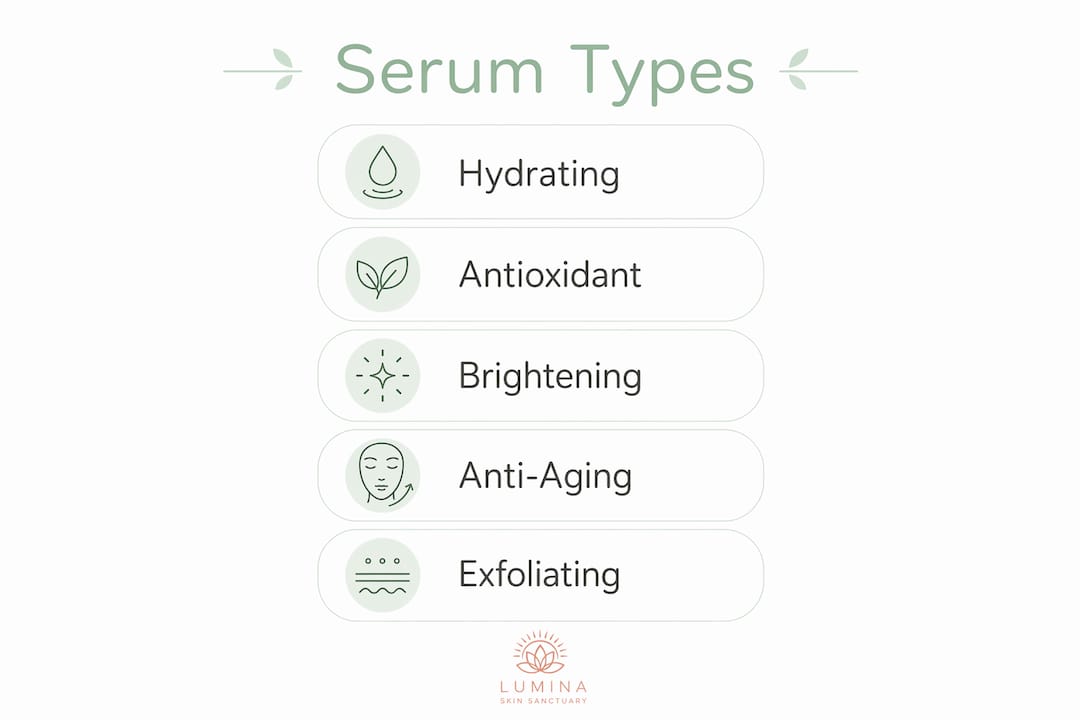
| Serum Type | Key Ingredient(s) | Primary Benefit |
|---|---|---|
| Hydrating | Hyaluronic Acid | Deep moisture retention |
| Anti-aging | Retinol, Peptides | Collagen support, wrinkle reduction |
| Brightening | Vitamin C, Niacinamide | Even skin tone, reduced dark spots |
| Acne-fighting | Salicylic Acid | Pore clearing, oil control |
| Exfoliating | AHAs, BHAs | Cell turnover, texture refinement |
Choosing serums based on skin need is the standard professional approach. Hyaluronic Acid suits dehydrated skin. Retinol suits mature skin with fine lines. Salicylic Acid suits oily or acne-prone skin. Matching the ingredient to the concern prevents wasted effort and unnecessary irritation.
Serum base type matters just as much as the active ingredient. Gel or water-based serums suit oily skin because they absorb quickly without adding lipids. Oil-based or emulsion serums suit dry or mature skin because they support the skin barrier while delivering actives. Using the wrong base for your skin type can block pores or leave skin feeling tight.
- Water-based: Fast-absorbing, ideal for oily and combination skin
- Gel-based: Lightweight, cooling, good for sensitive or acne-prone skin
- Oil-based: Nourishing, best for dry or mature skin
- Emulsion: Balanced texture, works for normal to dry skin
- Pressed balm: Richest format, suited for very dry or compromised skin
Pro Tip: If you live in a humid climate like Fort Myers, Florida, a water-based or gel serum will absorb better and feel more comfortable year-round than a heavy oil-based formula.
For a deeper look at how hydrating serums like the Nusmile HA5 Hyaluronic Serum work in practice, the ingredient profile shows why Hyaluronic Acid remains the gold standard for moisture-focused treatments.
How should you use serums effectively in a facial treatment routine?
Proper serum use follows a clear sequence. Skipping steps or applying in the wrong order reduces how much active ingredient actually reaches the skin.
- Cleanse your face thoroughly to remove oil, sunscreen, and debris
- Tone to balance skin pH and prepare the surface for absorption
- Apply serum to slightly damp skin using 2–4 drops for the full face
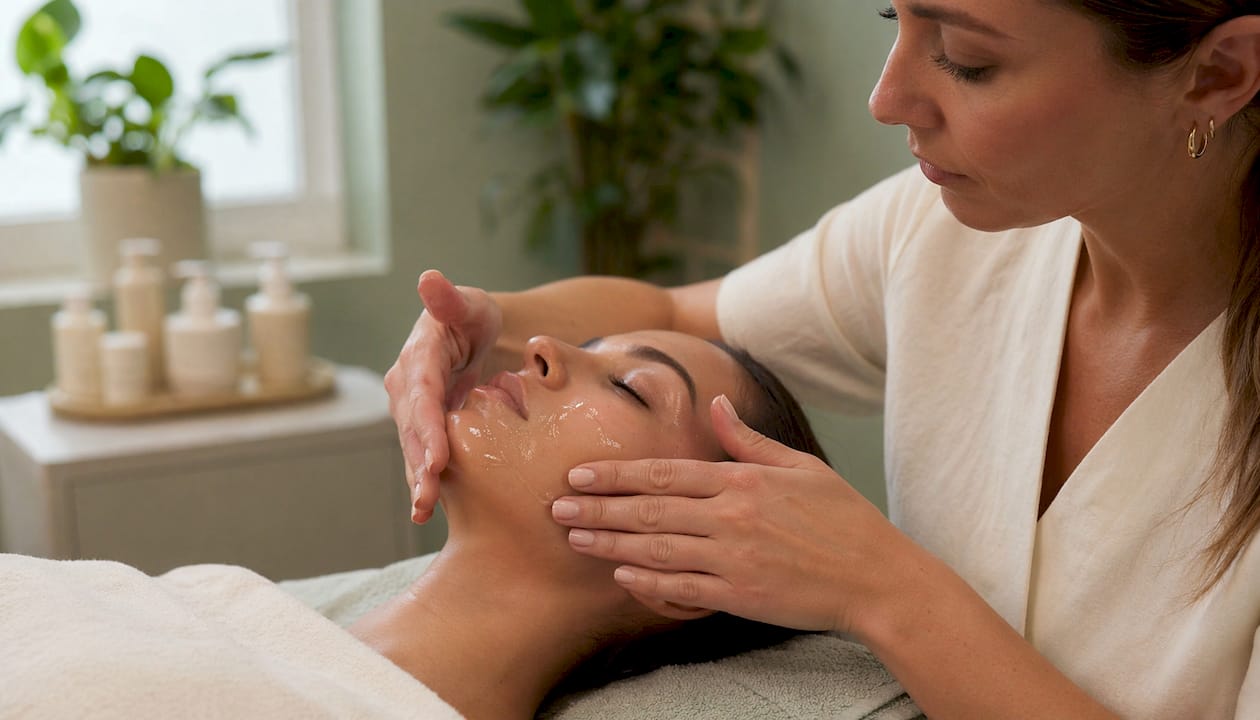
- Press gently with fingertips across the face and neck. Do not rub
- Wait 60 seconds to allow the serum to absorb before the next step
- Apply moisturizer to seal in the serum and add surface hydration
- Finish with SPF in the morning to protect actives from UV breakdown
Gentle pressing is the recommended technique for serum application. Rubbing creates friction that can cause micro-trauma and reduce how evenly the product distributes across the skin. Pressing also encourages absorption without disrupting the skin barrier.
Timing matters for different serum types. Antioxidant serums, such as Vitamin C, work best in the morning because they protect skin from daytime environmental damage. Retinoid serums work best at night because they increase photosensitivity and work with the skin’s natural overnight repair cycle. A daily regimen of one morning serum and one evening serum produces consistent, noticeable improvements in texture, radiance, and fine lines.
Excessive product layering leads to ingredient reactivity and dilutes serum potency. A single, well-formulated serum targeting your primary concern outperforms a stack of five products with overlapping or conflicting actives. Start with one serum, use it consistently for four to six weeks, then assess results before adding anything new. For practical guidance on building a routine without overcomplicating it, the skincare layering guide at Lumina Skin Sanctuary breaks down the process clearly.
Pro Tip: New to retinol? Start with two nights per week and build up gradually. Jumping straight to nightly use causes irritation that most people mistake for an allergic reaction.
What benefits can you expect from incorporating serums into facial treatments?
Serums deliver results that moisturizers alone cannot produce. The combination of high active concentration and deep penetration means changes happen at the cellular level, not just on the surface.
Expected benefits with consistent serum use:
- Improved hydration: Hyaluronic Acid serums increase moisture retention noticeably within days
- Reduced fine lines: Peptide and retinoid serums stimulate collagen over weeks of use
- Even skin tone: Vitamin C and Niacinamide serums reduce dark spots and redness over four to eight weeks
- Clearer skin: Salicylic Acid serums reduce active breakouts and prevent new ones
- Stronger skin barrier: Niacinamide and ceramide serums reduce sensitivity and flaking
- Antioxidant protection: Vitamin C and Vitamin E serums neutralize free radicals from UV and pollution
Sun damage is a specific concern in Fort Myers, where year-round UV exposure accelerates pigmentation and collagen breakdown. Understanding why skin darkens after sun exposure helps clarify why antioxidant and brightening serums are not optional for residents here. They are a direct response to a real environmental stressor.
“Effective serum use depends on matching active ingredients to an individual’s skin physiology and concerns, emphasizing serums as corrective, not cosmetic-only, treatments.” Targeted Serum Use According to Skin Needs
Facial serums boost skincare by delivering potent actives in a fast-absorbing format that produces visible changes faster than most creams. The results are not permanent without continued use, but consistent application maintains and builds on improvements over time. For a full breakdown of what regular facial treatments deliver, the 10 visible facial benefits article covers measurable outcomes in detail.
How do professionals personalize serum selection for facial treatments?
Professional serum selection starts with a thorough skin assessment. At Lumina Skin Sanctuary in Fort Myers, Florida, every client receives an individualized consultation before any product is applied. That assessment identifies skin type, active concerns, and any sensitivities that would rule out specific ingredients.
Professional personalization covers several key factors:
- Skin type: Oily, dry, combination, or sensitive skin each respond differently to serum bases and actives
- Primary concern: Aging, pigmentation, acne, and dehydration each require different ingredient families
- Ingredient compatibility: Some actives, like Retinol and Vitamin C, should not be layered together without professional guidance
- Skin history: Previous reactions, treatments, or conditions affect which serums are safe and effective
- Treatment goals: Short-term results versus long-term correction require different product strategies
Avoiding common pitfalls is a major part of professional guidance. Clients who self-select serums often choose based on marketing rather than ingredient function. That leads to either no results or irritation from incompatible combinations. A professional matches the serum to the skin, not to a trend.
Personalized facial treatments that incorporate the right serums produce faster, more visible results than a generic routine. The difference is not the product alone. It is the precision of the selection. Lumina Skin Sanctuary uses medical-grade formulations and advanced technologies like LED light therapy alongside targeted serums to amplify outcomes for each client.
Key Takeaways
Serums are the most targeted delivery system in skincare, and matching the right active ingredient to the right skin concern is what separates effective routines from ineffective ones.
| Point | Details |
|---|---|
| Serums penetrate deeper | Smaller molecular structures carry actives past the surface barrier into the epidermis. |
| Match serum type to concern | Use Hyaluronic Acid for hydration, Retinol for aging, Vitamin C for pigmentation, and Salicylic Acid for acne. |
| Apply with gentle pressing | Pressing distributes serum evenly and avoids micro-trauma from rubbing. |
| Avoid excessive layering | One well-chosen serum outperforms a stack of conflicting or redundant products. |
| Professional selection improves results | Skin assessments at clinics like Lumina Skin Sanctuary match serums to individual skin profiles for faster outcomes. |
Why I think most people are using serums wrong
People tend to treat serums like moisturizers. They apply too much, rub it in fast, and move on. That approach wastes the product and misses the point entirely.
What I have observed, both personally and through conversations with skincare professionals, is that the biggest barrier to serum results is impatience. People switch products after two weeks because they do not see a change. Retinol takes six to eight weeks to show measurable improvement in fine lines. Vitamin C takes four to six weeks to visibly reduce dark spots. The science is not broken. The timeline expectation is.
The second mistake is buying serums based on ingredient lists rather than skin condition. A Vitamin C serum is not automatically good for everyone. If your skin barrier is compromised, Vitamin C can sting and inflame rather than brighten. A Niacinamide serum to repair the barrier first would produce better results in that case.
My honest recommendation is to start with one serum, use it correctly for six weeks, and assess. If you are in Fort Myers and dealing with sun-related pigmentation or humidity-driven breakouts, a professional consultation at Lumina Skin Sanctuary will save you months of trial and error. Consistent facial treatments combined with the right serum produce results that a solo home routine rarely matches.
— Kira Tia
Serums available at Lumina Skin Sanctuary in Fort Myers
Lumina Skin Sanctuary offers targeted serum-based treatment series designed for the specific skin challenges Fort Myers residents face.
The Youth-Restore, Sculpting and Firming Series addresses fine lines, loss of firmness, and collagen decline with professional-grade anti-aging actives. For sun damage and dull skin, the Sun-Damage Eraser and Galvanic Glow Series combines brightening serums with galvanic technology to restore radiance and reduce pigmentation. Clients who need immediate hydration and texture improvement can start with the Express Hydration Facial, which uses hydrating serums alongside a polish treatment for fast, visible results. Book a consultation at Lumina Skin Sanctuary to find out which serum series fits your skin.
FAQ
What does a facial serum actually do?
A facial serum delivers high concentrations of active ingredients deeper into the skin than a moisturizer can reach. It targets specific concerns like fine lines, pigmentation, acne, or dehydration at the cellular level.
How often should you use a serum?
Most serums are designed for daily use, with antioxidant serums applied in the morning and retinoid serums applied at night. Consistent daily use produces the most noticeable improvements in texture and radiance.
Can you layer multiple serums at once?
Serum layering can be effective if the ingredients are compatible, but using too many at once risks irritation and diluted results. One targeted serum per concern is the safer starting point.
What is the correct order to apply a serum?
Apply serum after cleansing and toning, before moisturizer and SPF. Use 2–4 drops and press gently into the skin. Wait 60 seconds before applying the next product.
Do I need a serum if I already use a moisturizer?
Yes. Moisturizers hydrate and protect the surface. Serums deliver corrective actives to deeper skin layers. The two products serve different functions and work best together.


