


TL;DR:
- Enzyme facial treatments utilize proteolytic enzymes like papain and bromelain to selectively dissolve dead skin cells without damaging healthy tissue. They offer gentle, pH-neutral exfoliation with no downtime, making them suitable for sensitive or reactive skin types, and enhance product absorption and skin radiance over time. These treatments are ideal for maintenance, prepping for more invasive procedures, and managing sun damage or inflammation.
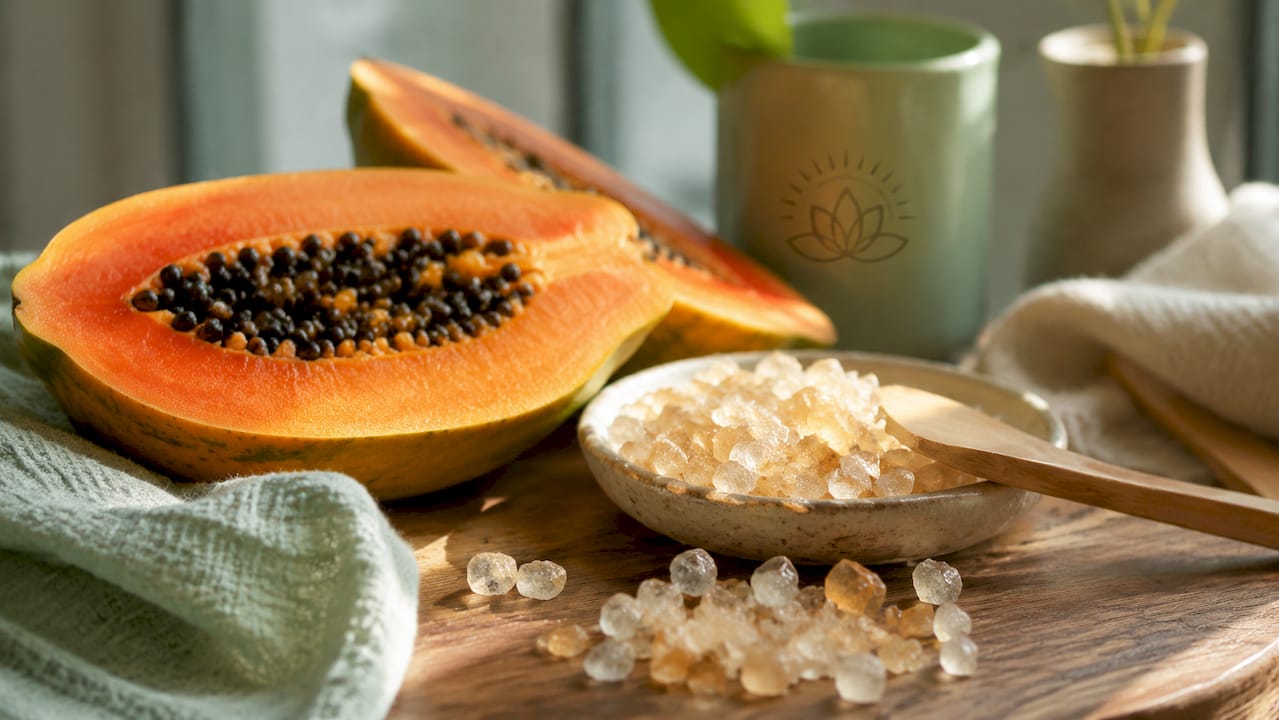
Enzyme facial treatments are defined as professional exfoliation procedures that use proteolytic enzymes, primarily papain from papaya and bromelain from pineapple, to dissolve dead skin cells at the surface level without disturbing living tissue. Understanding why enzyme facial treatments work comes down to one core mechanism: these enzymes target keratin proteins in dead cells only, leaving healthy skin completely intact. The result is a gentler, more precise form of exfoliation than either acid peels or physical scrubs can deliver. For anyone dealing with sun damage, sensitivity, or uneven texture, this biological approach produces real, measurable results.
Why enzyme facial treatments work at the cellular level
Enzyme facials work through a process called biological exfoliation, the industry term for using naturally derived enzymes to break down dead skin proteins. The mechanism is specific: proteolytic enzymes digest dead keratin without affecting living cells, which is what separates this treatment from every other exfoliation method.
Here is what makes this process precise:
- Substrate specificity. Papain and bromelain bind only to dead keratin proteins. They do not have the chemical capacity to break down living cell membranes, which means the treatment cannot go too deep.
- pH compatibility. Enzyme facials operate at pH 5.5 to 7.0, which matches the skin’s natural physiological range. Acid peels work by disrupting this pH balance, which is what causes redness, peeling, and downtime.
- Self-limiting action. Enzyme treatments stop once all dead keratin is digested, with no chemical neutralizer required. This built-in stop mechanism eliminates the risk of over-exfoliation entirely.
- Temperature control. Enzyme activity is temperature-dependent, so a trained esthetician can increase or decrease treatment intensity simply by adjusting the mask temperature. Acids and scrubs offer no equivalent control.
Contrast this with physical scrubs, which use abrasive particles to mechanically remove surface cells. Scrubs cannot distinguish between dead and living tissue, and they create micro-tears in the skin barrier, particularly on sensitive or reactive skin. Acid peels work by lowering the skin’s pH to chemically dissolve cell bonds, which is effective but carries a higher irritation risk and requires recovery time.
Pro Tip: If your skin reacts to glycolic or lactic acid products, enzyme exfoliation is the logical next step. The pH-neutral mechanism removes the irritation trigger entirely while still delivering real exfoliation results.
What benefits do enzyme facials actually deliver?
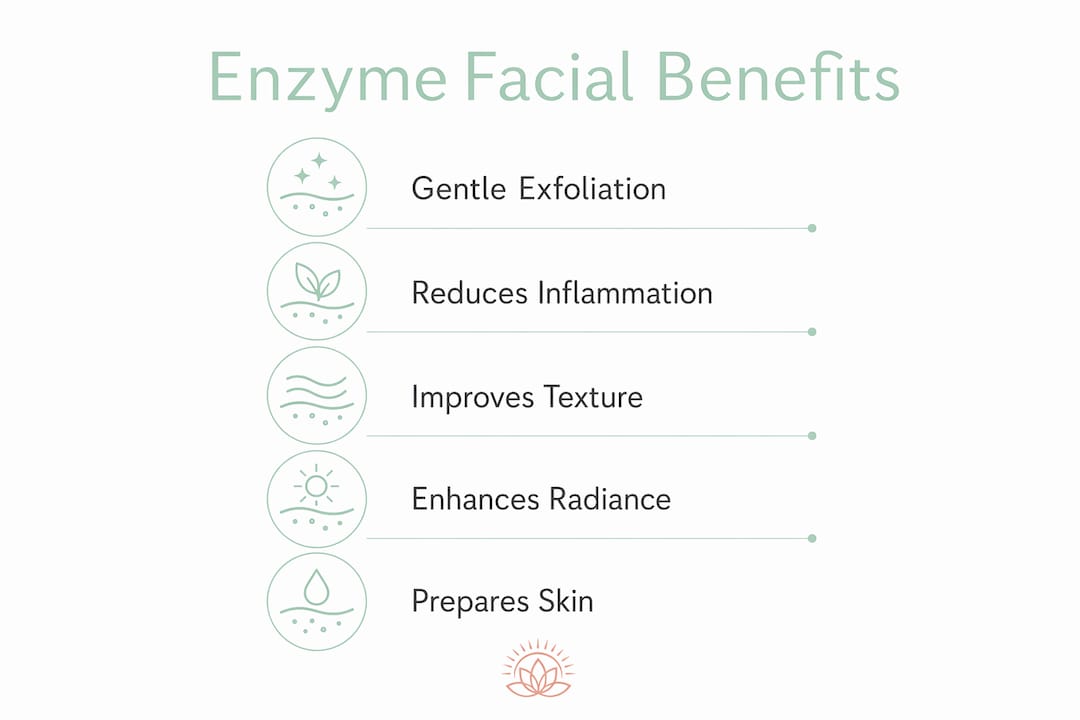
The benefits of enzyme facials are both immediate and cumulative. Most clients notice radiance and smoothness after one session, with visible improvements in texture and tone appearing after three to four treatments. That progression matters because it reflects genuine cellular turnover, not just surface hydration.
Here are the primary results clients experience:
- Smoother texture. Removing the layer of dead cells that dulls the surface reveals the fresher, more even skin underneath. This is the most immediate and consistent enzyme facial treatment result.
- Improved tone. Accumulated dead cells trap pigment unevenly. Clearing them regularly reduces the appearance of sun spots and post-acne discoloration over time.
- Better product absorption. Enzyme facials improve skin permeability, meaning serums and moisturizers applied afterward penetrate more effectively. A vitamin C serum applied to freshly exfoliated skin performs measurably better than on an unexfoliated surface.
- Reduced inflammation. Bromelain carries anti-inflammatory properties that actively reduce redness and irritation. For acne-prone or rosacea-prone skin, this dual action of exfoliation plus calming is a significant advantage.
- Improved circulation. Enzyme facials induce vascular flushing, enhancing oxygen and nutrient delivery to skin cells. This supports natural repair processes beyond what surface exfoliation alone achieves.
The anti-inflammatory action of bromelain deserves specific attention. Most exfoliation methods create some degree of inflammation as a side effect. Bromelain actively works against inflammation while simultaneously exfoliating, which is why enzyme treatments for skin are the preferred choice for reactive skin types. Clients with rosacea, perioral dermatitis, or chronic sensitivity often find enzyme facials are the only exfoliation method they can tolerate without flare-ups.
For Florida residents managing sun damage and humidity-related congestion, these benefits align directly with the most common skin concerns. Consistent enzyme treatments clear the buildup that heat and UV exposure accelerate, without adding the stress of harsh chemical treatments to already-compromised skin.
Enzyme facials vs. chemical peels vs. physical scrubs
Understanding how enzyme facials compare to other exfoliation methods helps clarify when to choose each option.
| Feature | Enzyme facial | Chemical peel | Physical scrub |
|---|---|---|---|
| Mechanism | Biological digestion of dead keratin | Acid-induced pH disruption | Mechanical abrasion |
| Downtime | None | 1 to 7 days depending on depth | None to minimal |
| Risk of over-exfoliation | None (self-limiting) | Moderate to high | Moderate |
| Suitable for sensitive skin | Yes | Rarely | No |
| Customizable intensity | Yes (temperature) | Yes (acid concentration) | Limited |
| Micro-tear risk | None | None | Present |
Enzyme facials cause no micro-tears or mechanical damage, which makes them the clear choice for sensitive and rosacea-prone skin. Chemical peels deliver stronger results for deep pigmentation or acne scarring but require recovery time and carry a higher risk of post-inflammatory hyperpigmentation on darker skin tones. Physical scrubs remain popular for their accessibility but are the least precise option and the most likely to cause barrier damage with regular use.
The practical answer to “do enzyme facials work as well as peels” is: it depends on the goal. For maintenance, glow, and sensitivity management, enzyme treatments outperform peels on every practical metric. For corrective work on deep scarring or significant sun damage, peels may be necessary, but enzyme facials serve as an ideal preparation and recovery treatment around those procedures.
Pro Tip: Schedule an enzyme facial one to two weeks before a chemical peel. The pre-exfoliation creates a more even surface for acid penetration, which improves peel results and reduces the risk of uneven absorption.
How to fit enzyme facials into your skincare routine
Frequency and timing determine how much benefit you actually get from enzyme treatments for skin. A single session delivers visible results, but a consistent schedule builds the cumulative improvements that transform skin over time.
Recommended frequency guidelines:
- Normal to combination skin: Every two to four weeks for maintenance.
- Sensitive or reactive skin: Every four to six weeks, allowing full barrier recovery between sessions.
- Congested or acne-prone skin: Every two to three weeks during active treatment phases, then monthly for maintenance.
- Pre-procedure preparation: One session one to two weeks before microneedling, LED therapy, or a chemical peel.
Enzyme facials prepare skin for procedures like microneedling or LED therapy by clearing surface cells without causing inflammation, which maximizes how well the skin responds to the follow-up treatment. At Luminaskinsanctuary, LED light therapy is a core service, and pairing it with an enzyme facial beforehand consistently produces stronger outcomes than either treatment alone.
Post-treatment care is straightforward but non-negotiable. Apply a hydrating serum immediately after the session while the skin’s permeability is elevated. Use SPF 30 or higher the following morning without exception. Avoid retinoids, AHAs, and BHAs for 48 hours post-treatment to allow the skin barrier to stabilize. These steps protect the results and prevent the sensitivity that can follow any exfoliation procedure.
For home care between sessions, a gentle enzymatic scrub with papain can extend results without disrupting the skin barrier. Products formulated with aloe and D-panthenol alongside enzymes, such as enzyme-based face scrubs designed for sensitive skin, provide mild ongoing exfoliation that complements professional treatments rather than replacing them.
Key takeaways
Enzyme facial treatments work because their biological mechanism is precise, self-limiting, and pH-compatible with living skin, making them effective for nearly every skin type.
| Point | Details |
|---|---|
| Biological precision | Papain and bromelain target only dead keratin, leaving living cells completely unaffected. |
| Zero downtime | pH-neutral action means no peeling, redness, or recovery period after treatment. |
| Cumulative results | Texture and tone improvements build visibly after three to four consistent sessions. |
| Anti-inflammatory action | Bromelain reduces redness while exfoliating, making enzyme facials safe for sensitive and rosacea-prone skin. |
| Treatment synergy | Enzyme facials boost absorption of serums and improve results of follow-up procedures like LED therapy. |
What I’ve seen enzyme facials do for reactive skin
I have worked with clients who had given up on exfoliation entirely after repeated reactions to glycolic acid and physical scrubs. Enzyme facials changed that pattern consistently. The self-limiting mechanism is not just a theoretical safety feature. In practice, it means the treatment performs the same way on a reactive skin type as it does on a resilient one, without requiring the practitioner to guess at tolerance levels.
The most common misconception I encounter is that “gentle” means “less effective.” Clients often expect enzyme treatments to be a compromise, a softer option that delivers softer results. That is not what the data or the outcomes show. Substrate specificity is the reason enzyme facials are preferred for reactive skin, not a consolation prize. The precision of the mechanism is the advantage, not a limitation.
One practical note: do not skip sun protection after any enzyme facial, especially in a high-UV environment like Florida. Freshly exfoliated skin is more photosensitive, and unprotected exposure immediately after treatment will undo the results faster than any other single factor. This is the step clients most often skip, and it is the one that matters most.
— David
Experience enzyme facials at Luminaskinsanctuary
Luminaskinsanctuary offers professional enzyme facial treatments designed specifically for Florida skin, addressing sun damage, humidity-driven congestion, and sensitivity in a single session.
The clinic-grade facial treatments at Luminaskinsanctuary include enzyme-based options suitable for all skin types, with personalized consultations to match the right treatment to your skin’s current condition. For a faster option, the Express Hydration and Polish Facial delivers enzyme exfoliation with immediate hydration in a single appointment. Browse the full range of expert skincare services to find the right starting point for your skin goals.
FAQ
What do enzyme facials actually do to your skin?
Enzyme facials use proteolytic enzymes like papain and bromelain to dissolve dead keratin proteins on the skin’s surface. The result is smoother texture, improved tone, and better absorption of skincare products applied afterward.
How many enzyme facial sessions are needed to see results?
Most clients see immediate radiance after one session, with noticeable improvements in texture and tone after three to four treatments. Monthly maintenance sessions sustain those results long-term.
Are enzyme facials safe for sensitive or rosacea-prone skin?
Yes. Enzyme facials are the preferred exfoliation method for sensitive and rosacea-prone skin because they operate at the skin’s natural pH and cause no micro-tears or inflammation. Bromelain’s anti-inflammatory properties add an additional calming benefit.
How do enzyme facials differ from chemical peels?
Chemical peels work by disrupting the skin’s pH with acids, which causes controlled damage and requires downtime. Enzyme facials digest only dead cells at a neutral pH with no downtime, no peeling, and no risk of over-exfoliation.
Can enzyme facials be combined with other treatments?
Yes. Enzyme facials prepare skin for procedures like LED therapy and microneedling by clearing surface cells and increasing skin receptivity without causing inflammation. Scheduling an enzyme facial one to two weeks before a more intensive procedure consistently improves outcomes.


