


Your skin was fine two weeks ago. Now every cleanser stings, your cheeks stay pink, makeup looks rough by noon, and the moisturizer you used to love suddenly burns. In Southwest Florida, I see this pattern all the time. Sun exposure, salt air, sweat, indoor air conditioning, over-cleansing, and one too many “fix it fast” products can push skin from manageable to reactive fast.
A lot of clients call this “sensitive skin,” but that label can hide the underlying issue. In Western surveys, around 35% of adults identify as having sensitive skin, often with stinging, redness, or dryness that can correlate with barrier dysfunction, as noted in Healthline's overview of the skin barrier. When your barrier is off, skin doesn't just feel dry. It becomes unpredictable.
Barrier repair is less glamorous than brightening serums and exfoliating acids, but it's the foundation that lets every other treatment work better. If your skin is angry, the answer usually isn't another active. It's fewer variables, steadier support, and enough consistency to let the surface recover.
Table of Contents
- Introduction Why Your Skin Is Suddenly So Angry
- Is Your Skin Barrier Damaged Key Signs to Watch For
- Your Gentle At-Home Repair Routine
- Barrier Repair Ingredients to Use and Avoid
- Tracking Your Recovery and Troubleshooting Stalls
- When to Seek Professional Help in Southwest Florida
Introduction Why Your Skin Is Suddenly So Angry
When the skin barrier is compromised, skin loses water too easily and lets irritation in too easily. That's why the same face can feel tight and greasy, flaky and breakout-prone, dull and inflamed. Clients often think they need a stronger acne product or a better exfoliant. Usually they need the opposite.
In Florida, the pattern gets amplified. You move from heat and UV outside to cold AC inside, then wash off sunscreen, sweat, and humidity at night. That cycle doesn't sound dramatic, but repeated friction, cleansing, and environmental exposure can leave skin less tolerant week after week.
Practical rule: If your skin suddenly reacts to products that used to feel normal, stop assuming it needs more treatment and start considering that it needs less.
Barrier repair works best when you treat it like a reset, not a trend. Strip the routine down. Calm inflammation. Keep the surface lightly supported morning and night. Then, once skin feels consistently comfortable again, decide which actives still deserve a place.
Is Your Skin Barrier Damaged Key Signs to Watch For
A damaged barrier doesn't always look severe. Sometimes it looks like “my skin just won't behave anymore.”

What damaged barrier skin usually feels like
Use this checklist. If several sound familiar, barrier damage is a strong possibility.
- Persistent tightness: Your skin feels stretched after cleansing, and that feeling returns a few hours after moisturizer.
- Stinging from familiar products: A basic serum, sunscreen, or moisturizer suddenly tingles or burns.
- Redness that lingers: Not just a brief flush after heat, but a baseline pinkness that hangs around.
- Flaking with oiliness underneath: The surface looks rough or peely, but you still notice shine or clogged pores.
- Breakouts that don't respond normally: You treat the bumps, but stronger acne products make the whole face feel worse.
- Texture that feels rough instead of smooth: Makeup grabs onto dry patches, and skin feels uneven to the touch.
People often get confused. Dry, reactive skin can still break out. A weakened barrier can trap you in a cycle where you treat congestion aggressively, then create more irritation, then treat the irritation with more products.
Barrier damage versus simple dehydration
Simple dehydration usually improves quickly when you increase water-binding and moisturizing support. Barrier damage is broader. Skin feels reactive, not just thirsty.
A helpful perspective:
| Condition | More likely signs | What usually happens |
|---|---|---|
| Dehydration | Temporary tightness, dullness, fine surface lines | Improves with consistent hydration and better moisture retention |
| Barrier damage | Stinging, redness, flaking, increased sensitivity, routine intolerance | Needs simplification, fewer actives, and a slower recovery period |
If you want another plain-language resource on reactivity, irritation triggers, and routine simplification, Healtsy's guide to comprehensive sensitive skin solutions is a useful companion read.
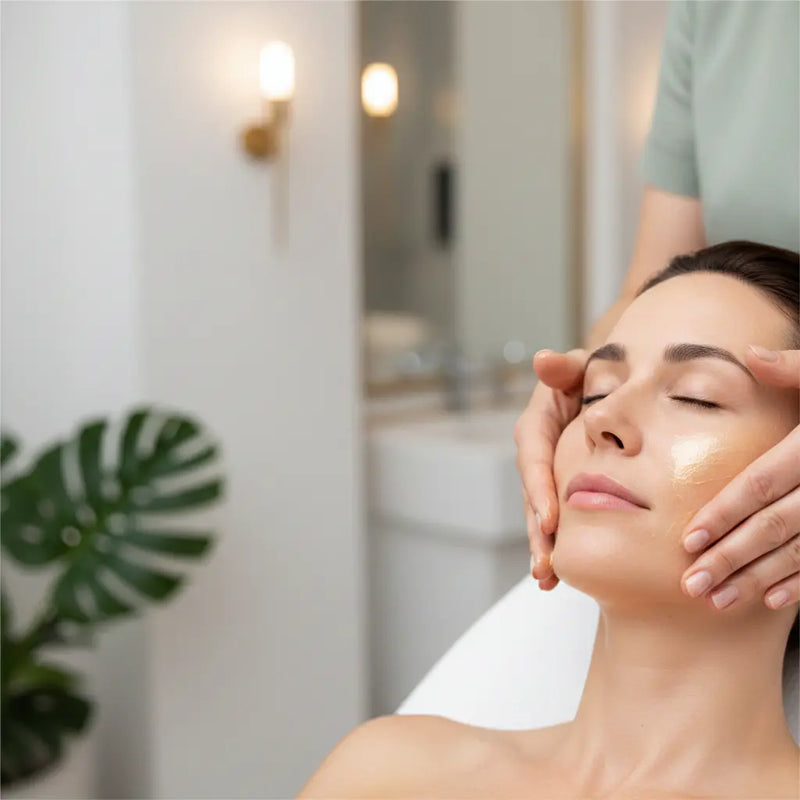
For clients who want professional support without piling on aggressive resurfacing, The Express Hydration Facial and Polish Treatment is one example of a barrier-conscious service. Its protocol includes double cleansing under ozone steam, ultrasonic exfoliation to lift dry surface flakes, a deep hydration cream mask, hyaluronic acid mist, ceramide barrier cream, and SPF 50+ finish. The key detail is not “more treatment.” It's controlled hydration support with gentle polishing and no downtime.
Skin that's damaged often asks for comfort before it asks for correction.
Your Gentle At-Home Repair Routine
You spend the afternoon outside in Southwest Florida heat, step into aggressive air conditioning, then wash your face with hot water because it feels relaxing. By bedtime, your skin is tight, blotchy, and suddenly irritated by products you used to tolerate. That pattern is common here, and repair starts by making the routine quieter.

Cleanse with restraint
Cleansing should remove sunscreen, sweat, and surface buildup without leaving the skin feeling stripped. In barrier repair, that “squeaky clean” feeling usually means you went too far.
At night, use a mild cleanser with lukewarm water. Hot water is a poor trade in Florida. It feels soothing in the moment, but it can leave already stressed skin more reactive afterward.
In the morning, let your skin decide. Clients who wake up oily, sweat overnight, or used heavy sunscreen the day before often do better with a light cleanse. If skin feels dry or tender first thing, a water rinse may be enough.
Skip the extra friction. Cleansing brushes, gritty scrubs, rough washcloths, and repeat washing after every sweaty errand can keep the barrier from settling down.
Hydrate in layers that match the climate
Humidity does not guarantee comfortable skin. I see the opposite all the time in Southwest Florida. Sun exposure, saltwater, pool chemicals, frequent showering, and cold indoor air can all leave skin dehydrated and irritated even when the weather feels sticky.
A simple order works well:
- Apply a hydrating layer first: A humectant-rich serum or lotion adds water to the upper layers of skin.
- Follow with a barrier-supportive moisturizer: Choose a formula that brings in lipids and enough cushion to reduce that tight, overwashed feeling.
- Use a slightly richer layer at night: Daytime products should feel comfortable in heat and humidity. Night is the better time for a creamier finish if your skin needs it.
One common mistake is stopping at a hydrating serum. Humectants help, but they do not replace moisturizer. In air-conditioned spaces, that light layer often is not enough to keep skin comfortable for long.
If your shelf is crowded and your skin is getting harder to manage, Lumina's guide to building results without irritation through a gentle skin care routine can help you simplify without guessing. For clients reviewing labels during this reset period, understanding harmful additives in skincare is also useful.
Here's a practical demo to reinforce the basics before you start changing products:
Protect every morning
In Southwest Florida, sunscreen is part of barrier repair. Daily UV exposure, heat, and long bright days keep inflammation active, especially if skin is already stinging or flushing easily.
Choose a broad-spectrum SPF 30 or higher that you can wear comfortably every day. Comfort matters. A sunscreen with a beautiful finish is not a good fit if it burns, pills, or makes you avoid reapplying.
The best repair routine is the one your skin can tolerate for a full month without constant adjustments.
A steady routine usually looks like this:
| Time | Keep it simple |
|---|---|
| Morning | Gentle cleanse if needed, hydrating layer, moisturizer, sunscreen |
| Evening | Gentle cleanse, hydrating layer, barrier-supportive moisturizer |
That is enough for the early repair phase. Consistency, low irritation, and climate-aware choices get better results than a complicated routine.
Barrier Repair Ingredients to Use and Avoid
When skin is reactive, ingredients matter more than branding. A beautiful package doesn't soften the effect of a harsh formula. During barrier repair, think in two columns. What helps rebuild. What keeps re-triggering the problem.

The ingredients worth keeping
These are the workhorses I look for when skin needs recovery, not excitement.
| Skin Barrier Repair Ingredient Guide | |
|---|---|
| Ingredients to Use | Ingredients to Pause |
| Ceramides | Strong exfoliating acids |
| Hyaluronic acid | Retinoids |
| Glycerin | Harsh sulfates |
| Niacinamide | Denatured alcohol |
| Fatty acids | Strong fragrance |
| Cholesterol | Abrasive scrubs |
Ceramides matter because they help support the lipid structure of the barrier. Glycerin and hyaluronic acid help with water balance. Fatty acids and cholesterol round out the richer, more supportive side of moisturizing. Niacinamide can be useful too, especially in gentle formulas, because it often fits well in routines aimed at calm, resilient skin.
The ingredients to pause for now
Most barrier setbacks come from people trying to “treat through” damage. That usually means keeping too many actives in rotation while the skin is clearly irritated.
Pause these categories for the repair phase:
- Exfoliating acids: If your skin already feels raw, more peeling usually means more inflammation.
- Retinoids: Even when they're excellent long term, they can be the wrong move in an active repair window.
- Scrubs and cleansing tools: If it physically abrades the surface, it can wait.
- High-fragrance products: Fragrance isn't guaranteed to irritate everyone, but compromised skin tends to be less forgiving.
- Drying formulas: Anything that leaves the skin squeaky or tight is suspect.
If you're trying to get better at label reading, ALODERMA's article on understanding harmful additives in skincare is a practical reference. Lumina also has a straightforward guide to ingredients to avoid in skincare when you're editing down a crowded routine.
If a product promises fast resurfacing while your skin is already burning, that's usually not a solution. It's a delay.
A useful rule: during a repair phase, choose products for tolerance first and ambition second.
Tracking Your Recovery and Troubleshooting Stalls
Barrier repair feels slow because the signs improve in layers. Comfort often comes before appearance. Your skin may sting less before it looks less red. It may hold moisture better before texture fully smooths out.
Clinical studies show structured barrier-repair regimens can reduce TEWL by 30 to 50% within 2 to 4 weeks, supporting a measurable recovery timeline, according to this clinical review on barrier repair and TEWL.
What progress looks like week by week
Don't judge progress only by glow. Watch for these changes instead:
- Early improvement: Products sting less, washing feels easier, and the face doesn't feel as tight after cleansing.
- Mid-course improvement: Redness settles down, flakes become finer, and skin feels less “thin” or exposed.
- Later improvement: The face looks more even, holds moisture better through the day, and tolerates a basic routine without drama.
In practice, mild disruption often calms faster than severe over-exfoliation or long-term irritation. The key is consistency. Constantly switching products every few days makes it harder to know what's helping.
What to do when recovery stalls
If you're two weeks in and still uncomfortable, don't panic. Audit the routine first.
| Problem | Better response |
|---|---|
| Still dry | Check water temperature, reduce cleansing frequency, and make sure you're sealing hydration with moisturizer |
| Breaking out | Avoid the urge to attack every blemish with spot treatments if the whole face is irritated |
| Burning continues | Remove fragranced products, scrubs, and unnecessary serums |
| Improves then backslides | Look for hidden triggers such as over-washing after workouts, beach days, or reintroducing actives too soon |
One of the biggest mistakes I see is the “I'm feeling better, so I restarted everything” mistake. A barrier can feel calmer before it's fully resilient. Go slower than you think you need to.
Recovery isn't linear. What matters is whether the overall direction is calmer, more comfortable, and less reactive.
When to Seek Professional Help in Southwest Florida
Home care does a lot, but sometimes skin needs professional guidance because the environment and the routine have become too hard to untangle alone. This is especially common in Southwest Florida, where clients are managing sun damage, sweat, clogged pores, dehydration, and indoor cooling at the same time.

When home care isn't enough
If your skin stays persistently reactive, if every product seems to burn, or if you can't tell whether you're dealing with barrier damage, acne, rosacea, or another issue, it's time for an in-person evaluation.
A common point of confusion is whether all professional treatments should stop during repair. That uncertainty is real. Existing content on skin-barrier repair often doesn't explain how to reconcile healing with active treatments like peels or microdermabrasion, leaving clients unsure how to adapt professional care, as discussed in this article on skin barrier repair and treatment conflicts.
How to combine barrier repair with professional treatments
Not every treatment belongs in a repair phase. Aggressive resurfacing usually doesn't. Controlled, barrier-aware support sometimes does.
In practice, the right professional help often looks like this:
- A skin assessment first: Someone needs to identify whether your skin is inflamed, dehydrated, congested, over-exfoliated, or dealing with more than one issue.
- Lower-intensity treatment choices: The goal is to reduce stress on the skin, not to force fast turnover.
- Clear aftercare: Clients do better when they know exactly what to stop, what to keep, and when to resume actives.
If you're not sure when home care has reached its limit, Lumina's article on when to see a skin care professional for better results is a sensible next read.
In a climate like Fort Myers, the smartest plan is often hybrid care. Keep home care simple and predictable, then use professional treatments selectively and only when they match the skin you have now, not the goals you had three months ago.
If your skin feels stuck in a cycle of redness, dehydration, congestion, and irritation, Lumina Skin Sanctuary offers licensed esthetician care built around Southwest Florida conditions, with climate-adaptive facials, personalized consultations, and straightforward home-care guidance that helps you calm the barrier first and layer treatments back in more carefully.


