
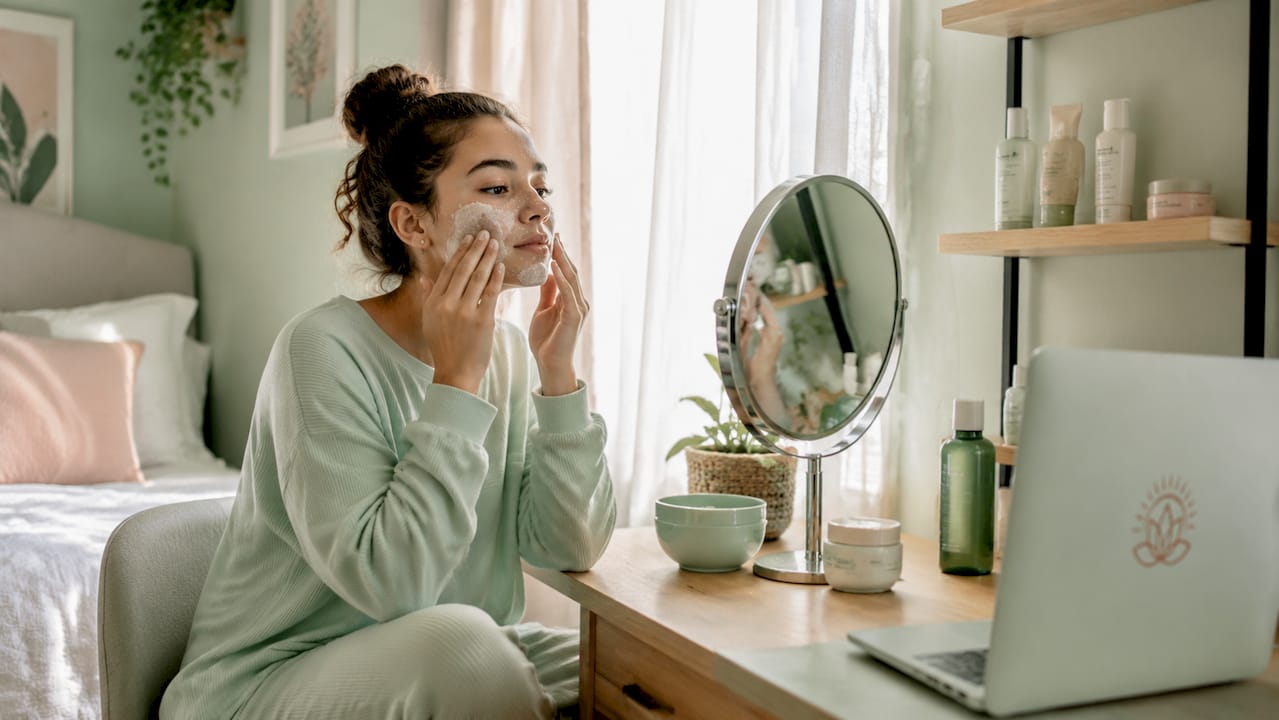
TL;DR:
- A teen skincare routine consists of three simple steps: cleansing, moisturizing, and sun protection, starting as early as age 11 or 12. Introducing active acne treatments should be gradual, beginning with one ingredient and allowing 8 to 12 weeks for results, while avoiding multiple actives at once. Consistent habits like proper cleansing, hydration, and sun protection significantly support healthy adolescent skin development.
A teen skincare routine checklist is defined as the ordered set of daily steps, products, and active ingredients that protect and maintain adolescent skin health. The three-step foundation of a gentle cleanser, lightweight moisturizer, and daily SPF 30+ broad-spectrum sunscreen covers 90% of teen skincare needs and can begin as early as age 11–12. Acne affects the majority of teenagers at some point, making it the most common reason parents seek a structured daily skincare routine for teens. Dermatologists and skin health professionals at Lumina Skin Sanctuary in Fort Myers, Florida, consistently confirm that simplicity and consistency outperform complicated, product-heavy regimens every time.
1. What is the teen skincare routine checklist?
The standard daily skincare routine for teens follows three core steps: cleanse, moisturize, and protect. These steps form the backbone of every evidence-based teen skin care guide, regardless of skin type or concern.
Morning routine:
- Gentle, pH-balanced cleanser
- Lightweight, non-comedogenic moisturizer
- Broad-spectrum SPF 30+ sunscreen
Evening routine:
- Gentle cleanser (double cleanse only if wearing sunscreen or makeup)
- Lightweight moisturizer
- Acne treatment (if needed, applied before moisturizer)
These three steps address barrier health, hydration, and UV protection. Aggressive routines and anti-aging products are harmful for teen skin and should be avoided entirely. Teens do not need toners, essences, eye creams, or serums to start. A simple skincare routine built on these basics is the most effective approach for adolescent skin.
Pro Tip: In the morning, apply sunscreen as the last step after moisturizer. In the evening, skip sunscreen and focus on cleansing and repair.
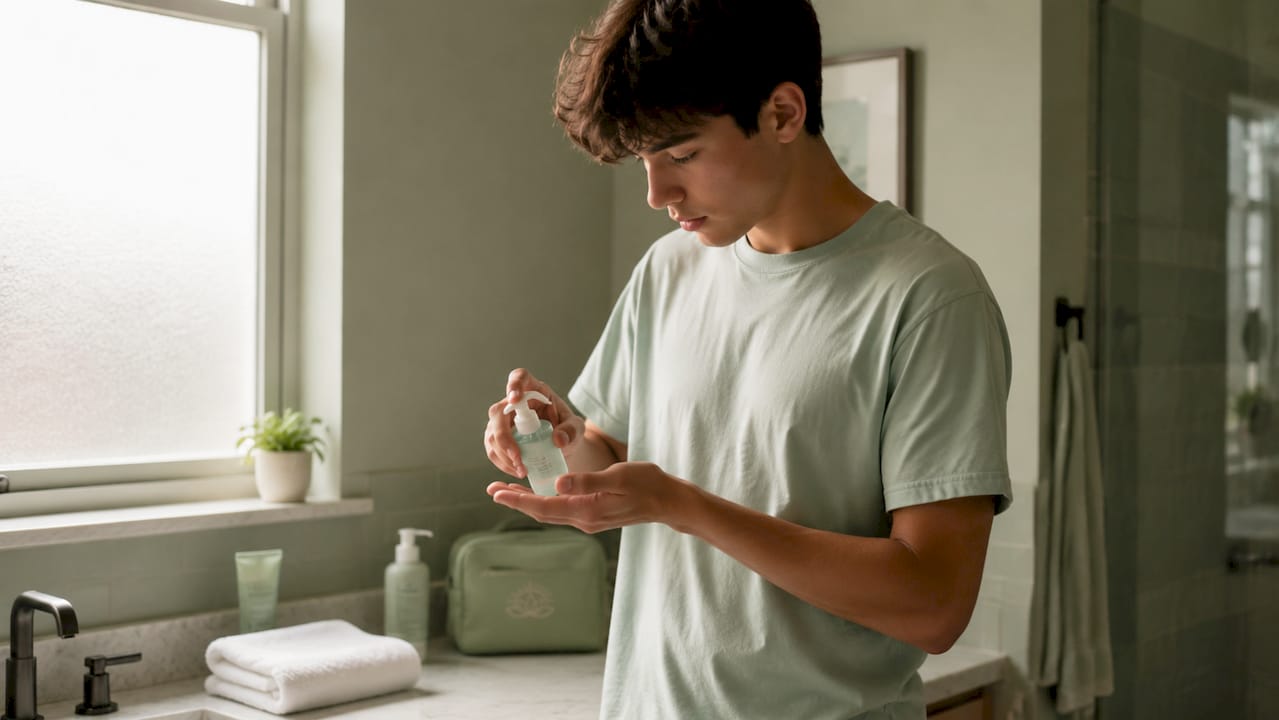
2. How to choose the right cleanser for teen skin
Cleansers are the most important product in any teen skincare routine. The wrong cleanser strips the skin barrier, triggers excess oil production, and worsens breakouts.
Choose a gentle, sulfate-free, pH-balanced cleanser. Gel cleansers work well for oily and acne-prone skin. Cream or milk cleansers suit dry or sensitive skin. Avoid bar soaps, scrubbing beads, and anything labeled “deep clean” or “pore-stripping,” as these disrupt the skin barrier.
Teens should wash their face twice daily: once in the morning and once at night. Over-cleansing, meaning washing more than twice a day, damages the moisture barrier and increases irritation. Fort Myers parents should note that humidity and sweat from outdoor activities can increase the need for a gentle post-workout rinse, but a full cleanse twice daily remains the standard.
3. Why moisturizer matters even for oily teen skin
Oily skin still needs moisture. Skipping moisturizer causes the skin to overproduce oil to compensate, which worsens acne and shine.
Choose a lightweight, oil-free, non-comedogenic moisturizer. Ingredients like ceramides and hyaluronic acid support the skin barrier without clogging pores. Apply moisturizer twice daily, morning and night, after cleansing. Teens in Fort Myers deal with year-round heat and humidity, which can make heavier creams feel uncomfortable. A gel-cream or water-based formula works best in this climate.
Ceramide moisturizers provide barrier support that is especially valuable for teens using acne treatments, which can cause dryness and irritation. Moisturizer is not optional when actives are in the routine.
4. How to introduce acne treatments safely
Introducing acne treatments requires patience and a careful, one-at-a-time approach. Dermatological consensus recommends starting with one active ingredient, such as benzoyl peroxide 2.5% or adapalene 0.1%, applied every other night for the first two weeks.
Follow this step-by-step process:
- Start with the three-step foundation for at least two weeks before adding any active ingredient.
- Choose one active: benzoyl peroxide 2.5% for surface bacteria, or adapalene 0.1% for clogged pores and inflammation.
- Apply every other night for two weeks. Watch for redness, peeling, or irritation.
- If tolerated, move to nightly application.
- Wait 8–12 weeks before evaluating whether the treatment is working.
- If no improvement after three months of consistent use, consult a dermatologist.
Introducing multiple actives at once damages the moisture barrier and worsens acne. The skin barrier in teens is still developing, and less is more.
Pro Tip: A purge phase, where breakouts temporarily increase, is normal during the first 2–4 weeks of using adapalene or benzoyl peroxide. This is not a reason to stop. Quitting too early is the most common cause of treatment failure.
5. What skincare mistakes should parents help teens avoid?
Several common habits undermine teen skin health and make acne worse. Parents play a direct role in helping teens recognize and correct these patterns.
- Over-cleansing: Washing more than twice daily strips the skin barrier and triggers more oil production.
- Using harsh physical scrubs: Scrubbing with rough exfoliants causes micro-tears and spreads bacteria. Avoid them entirely for acne-prone skin.
- Picking or popping pimples: This pushes bacteria deeper, causes scarring, and prolongs healing time.
- Skipping sunscreen: Daily SPF 30+ prevents UV damage, skin cancer risk, and darkening of post-acne marks. Skipping it undoes acne treatment progress.
- Using anti-aging products prematurely: Retinol, high-percentage acids, and firming serums are not appropriate for most teens. They cause irritation and barrier damage without benefit.
- Chasing social media trends: Layering multiple new products at once makes it impossible to identify what is helping or hurting.
Pro Tip: Encourage your teen to stick with the same three products for at least four weeks before adding or changing anything. Consistency beats perfection.
Parents who help their teens build clean, safe habits early set the foundation for healthy skin long into adulthood.
6. How lifestyle habits support a healthy teen skincare routine
Topical products alone do not control teen acne. Daily habits have a direct impact on skin condition and breakout frequency.
- Hydration: Drinking enough water supports skin cell turnover and reduces dullness. Dehydration makes skin look flat and can worsen dryness from acne treatments.
- Sleep: Skin repairs itself during sleep. Teens who consistently get 8–9 hours show fewer stress-related breakouts and faster healing.
- Stress management: Hormonal acne flares are directly linked to stress. Regular physical activity, adequate rest, and reduced screen time all lower cortisol levels that trigger breakouts.
- Clean surfaces: Phones, pillowcases, and towels transfer bacteria to the face. Wash pillowcases at least once a week and clean phone screens daily.
- Post-workout cleansing: Sweat left on the skin clogs pores. A gentle rinse or cleanse after exercise prevents workout-related breakouts, which are especially common in Fort Myers due to the heat.
Consistent, simple habits reduce anxiety around acne management and improve both skin and confidence over time. The psychological benefit of a predictable routine is real and measurable.
7. What ingredients are safe and recommended for teen skin?
Evidence-based ingredients are the standard for teen skincare. Parents should focus on what is proven, not what is trending.
| Ingredient | Benefit | Concentration | Age Suitability |
|---|---|---|---|
| Ceramides | Barrier repair and hydration | No set limit | All teens, 11+ |
| Niacinamide | Oil control, pore appearance | 2–5% | All teens, 11+ |
| Salicylic acid | Unclogs pores, reduces blackheads | 1–2% | 13+ with acne |
| Benzoyl peroxide | Kills acne-causing bacteria | 2.5% | 13+ with acne |
| Adapalene | Reduces inflammation, clears pores | 0.1% | 13+ with acne |
| Retinol | Anti-aging, cell turnover | Any | 15+ only, with guidance |
| High-percentage AHAs | Exfoliation | Above 5% | Adults only |
Niacinamide and ceramides are the safest starting ingredients for teens. They support barrier health and oil control without irritation. Serums are optional. If a teen wants to add a serum, niacinamide at 2–5% is the safest choice.
Retinol and high-percentage acids belong in adult routines. Introducing them too early causes barrier damage, sensitivity, and rebound breakouts. Parents should check product labels carefully and avoid anything marketed as “anti-aging” for their teen’s routine.
Key takeaways
A consistent three-step routine of gentle cleansing, non-comedogenic moisturizing, and daily SPF 30+ covers the core needs of teen skin, with acne actives added one at a time only when needed.
| Point | Details |
|---|---|
| Start with three steps | Cleanser, moisturizer, and SPF 30+ cover 90% of teen skincare needs from age 11 onward. |
| Add actives one at a time | Introduce benzoyl peroxide 2.5% or adapalene 0.1% every other night; never stack multiple actives. |
| Allow 8–12 weeks | Acne treatments require consistent use for 8–12 weeks before results can be fairly assessed. |
| Avoid anti-aging products | Retinol and high-percentage acids are not appropriate for most teens and damage the developing skin barrier. |
| Lifestyle habits matter | Sleep, hydration, clean pillowcases, and post-workout cleansing directly affect breakout frequency. |
What I have learned from watching teens build real skincare habits
By Kira Tia
The biggest mistake I see parents make is buying their teen a full skincare “system” all at once. It feels thorough. It looks organized. And it almost always backfires.
Teen skin is reactive. When you introduce five new products in a week, you have no way of knowing which one caused the rash, the purge, or the sudden dryness. You end up scrapping everything and starting over, which is exactly what you were trying to avoid.
What actually works is boring. One cleanser. One moisturizer. One sunscreen. Four weeks of nothing else. Then, if acne is present, one active ingredient introduced slowly. That is the whole plan. Parents who follow this approach consistently report better outcomes than those who chase the latest ingredient or social media routine.
The other thing I want parents to understand is that the purge phase is real and it is not a sign of failure. When adapalene starts working, it pushes congestion to the surface before clearing it. Teens who quit during this phase never see the results. Staying the course through weeks two and three is where the real improvement begins.
Social media has made teen skincare anxiety worse, not better. Teens are watching adults use 10-step routines with prescription-strength actives and assuming that is the standard. It is not. A simple morning routine that takes three minutes is more effective than a complicated one that gets skipped half the time.
Encourage your teen to think of skincare as maintenance, not correction. The goal is a healthy barrier, not perfect skin overnight.
— Kira Tia
Lumina Skin Sanctuary’s approach to teen skin health in Fort Myers
Lumina Skin Sanctuary in Fort Myers, Florida, works with parents and teens to build routines that match real skin needs, not trends. The Fort Myers climate adds specific challenges: year-round UV exposure, humidity-driven breakouts, and sweat that clogs pores faster than in cooler climates. Generic routines do not account for that.

Lumina’s skincare collection includes gentle, evidence-based products suited for teen skin at every stage, from the basic three-step foundation to targeted acne support. For teens with persistent breakouts or skin concerns that do not respond to over-the-counter options, Lumina offers personalized consultations and professional-grade facial treatments designed to address the root cause, not just the surface. Parents in Fort Myers can book a consultation to get a clear, practical plan for their teen’s specific skin type and concerns.
FAQ
What are the three basic steps in a teen skincare routine?
The three steps are gentle cleansing, lightweight moisturizing, and daily SPF 30+ sunscreen. These steps cover 90% of teen skincare needs and can begin as early as age 11–12.
When should a teen start using acne treatments?
Acne treatments like benzoyl peroxide 2.5% or adapalene 0.1% are appropriate around age 13 when acne appears. Introduce one active at a time, every other night, and allow 8–12 weeks to assess results.
Is it normal for acne to get worse when starting a new treatment?
Yes. A purge phase lasting 2–4 weeks is normal when starting adapalene or similar actives. Stopping too early is the most common reason treatments fail.
Can teens use anti-aging skincare products?
Retinol and high-percentage acids are not recommended for most teens. They cause irritation and barrier damage without meaningful benefit for adolescent skin. Retinoids should not be introduced before age 15 and only with professional guidance.
How often should teens wash their face?
Teens should cleanse twice daily, morning and night. Over-cleansing strips the skin barrier and increases oil production, which worsens breakouts rather than reducing them.


