
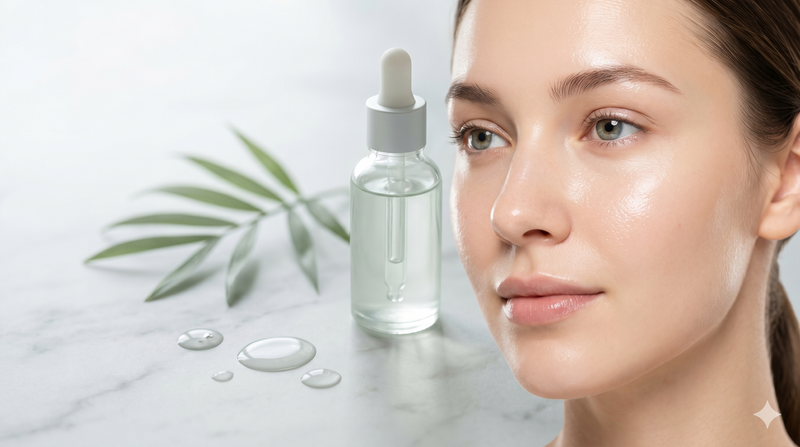


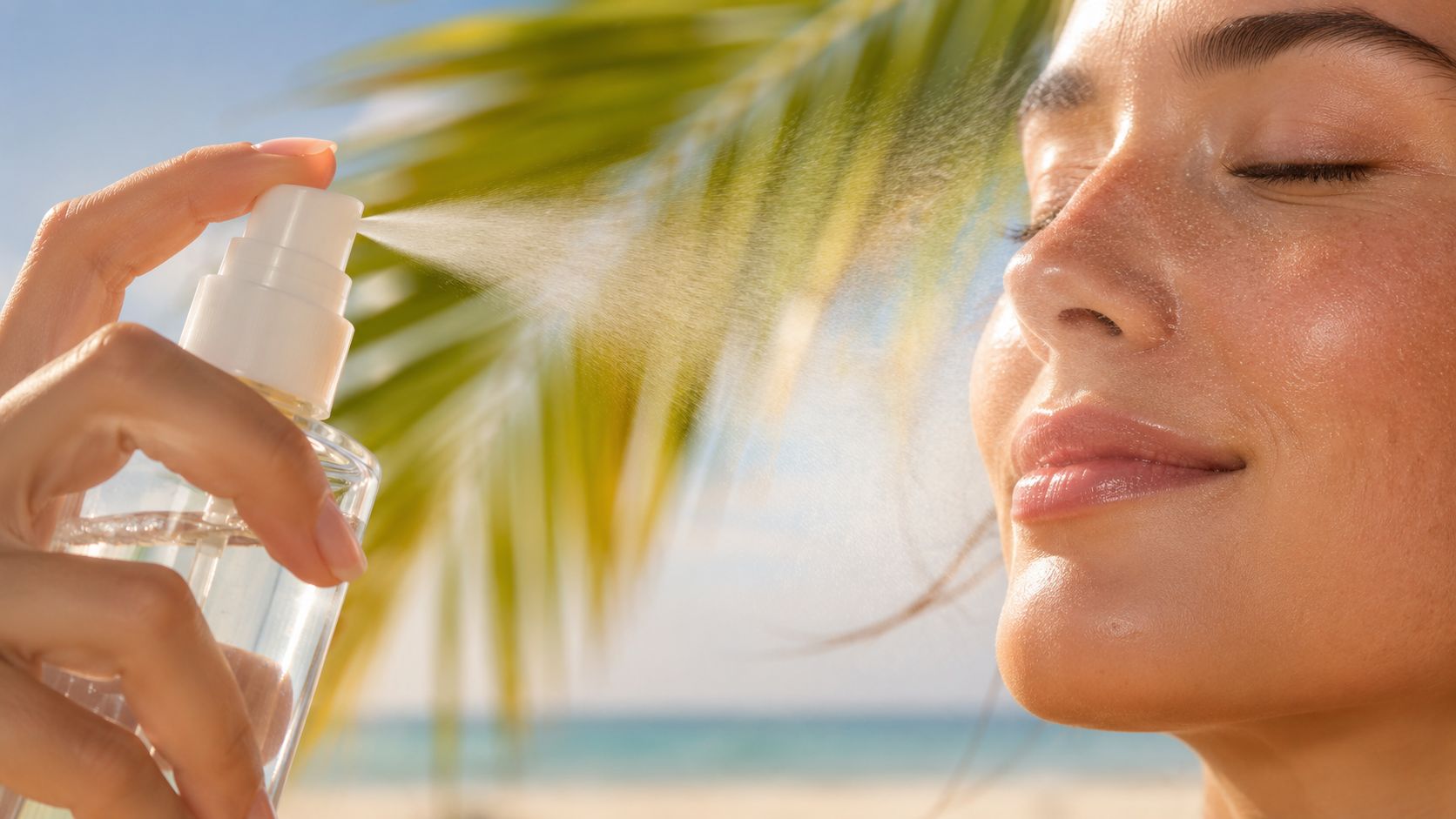
You step out of your car in Fort Myers, walk through heat that feels almost wet, then spend the next few hours under aggressive air conditioning. By lunchtime, your skin can feel shiny on the surface and tight underneath. That combination confuses a lot of people. They assume oil means hydration, or they keep reaching for heavier creams that feel suffocating by midday.
In my treatment room, this is one of the most common Florida skin patterns I see. Clients tell me their face feels greasy outside, dry indoors, reactive after sun, and somehow dull by evening. A good facial mist can help, but only if it's a true hydrating spray and not just a bottle that leaves water sitting on the skin.
That's why the best hydrating facial spray matters more in Southwest Florida than generic skincare advice usually admits. It's not a cute extra step here. It's a practical tool for dealing with heat, humidity, sun exposure, salt air, and constant transitions between outdoor moisture and indoor dryness.
Table of Contents
- Your Skin's Thirst in the Florida Climate
- What a Hydrating Spray Actually Does for Your Skin
- Decoding the Label for Florida-Ready Skin
- Your Daily Mist Routine for Maximum Hydration
- Choosing the Best Facial Spray for Your Skin Concerns
- The Clinic-to-Home Connection for Lasting Hydration
- Your Key to a Hydrated and Healthy Florida Glow
Your Skin's Thirst in the Florida Climate
Florida skin rarely lives in one condition for long. You may start the day walking the dog in sticky morning air, drive with the A/C pointed at your face, sit in recirculated office air, then head back outside into heat and UV exposure. Skin doesn't respond well to that whiplash.
In Fort Myers, I often see clients who mistake climate stress for a skin type. They tell me, “I thought I was oily,” but what they're really describing is dehydrated skin with surface shine. Others assume their tightness means they need a richer moisturizer, then end up feeling congested by afternoon. The climate is part of the diagnosis.
A facial spray helps because it's flexible. You can use it after cleansing, before a serum, after beach exposure, or during the day when indoor air starts pulling comfort out of your skin. Used correctly, it supports hydration without forcing you into a heavy routine that feels miserable in humid weather.
In Southwest Florida, skin often needs more water support and better barrier support, not just more product.
That shift in routine is part of a larger trend. The global Face Mists market is projected from USD 1,156.85 million in 2026 to USD 2,064.39 million by 2035, with a 6.6% CAGR, reflecting growing demand for convenient hydration products, including in climates like Southwest Florida, according to Face Mists market projections.
Hydration concerns also don't stop at the face. If you're trying to think more broadly about comfort and moisture balance in intimate skin, this guide on ways to achieve vaginal wellness offers a useful perspective on hydration as a whole-body issue.
For a broader local routine, I also recommend reading this Florida humidity skincare guide, especially if your products seem to work in other states but not here.
What a Hydrating Spray Actually Does for Your Skin
A real hydrating spray does more than make your face feel cool for a minute. It helps move water to the skin, settle irritation, and improve how the next steps in your routine perform.

Why wet skin is not the same as hydrated skin
Think of a houseplant. Splashing a little water on the leaves may perk it up briefly. Watering the roots is what supports it. Skin works in a similar way.
If a spray just leaves water on the surface, you'll get a refreshing moment. If the formula includes ingredients that attract water and support the skin barrier, that's when you move from “fresh” to “hydrated.” The difference matters in Florida, where evaporation and heat can make a weak mist feel nice for a minute and then leave skin wanting more.
A clinical study on high-quality face mists found that 86% of participants reported their skin looked and felt instantly hydrated after one application, and 85% said their skin felt soothed and calmed, according to the clinical face mist evidence summary.
What happens after a well-formulated mist lands on skin
When a mist is formulated well, it can do a few jobs at once:
- Add water to thirsty skin: This is the immediate relief people notice first.
- Support comfort: A good mist can help calm that hot, tight, overexposed feeling after sun or indoor air.
- Help layering: When applied at the right point in your routine, it can improve how serums and moisturizers spread and sit.
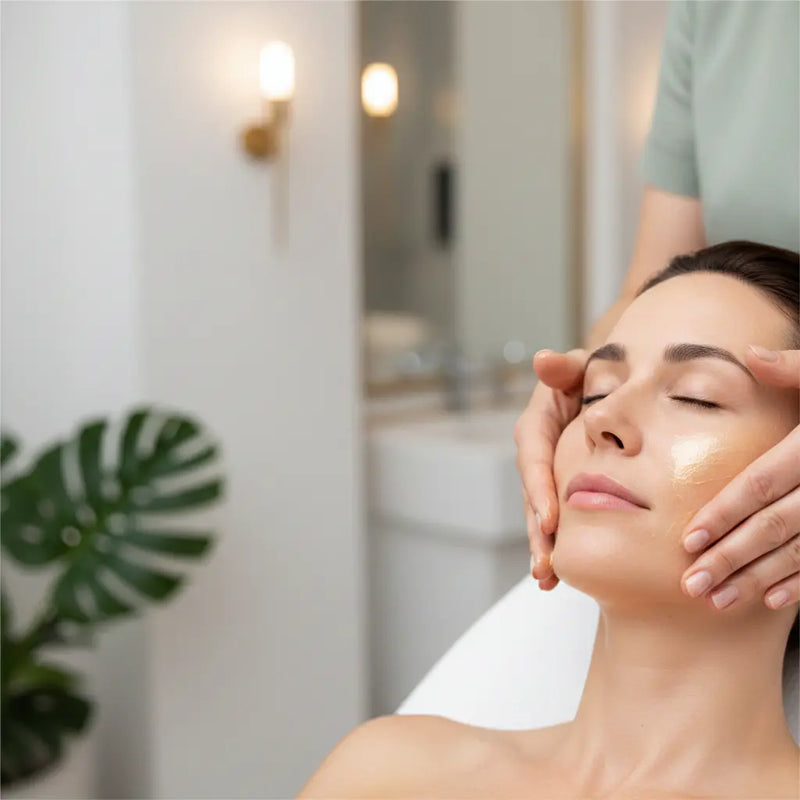
This is also why treatment sequencing matters in the treatment room. In The Express Hydration Facial and Polish Treatment, the skin is cleansed, exfoliated, masked, then finished with a pressurized spray atomizer using a pure hyaluronic acid mist followed by a ceramide barrier-supportive repair cream and SPF 50+ protection. That order is practical, not decorative. Freshly exfoliated skin takes hydration more effectively when the barrier is supported right after.
Practical rule: A hydrating spray should fit into a moisture strategy. It shouldn't be the entire strategy.
A mist isn't a replacement for moisturizer or sunscreen. It's a bridge step that can make both work better and feel better, especially when Florida weather keeps pushing your skin in opposite directions.
Decoding the Label for Florida-Ready Skin
If you want the best hydrating facial spray for Florida, start with the label. Marketing language won't tell you enough. Ingredient structure will.

What to look for first
In humid climates, I usually steer people toward formulas that feel light but still do real work. That means humectants and barrier-supportive ingredients, not just perfumed water.
A clinically effective hydrating facial spray should contain named humectant actives such as 3% Hydroviton®, which has been shown to provide hydration for up to 12 hours, and it should be alcohol-free, fragrance-free, and within a skin-friendly pH range of 5 to 5.5, according to this guide to hydrating mist ingredients that work.
When you scan a label, these categories are useful:
| What helps | Why it matters in Florida |
|---|---|
| Humectants like hyaluronic acid, glycerin, and sodium PCA | They draw water toward the skin without forcing a heavy finish |
| Barrier-support ingredients such as ceramides or niacinamide | They help reduce the tight, depleted feeling that often shows up after A/C and sun |
| Aloe or other calming ingredients | Helpful when skin feels warm, reactive, or overexposed |
The goal isn't to build the longest ingredient list. It's to find a formula that gives water to the skin and helps keep that hydration from disappearing too quickly.
What to be careful with in heat and sun
Florida weather changes how a formula feels. Ingredients that seem elegant in a cooler climate can turn irritating, sticky, or pore-clogging here.
Watch for these common issues:
- Drying alcohols: They can give an instant cooling sensation, but many people with already-dehydrated skin feel tighter later.
- Heavy occlusive oils: In high humidity, these can feel suffocating on acne-prone or congestion-prone skin.
- Fragrance and essential-oil-heavy blends: If your skin already flushes, stings, or reacts after sun exposure, a strongly fragranced mist usually doesn't help.
- Water-first formulas with no support system: If there's nothing in the formula to bind moisture or support the barrier, the spray may feel refreshing but perform weakly.
That's where local skin judgment matters. A mist that sounds luxurious on the shelf can become a problem in a hot car, on sweaty skin, or under sunscreen and makeup.
For a deeper breakdown of how to compare formulas, this guide to choosing hydrating facial products is a good place to slow down and read labels more critically.
If a mist smells strongly botanical, gives a big alcohol flash, or leaves your face sticky in five minutes, it's probably not the right Florida formula for you.
Your Daily Mist Routine for Maximum Hydration
The best hydrating facial spray won't help much if you use it at the wrong time or in the wrong way. Technique changes results.

The timing that makes a mist work better
It's common to wait until skin already feels uncomfortable. That's fine for a quick refresh, but better results come from placing the mist where it supports the rest of your routine.
A simple Florida-friendly pattern looks like this:
- After cleansing: Use the mist on clean skin, while your face is no longer dripping but not fully dried out.
- Before serums: This gives hydrating and treatment products a better surface to spread across.
- Before moisturizer: Lock the water phase in with a cream or lotion suited to your skin type.
- Midday over makeup if needed: Use a light amount when indoor air or sun exposure leaves your face feeling drawn.
This matters most for people who say, “My skin feels fine right after skincare, then looks tired by noon.” Usually the issue isn't that they need more products. It's that their water layer isn't being supported well.
How to mist without sabotaging absorption
Application technique is where many people accidentally undercut their own routine. The most effective method is to spray into the air and let the particles fall onto the face, because direct spraying can create larger droplets that interfere with absorption and may even dry out the skin, according to this demonstration on hydrating mist application.
That means no aggressive close-range soaking. You want a fine veil, not a face full of runoff.
Use these quick adjustments:
- Mist from a sensible distance: If the spray lands in large wet spots, it's too concentrated.
- Apply to clean skin first: A mist over sweat, oil, and sunscreen buildup won't perform the same way.
- Follow with a sealing step: If your skin is dry or A/C-stressed, don't leave the hydration unsupported.
- Choose lighter formulas for oily skin: In Florida humidity, weightless matters.
A short visual demo can help if you're trying to fix your routine timing or layering:
One more practical note. Don't treat a mist like a substitute for reapplying sunscreen. If you're outdoors, a hydrating spray can improve comfort, but UV protection still needs its own dedicated step.
Choosing the Best Facial Spray for Your Skin Concerns
The right spray for Florida isn't always the one with the prettiest packaging or the broadest claims. It's the one that matches how your skin behaves in heat, sweat, sun, and indoor cooling.
A key problem with generic advice is that it treats all mists as if they perform the same way everywhere. They don't. A 2025 study found that 68% of users in humid climates experienced reduced barrier support from simple water-based mists after 30 minutes, which is why I'm cautious with bare-bones formulas in Southwest Florida conditions, as noted in this discussion of hydrating mists in humid climates.
If your skin gets oily and congested
This skin type often gets mismanaged. People see oil and stop hydrating, then their skin gets hotter, tighter, and more reactive.
Look for:
- Light, non-comedogenic textures
- Humectant-focused formulas
- Low residue finishes that don't sit heavily under SPF
Skip mists that leave a film you can feel. In high humidity, that film tends to mix with sweat, sunscreen, and sebum. By late afternoon, pores look more obvious and makeup starts shifting.
If your skin feels dry, hot, or sensitized
This is common after beach days, long drives with the A/C running, or periods of over-exfoliation. These clients usually need comfort as much as hydration.
Better choices usually include:
- Barrier-support ingredients
- Fragrance-free formulas
- Calming components that don't sting on warm skin
“If your mist burns, smells intensely floral, or leaves your face tighter after ten minutes, stop using it.”
That reaction isn't your skin “adjusting.” It's information.
If you want value without wasting money
Price doesn't guarantee performance. Some affordable mists are useful. Some expensive ones are mostly an experience product.
I usually tell clients to judge a spray by four things:
| Question | Good sign | Warning sign |
|---|---|---|
| How does it land? | Fine, even veil | Large droplets |
| How does it feel after a few minutes? | Comfortable, balanced | Tight, sticky, or greasy |
| Does it layer well under skincare or makeup? | Sits cleanly | Pills or turns heavy |
| Does your skin stay comfortable? | Hydration feels supported | Relief fades quickly |
If you're comparing lower-cost options, a guide to budget-friendly facial sprays can be useful for seeing where you may be paying for formula versus branding.
The best hydrating facial spray for your skin is rarely the most dramatic one. It's the one you can use consistently in Florida without triggering congestion, irritation, or that strange tight-and-greasy cycle.
The Clinic-to-Home Connection for Lasting Hydration
At-home mists work better when the skin is prepared well. That's the part many people miss.
Why professional prep changes home results
If the skin is covered in compacted dead cells, oil, or residual congestion, even a nice mist won't land the same way. In clinic, we focus on clearing what's blocking absorption first, then delivering hydration in a more controlled sequence.

A good example is a vacuum-and-atomizer approach. First, pores are cleared more thoroughly. Then a fine misted serum can be applied onto skin that's more receptive. That's very different from spraying over buildup at home and hoping for the best.
Professional facials also help identify the underlying issue. Many clients come in asking for “more hydration” when what they need is a combination of gentle exfoliation, barrier repair, and less irritating product layering.
How to keep that post-facial comfort going
The home goal isn't to recreate every treatment step. It's to preserve the benefits.
That usually means:
- Use a mist after cleansing, not randomly over residue all day
- Pair hydration with a barrier-supportive moisturizer
- Keep sunscreen daily, especially after any exfoliating service
- Avoid overcomplicating the routine if your skin is reactive
When clients want to extend that fresh, comfortable post-treatment feel, I point them toward consistent home maintenance rather than constant product switching. This guide on how to maintain facial results at home explains that relationship well.
A clinic treatment can reset the skin. Your home mist helps maintain that reset between appointments.
Your Key to a Hydrated and Healthy Florida Glow
The best hydrating facial spray isn't the one that feels refreshing for a few seconds. It's the one that fits Florida conditions, supports the barrier, layers well with the rest of your routine, and doesn't leave you greasy, sticky, or tighter later.
That means looking past the word “mist” and judging the actual formula. Humectants matter. Barrier support matters. Fragrance, drying alcohol, and heavy residue matter too. So does technique. A soft cloud application on clean skin works better than blasting your face with large droplets and hoping for hydration.
Florida skin also needs context. Heat, humidity, sun exposure, and indoor A/C can make skin feel oily and dehydrated at the same time. That doesn't mean your skin is impossible. It means your routine has to match your environment.
If you've been using a facial spray and still feel dry, congested, or inconsistent, the answer usually isn't more spraying. It's choosing a smarter formula and using it in the right place in your routine. That's how you get the comfortable, healthy Florida glow people are after.
If your skin feels tight indoors, shiny outdoors, or irritated after sun and humidity, Lumina Skin Sanctuary offers licensed esthetician care in Fort Myers with climate-aware facial treatments and simple home-routine guidance suited for Southwest Florida skin.


