


If you are comparing laser skin resurfacing with a professional facial, you are probably not looking for a generic “glow.” You want to know which option is most likely to help with your actual goal, whether that is smoother texture, brighter tone, fewer breakouts, softer fine lines, or more resilient skin in Southwest Florida’s sun and humidity.
The short answer: laser skin resurfacing is usually a medical, correction-focused treatment for deeper texture, scars, wrinkles, and sun damage, while facials are customizable, lower-downtime treatments for maintenance, hydration, congestion, barrier support, and gradual visible improvement. Both can be valuable, but they solve different levels of skin concern.
At Lumina Skin Sanctuary in Babcock Ranch, we take a skin-first approach to goals, timing, sensitivity, lifestyle, and aftercare. That matters because Florida skin is exposed to year-round UV, heat, humidity, sweat, and air-conditioning, all of which influence how your skin responds to resurfacing, exfoliation, and professional treatments.

What laser skin resurfacing actually does
Laser skin resurfacing uses concentrated light energy to improve the skin’s surface and, depending on the device and depth, stimulate changes below the surface. Some lasers remove microscopic layers of damaged skin, while others heat the dermis without fully removing the top layer. This is why you may hear terms like ablative, non-ablative, and fractional laser resurfacing.
According to the American Society for Dermatologic Surgery, laser resurfacing may be used to improve concerns such as wrinkles, sun-damaged skin, acne scars, and uneven tone or texture. The exact result depends on the laser type, treatment depth, provider skill, skin tone, pre-care, and post-care.
Because laser resurfacing is more intensive than a facial, it typically belongs in a medical aesthetics or dermatology setting with appropriately trained providers. It can offer more dramatic correction for certain concerns, but it also comes with more planning. Redness, peeling, swelling, pigment changes, infection risk, and strict sun avoidance can all be part of the conversation, especially in a high-UV area like Babcock Ranch.
What a professional facial does differently
A professional facial is not simply “pampering,” especially when it is customized by a trained esthetician. A well-designed facial can support the skin barrier, remove buildup, improve hydration, soften rough texture, calm visible redness, clear congestion, and help your home routine work more effectively.
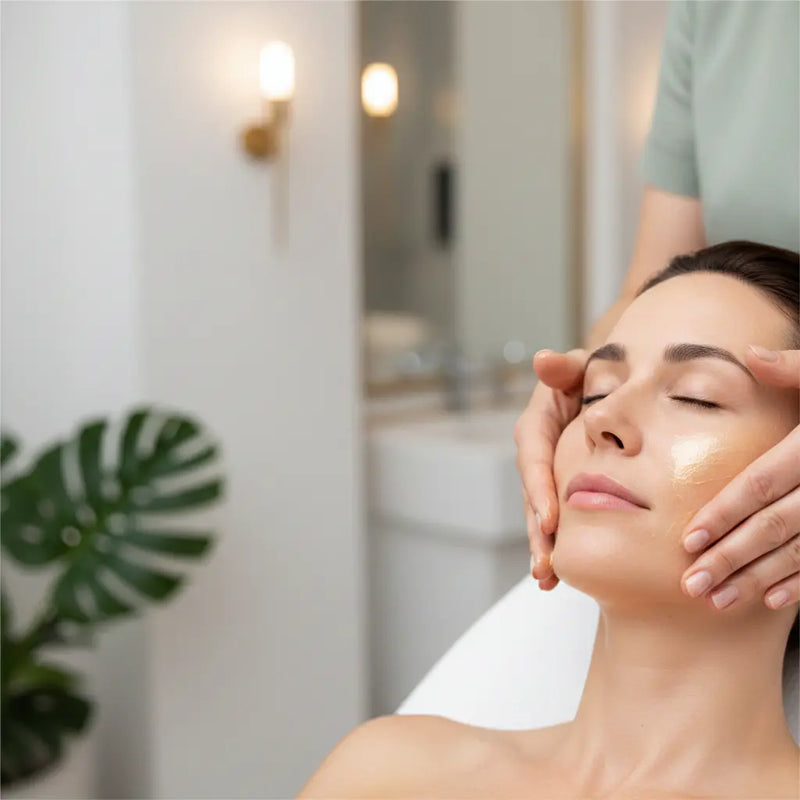
Facials may include cleansing, exfoliation, massage, extractions when appropriate, masks, targeted serums, LED, microcurrent, dermaplaning, or gentle peels depending on the service and your skin’s tolerance. Unlike laser resurfacing, facials are usually less invasive and have little to no downtime when properly matched to your skin.
This makes facials especially useful for people who want:
- A healthy glow before an event
- Help with clogged pores or dullness
- Hydration after sun, heat, or air-conditioning exposure
- A gentler path for sensitive or reactive skin
- Ongoing maintenance between more corrective treatments
- Professional guidance on skin care products and routines
If you are unsure what type of facial fits your skin, Lumina’s guide to facial services and how to choose the right one is a helpful next read.
Laser skin resurfacing vs facial: quick comparison
The best choice depends on what you want to change and how much downtime you can accept. Here is a practical side-by-side view.
| Goal or factor | Laser skin resurfacing may fit when | A facial may fit when |
|---|---|---|
| Texture | You have deeper acne scars, etched lines, or significant roughness | You have mild roughness, buildup, or uneven surface texture |
| Pigmentation | You have more stubborn sun damage or pigment concerns requiring medical-level correction | You have dullness, mild discoloration, or want brightening support |
| Fine lines | Lines are more visible at rest or linked to sun damage | Lines look worse when skin is dehydrated or dull |
| Acne and congestion | Scarring or post-acne texture is the main concern | Active congestion, blackheads, or routine support is the main concern |
| Downtime | You can commit to recovery, sun avoidance, and medical aftercare | You want minimal downtime and a faster return to normal activities |
| Sensitivity | You have medical clearance and a provider experienced with your skin type | You need a slower, barrier-first approach |
| Maintenance | You are planning a corrective series or periodic resurfacing | You want regular skin health support every 4 to 6 weeks |
Neither option is automatically “better.” The better treatment is the one that fits your skin’s current condition, your long-term goal, and your ability to follow aftercare.
When laser skin resurfacing is the stronger choice
Laser skin resurfacing may be worth exploring when your concern is deeper than surface dullness. For example, if acne scars cast shadows in certain lighting, if sun damage has created rough patches and visible pigment, or if fine lines remain noticeable even when your skin is hydrated, laser-level correction may be more appropriate than a standard facial.
Laser can be especially appealing for people who want collagen remodeling and more noticeable texture improvement. However, this is also why a careful consultation is so important. The provider should evaluate your skin tone, tendency toward hyperpigmentation, history of cold sores, medications, recent sun exposure, recent isotretinoin use, pregnancy status, and healing history.
In Florida, timing is a major factor. After laser resurfacing, your skin is more vulnerable to UV exposure. The American Academy of Dermatology recommends choosing a broad-spectrum sunscreen with SPF 30 or higher, but after resurfacing, sunscreen is only one part of protection. Hats, shade, limited outdoor heat exposure, and diligent reapplication become essential.
Laser may fit your goals if you are prepared for:
- A medical consultation before treatment
- Possible downtime that ranges from mild redness to more significant peeling, depending on treatment depth
- A pause on strong actives like retinoids and exfoliating acids when instructed
- Strict sun protection before and after treatment
- Multiple sessions or maintenance treatments for best results
If that sounds like more than you want right now, a professional facial plan may be the smarter place to begin.
When a facial is the better fit
A facial is often the better starting point when your skin needs balance, not aggressive correction. Many people assume they need laser because their skin looks tired, lined, uneven, or textured, but dehydration and barrier stress can make these concerns appear worse than they truly are.
In Babcock Ranch and surrounding Southwest Florida communities, the combination of sun, sweat, humidity, mineral-heavy water, and indoor air-conditioning can leave skin looking shiny on the surface but dehydrated underneath. A customized facial can help reset that imbalance by cleansing thoroughly, replenishing hydration, calming irritation, and supporting the barrier.
A facial may fit your goals if you want to improve:
- Dehydration and tightness
- Dullness or lack of radiance
- Mild congestion and blackheads
- Uneven texture from buildup
- Redness related to irritation or barrier stress
- Skin readiness before a special event
- Product absorption and routine consistency
Facials also give you something lasers do not always provide: ongoing observation. A skilled esthetician can track changes in your skin, adjust treatments seasonally, and help you avoid over-exfoliating or using too many actives at home. If you are already using retinoids, acids, vitamin C, acne products, or prescription topicals, this guidance can help prevent unnecessary irritation.
For a deeper look at choosing services by concern, see Lumina’s guide to professional skin care treatments.
The skin tone and pigmentation question
One of the most important differences between laser resurfacing and facials is pigment risk. Any treatment that creates heat or controlled injury can potentially trigger post-inflammatory hyperpigmentation, especially in skin that tans easily or has a history of dark marks after acne, bites, burns, or irritation.
This does not mean deeper skin tones cannot receive laser treatments. It means provider selection, device choice, settings, pre-treatment pigment control, and aftercare matter tremendously. A conservative, experienced approach is essential.
Facials can also cause pigmentation if they are too aggressive, especially when combined with sun exposure. Strong peels, harsh scrubs, overdone extractions, and inadequate sunscreen can all create setbacks. This is why “gentle” should not mean random, and “advanced” should not mean harsh. The right approach respects your skin’s biology.
Can you combine laser resurfacing and facials?
Yes, but timing matters. Facials and laser treatments can complement each other when they are planned thoughtfully.
Before laser resurfacing, a barrier-supportive facial plan may help calm dryness, improve hydration, and reduce unnecessary irritation. Skin that is already inflamed or compromised may not heal as predictably after a more intensive procedure. A pre-laser phase often focuses on gentle cleansing, hydration, pigment-supportive ingredients when appropriate, and consistent sunscreen use.
After laser resurfacing, you should follow the medical provider’s aftercare instructions first. Do not schedule a facial, peel, dermaplaning, waxing, or strong exfoliation until your provider clears your skin. Once healed, facials can help maintain smoothness, hydration, and radiance between corrective treatments.
A smart sequence often looks like this: stabilize the barrier, complete the corrective procedure if appropriate, heal fully, then maintain results with customized facials and home care.
How to choose based on your real goal
If you are stuck between laser skin resurfacing and a facial, start with the outcome you want most. A vague goal like “better skin” can lead to over-treatment or disappointment. A clear goal makes the decision easier.
Use this simple framework:
- If your main concern is glow, hydration, clogged pores, or mild texture, start with a facial. These concerns often improve with customized exfoliation, hydration, extractions, barrier support, and better home care.
- If your main concern is acne scarring, deeper wrinkles, or significant sun damage, consult a qualified laser provider. These concerns may need more intensive remodeling than a facial can provide.
- If your skin is sensitive, inflamed, or unpredictable, repair the barrier first. Jumping into aggressive treatments when your skin is reactive can make redness, dryness, and pigment worse.
- If you have an event soon, choose the lower-risk option. A gentle facial is usually easier to time before a wedding, vacation, photo session, or special occasion than a resurfacing treatment.
- If you spend a lot of time outdoors, plan around sun exposure. Laser resurfacing requires strict UV management, which can be challenging during Florida’s brightest months.
For many clients, the best first step is not choosing a device or treatment name. It is a professional skin assessment.
What to ask before booking laser skin resurfacing
If you are considering laser treatment, ask detailed questions before committing. A reputable provider should welcome them.
Ask about the type of laser, whether it is ablative or non-ablative, expected downtime, number of sessions, pigment risks for your skin tone, pre-care, post-care, and what complications to watch for. You should also ask who performs the treatment, what training they have, and whether the procedure is appropriate for your current medications and skin history.
Be cautious if a provider promises dramatic results with no downtime, minimizes sun protection, skips a medical history, or uses the same settings and protocol for everyone. Laser resurfacing is not one-size-fits-all.
What to ask before booking a facial
For a facial, the questions are different but still important. Ask whether the treatment will be customized, what exfoliation method will be used, whether extractions are appropriate for your skin, and how the service will be adjusted for sensitivity, acne, pigmentation, or recent sun exposure.
You should also share your current products, especially retinoids, exfoliating acids, acne treatments, prescription topicals, and recent peels or waxing. This helps your esthetician choose the safest path and avoid stacking too many active treatments at once.
At Lumina Skin Sanctuary, the goal is not to force your skin into a trend. It is to choose professional facial treatments, clinical-grade skin care, and holistic support that align with your skin’s needs and your real life in Babcock Ranch.
Florida aftercare matters no matter which you choose
Whether you choose a facial or laser skin resurfacing, your results depend heavily on what happens afterward. In Southwest Florida, post-treatment care needs to account for UV exposure, sweat, heat, humidity, and air-conditioning.
A strong aftercare plan usually includes gentle cleansing, barrier-supportive moisturizer, daily broad-spectrum sunscreen, and a temporary pause on unnecessary exfoliation. After more intensive treatments, you may also need to avoid pools, intense workouts, direct sun, and active ingredients until cleared.
Sunscreen is especially important because UV exposure can worsen redness, pigmentation, collagen breakdown, and uneven tone. If you are not sure your current SPF is enough for Florida conditions, Lumina’s guide to the best sunscreen for Florida can help you make a better choice.
Frequently Asked Questions
Is laser skin resurfacing better than a facial? Laser skin resurfacing is better for certain deeper concerns, such as acne scars, etched wrinkles, and significant sun damage. A facial is often better for hydration, congestion, glow, mild texture, and ongoing maintenance. The right choice depends on your goal, skin condition, downtime tolerance, and safety factors.
Can a facial give the same results as laser skin resurfacing? Not usually. Facials can noticeably improve radiance, hydration, smoothness, and clarity, but they do not remodel deeper scar tissue or wrinkles the same way certain lasers can. However, facials can help prepare and maintain the skin before and after more corrective treatments.
How much downtime should I expect? A gentle facial usually has little to no downtime, although mild redness can happen after extractions or exfoliation. Laser downtime varies widely depending on the laser type and intensity, from mild redness to several days or weeks of visible healing. Always ask your laser provider for a realistic recovery timeline.
Is laser skin resurfacing safe for all skin tones? Laser treatments can be used on many skin tones, but risk levels vary. Skin that tans easily or develops dark marks after irritation needs careful planning because heat and inflammation can trigger hyperpigmentation. Choose an experienced medical provider who regularly treats your skin tone.
Should I get a facial before laser resurfacing? A gentle, barrier-supportive facial may be helpful before laser if it is timed correctly and your laser provider approves. Avoid aggressive exfoliation, strong peels, or extractions too close to laser treatment unless your provider specifically recommends them.
Which option is best before a big event? If your event is soon, a customized facial is usually the safer choice because recovery is more predictable. Laser resurfacing should be planned well in advance, with enough time for redness, peeling, dryness, or pigment changes to resolve.
Is a chemical peel the same as laser skin resurfacing? No. Chemical peels use acids or enzymes to exfoliate and resurface the skin chemically, while lasers use light energy. Both can improve texture and tone, but they work differently and have different risks, downtime, and ideal candidates.
Ready to choose the right path for your skin?
If you are deciding between laser skin resurfacing and a facial, start with a personalized skin assessment rather than guessing. Your best plan may be a customized facial series, clinical-grade home care, chemical peel support, or a conversation with a qualified medical laser provider for deeper correction.
Lumina Skin Sanctuary offers customized facials, medical-grade skin care guidance, chemical peels, and holistic skin support in Babcock Ranch, Florida. If your goal is healthier, brighter, more resilient skin, visit Lumina Skin Sanctuary to begin with a thoughtful consultation and a plan designed around your skin, your lifestyle, and your long-term glow.


