


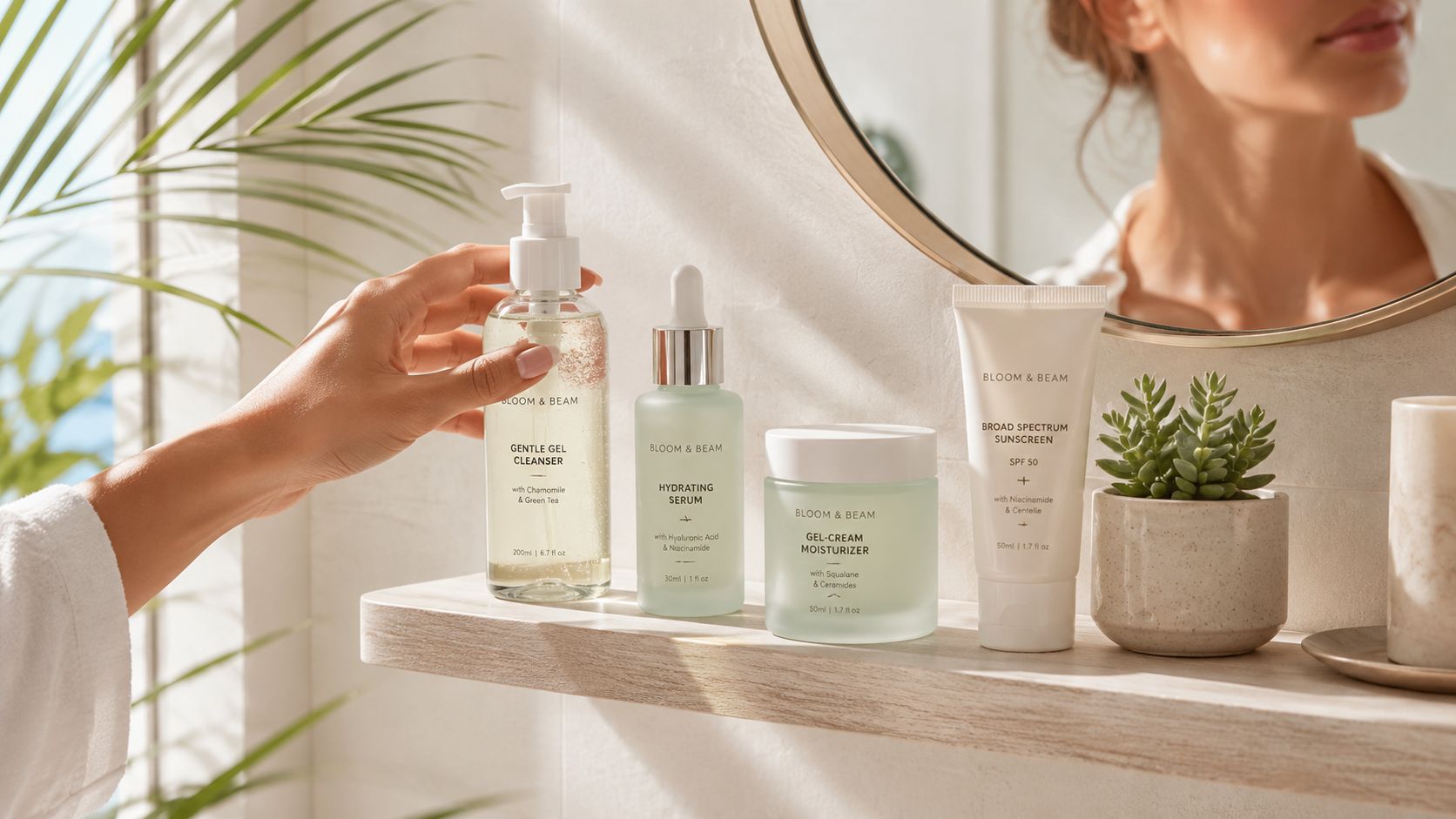
You're standing in the skincare aisle with a cleanser in one hand, a serum in the other, and about ten tabs open on your phone because every label promises something different. One says “hydrating.” Another says “purifying.” A third says “barrier support,” but your skin still feels greasy by noon and tight after washing.
That confusion gets worse in a place like Florida. Heat, sweat, sunscreen, salt air, and strong sun can make skin feel oily and dehydrated at the same time. Many people end up buying products for the wrong problem. They strip their skin because they think they're oily, or they pile on rich creams because they feel dry, when the underlying issue is dehydration, congestion, irritation, or too much sun exposure.
A good routine doesn't start with trends. It starts with a method. If you want to know how to choose skincare products without wasting money or upsetting your skin, think like an esthetician. Read your skin first. Read labels second. Keep your routine simple. Add professional help when your home care stops moving the needle.
Table of Contents
- Your Guide to Choosing Skincare That Actually Works
- First Understand Your Skin Type and Core Concerns
- How to Read a Skincare Label Like an Esthetician
- Building a Simple Routine for Florida's Climate
- How to Safely Introduce New Products to Your Skin
- When At-Home Care Is Not Enough
Your Guide to Choosing Skincare That Actually Works
Most skincare mistakes aren't caused by bad intentions. They happen because people shop by marketing language instead of skin behavior. “Clean,” “glow,” “anti-aging,” “pore refining,” and “medical grade” can all sound useful, but none of those terms matter if the formula doesn't fit your skin.
In treatment rooms, product selection starts with observation. How much oil is the skin producing. Is the barrier calm or irritated. Is the surface rough, congested, sun-exposed, reactive, or dehydrated from air conditioning and outdoor heat. That approach works much better than copying a routine from someone online who lives in a different climate and has different skin entirely.
Florida creates some very specific trade-offs. Heavy products can feel suffocating in humidity. Harsh foaming cleansers can make a sweaty face feel “clean” for a moment, then leave it reactive and overstripped. Rich night creams may sound comforting, but many people wake up congested if the texture is too occlusive for their skin and environment.
Good skincare should feel sustainable on your face at 8 a.m., 2 p.m., and after reapplying sunscreen. If it only feels good for five minutes, it's probably not the right fit.
What works is simpler than many realize. Choose products based on your real skin type, your current condition, and your daily environment. Then keep the routine tight enough that you'll consistently follow it. That's how to choose skincare products with less guesswork and better results.
First Understand Your Skin Type and Core Concerns
You cleanse after a humid Florida morning, your skin feels normal for an hour, then your T-zone turns shiny, your cheeks start to feel tight, and last week's “hydrating” cream has already left you with a few clogged pores. That mix of symptoms is exactly why product shopping gets confusing. Skin rarely fits into one neat label, especially in a climate with heat, sweat, sun exposure, air conditioning, and frequent sunscreen use.
Practitioners assess two things first. Your baseline skin type and your current skin condition. As noted earlier in guidance on how practitioners choose skincare products for different skin types, that distinction shapes which products are likely to help and which ones create new problems.

Start with a bare-face check
A simple at-home check gives useful clues. Cleanse with a gentle face wash, pat dry, and leave your skin product-free for a bit. Then look at how it behaves, not how you wish it behaved.
Ask yourself:
- Does your whole face get shiny fast? That usually points to oily skin.
- Do your cheeks feel tight, rough, or uncomfortable? That points more toward dry skin.
- Does your forehead and nose get oily while the outer face stays normal or dry? That suggests combination skin.
- Does your skin sting, flush, or react easily to new products? That suggests sensitivity.
- Does your skin look dull and feel tight, but still produce oil? That often means dehydration.
One caution here. Oily skin and hydrated skin are not the same thing. In Florida, I often see skin that is producing plenty of oil while still lacking water because of sun exposure, indoor cooling, over-cleansing, or acne products used too often.
Separate skin type from skin condition
Skin type is your usual pattern. Oily, dry, combination, or sensitive. Skin condition is what is happening right now, and it can change with season, travel, stress, breakouts, barrier damage, or time in the sun.
That difference matters in real product choices. An oily client with a healthy barrier may do well with a light gel moisturizer. An oily client with dehydration and irritation may need a gentler cleanser and more barrier support, even if they are still shiny by noon. A dry client may need richer support at night, but in a hot climate, that does not always mean the heaviest cream on the shelf.
A quick profile helps:
| Skin pattern | What it often needs |
|---|---|
| Oily and congested | Lightweight hydration, pore-focused cleansing, non-heavy textures |
| Dry and tight | Creamier cleansing, barrier support, more water-binding ingredients |
| Combination | Different textures for different areas, balanced cleansing |
| Sensitive | Fragrance-free, hypoallergenic formulas, slower product changes |
| Dehydrated | Water-focused hydration and less stripping, even if skin is oily |
Practical rule: Buy for your repeat pattern, not the single symptom bothering you today.
That is where many routines go off track. Someone sees shine and strips the skin. Someone feels tightness and buys a rich cream that is too occlusive for heat and humidity. Someone gets one breakout and starts three acne products at once. The better approach is to identify the pattern first, then choose the lightest effective product texture that your skin will tolerate and that you will use consistently.
If you want a clearer picture of what a professional evaluation includes, this guide to the skin consultation process explains what gets assessed and why.
For anyone dealing with dullness, rough texture, congestion, or uncertainty about where to start, Radiant Glow Clinic Grade Facial With Personalized Skin Consultation For All Skin Types is priced at $55 and includes a personalized consultation, deep cleansing, gentle exfoliation, extraction care when needed, plus moisturizer and broad-spectrum SPF. That kind of appointment can shorten the trial-and-error phase, especially if your home routine looks fine on paper but keeps failing in Florida weather.
How to Read a Skincare Label Like an Esthetician
You are standing in a Florida store aisle, holding two moisturizers that both promise hydration, glow, and smoother skin. One will sit well under sunscreen in heat and humidity. The other will feel heavy by noon, sting around the nose, or pill the second you layer SPF. The label usually tells you which is which.

Look at the top of the ingredient list first
Start with the first several ingredients. As noted in Real Simple's guide to choosing skincare products, ingredients are listed in descending order, so the top of the list gives you a quick read on what the formula is really built around.
For practical shopping, that means two things. If your skin reacts to fragrance, certain essential oils, or drying alcohols, and one of those shows up high on the list, skip it. If a product is marketed as hydrating but the formula is led by lightweight solvents and very little barrier support, set your expectations accordingly.
I also tell clients to compare the front claim to the back label. “Calming,” “brightening,” and “clean” are marketing words. Glycerin, ceramides, niacinamide, and hyaluronic acid are the words that tell you more.
Match ingredients to the job
A label gets easier to read once you sort ingredients by function:
- Humectants such as glycerin and hyaluronic acid help bind water to the skin. They are useful for skin that feels tight, looks dull, or gets dehydrated from sun and indoor air conditioning.
- Barrier-support ingredients such as ceramides help reduce that worn-down, easily irritated feeling. They matter if your skin stings after cleansing or gets reactive from using too many actives.
- Exfoliating acids such as alpha hydroxy acids can improve rough texture and fine lines, but they need to match your tolerance and your sun habits.
- Texture and vehicle ingredients matter too. In Florida, a good ingredient in a greasy base can still be the wrong pick for daytime wear.
That last point gets missed often. A product can be well-formulated and still be a poor fit for your climate. Many people here do better with gels, gel-creams, and fluid serums during the day, then use richer textures only when their skin has a clear need.
If you want help sorting ingredient claims from useful label details, this clean skincare products checklist and label guide gives a practical way to review what matters before you buy.
Professional treatments can help here because they let you feel the difference between hydration, exfoliation, and barrier repair on your own skin. For example, The Express Hydration Facial and Polish Treatment is priced at $75 and includes double cleansing, ultrasonic exfoliation, a hydration mask, a pure hyaluronic acid mist, ceramide barrier cream, and SPF 50+ protection. That is useful for someone who keeps buying “oil-control” products when the problem stems from dehydrated skin with surface congestion.
Before you buy anything expensive, it helps to watch how professionals evaluate labels and routines in real time.
A product earns a place in your routine when the ingredient list, texture, and purpose match your skin's actual behavior in heat, humidity, and sun exposure.
Use a broad-spectrum SPF of 30 or higher every day, especially in a high-sun environment. In practice, the best sunscreen is the one you will apply generously and reapply without fighting the texture.
Building a Simple Routine for Florida's Climate
A Florida routine has to survive sweat, sunscreen, humidity, and long sun exposure. If it feels too heavy, too complicated, or too irritating, it's unlikely to be followed. That's why the best routine for this climate is usually a short one.

A routine that holds up in heat and humidity
Use a core four-step structure:
-
Cleanse
Wash away sweat, oil, debris, and sunscreen residue without stripping your skin. In hot weather, many people do better with a gentle gel or foaming cleanser in the morning and a thorough cleanse at night. -
Treat
Use a serum or active that fits your main concern. Keep it focused. If your concern is dehydration, use hydrating support. If it's texture or fine lines, choose one treatment category and be consistent. -
Moisturize
Even oily skin usually needs moisture. The key in Florida is texture. Lightweight lotions and gel-creams often feel more comfortable than thick creams during the day. -
Protect
Finish with sunscreen every morning. If you spend time outside, reapply. In this climate, sunscreen isn't a bonus step. It's part of the routine itself.
What usually works better in Florida
The routine should reflect your environment, not just your skin type.
- For humid mornings: Lighter layers usually sit better under sunscreen and makeup.
- For air-conditioned days: Skin may still need hydration support even if it looks shiny.
- For outdoor lifestyles: Prioritize formulas you'll willingly reapply, not just ones that sound impressive.
- For acne-prone skin in heat: Avoid stacking too many exfoliating or drying steps just because you're breaking out.
A lot of people in Fort Myers, Babcock Ranch, and nearby areas do best when they stop chasing a ten-step routine and instead choose products they can wear comfortably every day. This Florida humidity skincare guide is useful if you want more climate-specific examples.
A simple routine also makes it easier to tell what's helping and what isn't. If your skin is calmer, less congested, and more comfortable by the end of the day, your routine is probably doing its job.
How to Safely Introduce New Products to Your Skin
You buy a new serum after a beach weekend, add it that night, then wake up unsure whether the tightness is sun exposure, over-exfoliation, or the product itself. I see this often in Florida. Heat, sweat, sunscreen, and sun exposure already give skin plenty to manage.
Start new products slowly so your skin has a fair chance to respond well, and so you can tell what is helping.
Patch test first
Test the product on a small area before applying it to your full face. The jawline, side of the neck, or behind the ear usually works well. Leave the rest of your routine alone for a few days while you watch that spot.
Look for:
- Redness or burning: The formula may be too strong for your skin right now.
- Itching, swelling, or small bumps: Stop using it.
- Clogged pores in the test area: The texture or ingredients may not suit your skin, especially in humid weather.
A patch test does not guarantee a product will be perfect, but it can catch obvious irritation before you create a full-face setback.
Add one product at a time
Use one new product for at least a week or two before adding another. With active products such as retinoids, exfoliating acids, or pigment-correcting serums, go even slower. Start a few nights per week instead of every day.
This matters more in a hot, high-sun climate. Skin that deals with frequent sweating, outdoor exposure, and daily sunscreen can become irritated faster when too many actives are layered at once. If your skin starts feeling hot, shiny but dehydrated, rough, or stingy, the problem is often the combination, not just one product.
Keep the rest of your routine plain while you test. A gentle cleanser, a moisturizer that does not feel heavy in humidity, and sunscreen in the morning give you a stable baseline. That makes reactions easier to read.
If a product consistently causes burning, prolonged redness, or a breakout pattern that is new for you, stop using it. Good skincare should challenge the skin only in controlled, tolerable ways. It should not leave you guessing whether you damaged your barrier.
At home, the goal is steady progress. In the treatment room, I may introduce stronger exfoliation or correction more strategically because I can assess your barrier, congestion, and sun exposure habits first. That is the difference between experimenting and following a plan.
When At-Home Care Is Not Enough
A home routine can do a lot, but it can't do everything. Some concerns need trained eyes, stronger treatment options, and a plan that changes as your skin responds.
Signs it's time to get professional guidance
Consider booking with a licensed esthetician if your skin stays stuck in one of these patterns:
- Sun-related uneven tone: Dark spots or discoloration that don't improve with consistent home care.
- Persistent congestion: Blackheads, breakouts, or rough texture that keep returning.
- Barrier stress: Skin that feels irritated, reactive, or uncomfortable no matter what you try.
- Routine confusion: You've bought several products and still don't know what your skin needs.

Why professional treatment changes the equation
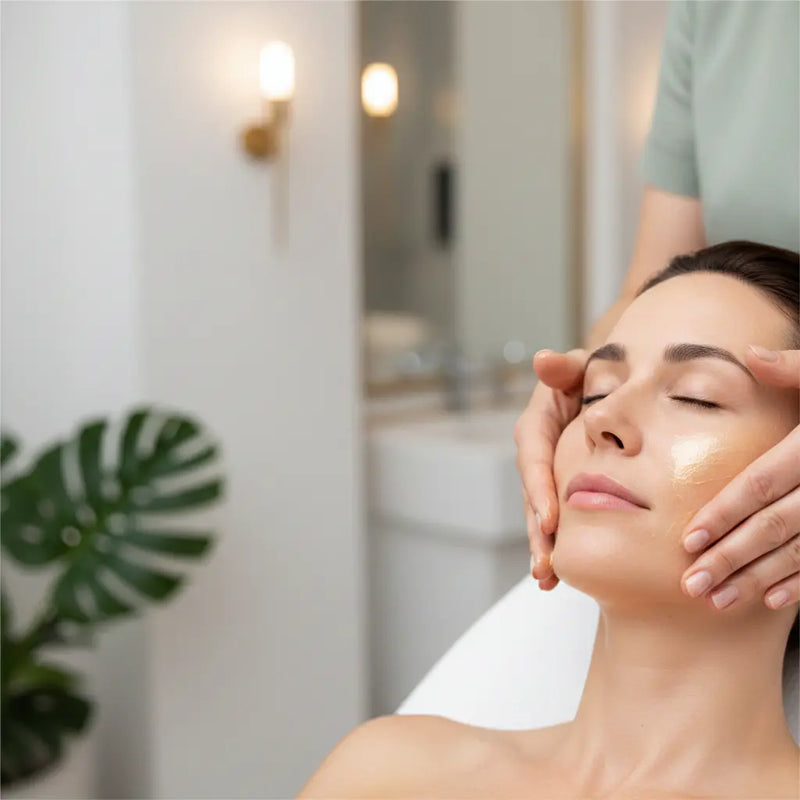
Professional care is useful because it combines analysis, controlled treatment, and aftercare guidance. In a studio setting, an esthetician can adjust exfoliation, extraction work, hydration support, LED facial therapy, gentle chemical peels, microdermabrasion, or galvanic techniques to fit your skin's condition instead of guessing from a shelf.
That matters in Southwest Florida, where sun exposure, humidity, and indoor cooling can create a strange mix of congestion, dehydration, and visible sun damage. A trained professional can help separate what should be treated at home from what needs in-studio correction.
Consumer behavior also shows why visible results matter. In skincare purchasing, 61.9% of consumers prioritize price, 45.6% prioritize effectiveness, and 81% are influenced by reviews and recommendations, according to Drive Research's skincare statistics and trends. That lines up with what happens in practice. People are willing to simplify their routine and invest more carefully when they can see what's working.
If your skin has plateaued, professional care isn't a last resort. It's often the step that turns a random routine into a targeted one.
If you want help choosing skincare products that make sense for Southwest Florida weather, Lumina Skin Sanctuary offers licensed esthetician care in Fort Myers with climate-adaptive facials, personalized consultations, and home-care guidance built around sun, heat, and humidity.


