


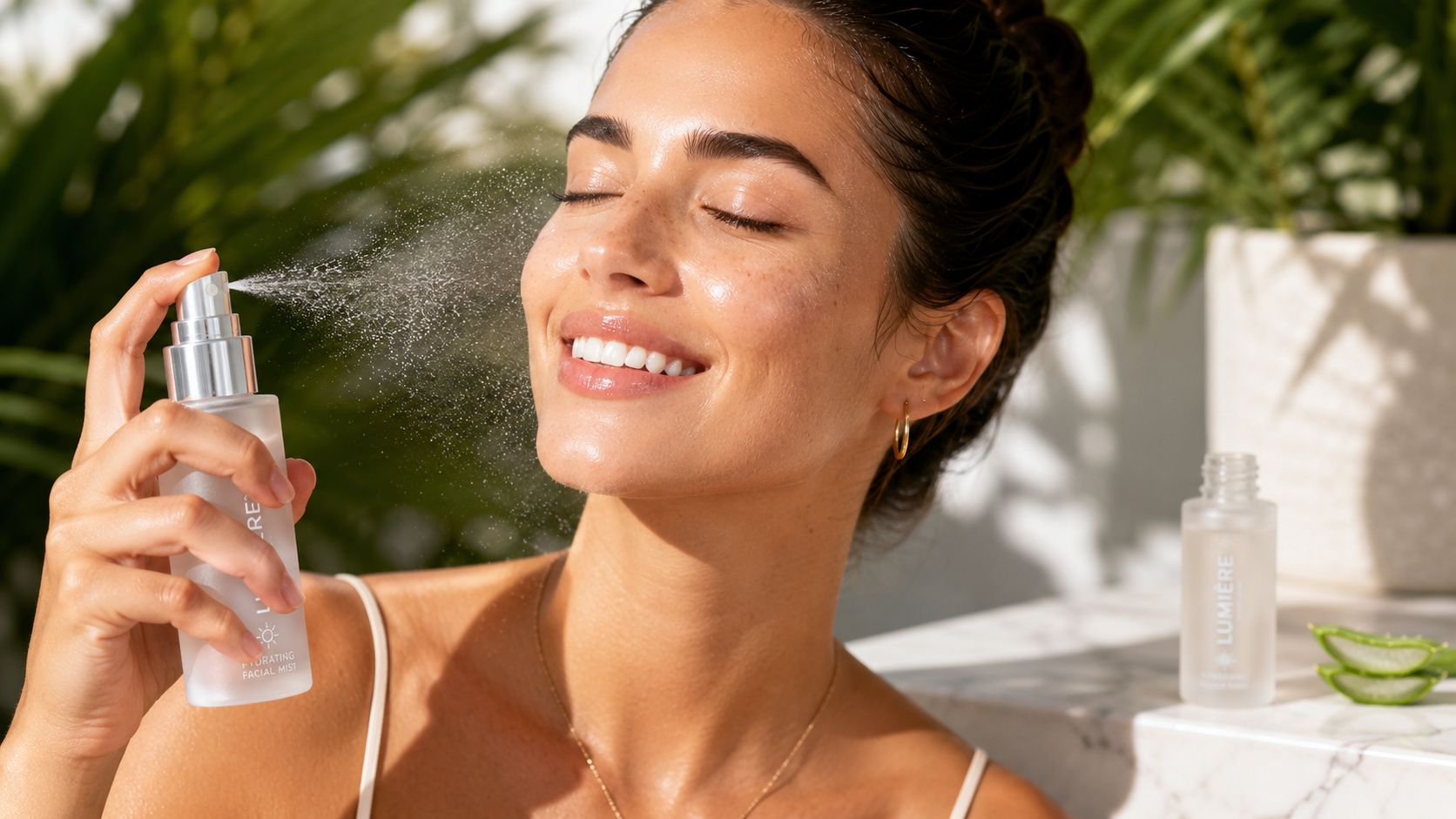
By noon in Southwest Florida, skin can feel shiny on the surface and tight underneath. You step from heat and sun into aggressive air conditioning, then back outside again, and your face never seems to settle. A lot of people reach for a facial mist in that moment and assume any spray will help.
Sometimes it does. Sometimes it makes the situation worse.
That difference matters more now because facial mists have moved far beyond a niche vanity product. The global hydrating face mists market was valued at USD 1,238.9 million in 2024 and is projected to reach USD 2,500 million by 2035, showing how quickly they've become part of everyday skincare, especially where instant refreshment matters most, according to Wise Guy Reports' hydrating face mists market outlook. In Florida, that popularity makes sense. A mist can be useful. It just has to be the right kind, used the right way.
If your skin feels dehydrated even while the weather is humid, you're not imagining it. Florida skin often needs hydration support that works with heat, sweat, sunscreen, and indoor cooling, not against them. For a broader look at that push-pull effect, Lumina's guide to skincare for Florida humidity and climate stress lays out why skin can act oily and depleted at the same time.
Table of Contents
- Your Guide to Hydrated Florida Skin
- The Science Behind a Superior Spritz
- Choosing Your Mist for the Florida Climate
- How to Use a Facial Mist for Maximum Benefit
- Pairing Mists with Professional Skincare
- Frequently Asked Questions About Hydrating Mists
Your Guide to Hydrated Florida Skin
Florida skin usually doesn't behave like textbook dry skin. It often looks dewy, produces oil, and still feels uncomfortable. That's why a hydrating facial mist gets misunderstood so often. People treat it like a luxury extra, when in this climate it's more useful as a support step that helps skin stay balanced between cleansing, treatment products, moisturizer, sunscreen, and long hours in heat.
A good mist can soften that tight post-cleansing feeling, refresh skin over makeup, and reduce the urge to over-wash when you feel sticky. A bad one just wets the face for a minute and disappears, leaving skin wanting more. In practice, that usually means the formula matters more than the marketing.
What Florida skin is dealing with daily
You're rarely dealing with one condition at a time here. It's usually some combination of:
- Sun exposure: Even routine errands add environmental stress.
- Indoor cooling: Air conditioning can leave skin feeling parched fast.
- Sweat and sunscreen buildup: Layers collect on the skin and can create congestion.
- Surface oil with underlying dehydration: This is one of the most common complaints I hear in hot climates.
Skin that feels oily and tight at the same time usually needs smarter hydration, not heavier products.
That's where a hydrating facial mist earns its place. It's not meant to do every job in the routine. It's meant to improve how the rest of the routine performs.
What a mist should actually do
For Florida conditions, a mist should help skin feel more comfortable without leaving a heavy film. It should support hydration, calm visible irritation, and work around sunscreen and makeup instead of turning them into a slippery layer.
The category has grown because more people are building that kind of flexible step into daily care. But convenience only helps if the formula is right. The rest of this guide is about choosing one that hydrates, and using it in a way that supports professional results at home.
The Science Behind a Superior Spritz
A hydrating facial mist should do more than make skin feel damp. The difference between a strong formula and a weak one usually comes down to two things. What the mist is built on, and where the useful ingredients appear on the ingredient list.

Why water alone isn't enough
Many people still assume any facial spray is hydrating because it contains water. That isn't how skin works. A high-performance hydrating facial mist should use a base like aloe vera, not just plain water, because aloe contains polysaccharides that bind water to the skin. Plain water can evaporate quickly and contribute to transient dehydration, as explained in CV Skinlabs' discussion of why some hydrating face mists can dry skin out.
Think of skin like a sponge. A dry sponge doesn't stay comfortably full just because you flick water across the surface. It holds moisture better when the material itself can absorb and retain it. In skincare, that retention comes from humectants and supportive soothing ingredients, not from misting with water alone.
Practical rule: If the formula is basically a refreshing water cloud with fragrance, don't expect lasting hydration.
What to look for on the ingredient list
The ingredients that matter most need to appear high enough on the list to make a real difference. The key ones to watch for include:
- Aloe vera base: Better than plain water for supporting moisture binding on the skin.
- Glycerin: A foundational humectant that helps draw water into the upper layers.
- Beta-glucan: Helpful for hydration support and a calmer-looking complexion.
- Hyaluronic acid: Useful in layered routines when it's followed by a sealing step.
- Soothing agents: Bisabolol, oat, reishi, turmeric, and similar calming ingredients can be helpful for reactive skin.
If you like reading formulation notes, guides written for producers can sharpen your eye for structure and base ingredients. Aroma Warehouse's Essential tips for body mist makers is useful for understanding how mist bases and supporting ingredients affect performance.
One professional example of this principle in practice is The Express Hydration Facial and Polish Treatment, which finishes with a pressurized spray atomizer using a pure hyaluronic acid mist, followed by a ceramide barrier-supportive repair cream and SPF 50+ protection. That sequence matters because freshly exfoliated skin absorbs hydration differently when moisture is immediately followed by barrier support.
For a deeper look at why hydrated skin responds better to treatment products, Lumina's article on the science behind skin hydration explains the connection clearly.
Choosing Your Mist for the Florida Climate
A mist that feels elegant in a dry office or cool spring weather can feel sticky, congestive, or pointless in Southwest Florida. Climate changes how a formula behaves on the skin. That's the part generic advice usually skips.

Most beauty content treats hydration as if it works the same in every environment. It doesn't. In high humidity, the skin's natural evaporation process can be impaired, and standard hydrating mists may sit on the surface and contribute to congestion. For climates like Southwest Florida, formulas with ingredients such as hypochlorous acid for calming irritation can make more sense than generic hydrating sprays, as noted in NBC Select's piece on face mists and climate-specific concerns.
Why heavy mists miss the mark in humidity
In a humid climate, you don't need a facial mist that behaves like a glossy coating. You need one that refreshes and settles without trapping too much residue at the surface.
That's why I'm cautious with formulas that feel overly rich, heavily fragranced, or oily in spray form, especially for acne-prone clients. In Florida, those textures can combine with sweat, sunscreen, sebum, and outdoor exposure in a way that leaves skin feeling coated rather than hydrated.
Here's the trade-off:
| Mist style | What can happen in Southwest Florida |
|---|---|
| Water-only spray | Brief relief, then skin may feel dry again |
| Heavy dewy mist | Can feel sticky and may contribute to congestion |
| Lightweight humectant mist | Better for layering under skincare |
| Calming mist for irritated skin | More useful after sun and heat exposure |
In humid climates, the goal isn't maximum wetness. The goal is controlled hydration that doesn't sit on the skin like a film.
A quick Florida-friendly checklist
When choosing a hydrating facial mist for daily use here, prioritize formulas that are:
- Lightweight in feel: They should disappear into the routine, not remain tacky.
- Free from alcohol and synthetic fragrance: Lower-quality mists often use these, and they can dry out or irritate the skin.
- Supportive, not overly occlusive: A mist should complement moisturizer, not imitate a heavy cream.
- Calming after heat exposure: This matters after outdoor activity, beach days, or long drives in sun.
For shoppers trying to narrow down product types, Lumina's guide on how to choose hydrating facial products is a helpful starting point.
If your skin clogs easily, don't pick a mist because it sounds luxurious. Pick it because the texture, finish, and ingredient profile fit the weather you live in.
How to Use a Facial Mist for Maximum Benefit
Technique changes everything with facial mists. Used randomly, a mist may feel refreshing but do very little. Used with intention, it can improve comfort, product absorption, and the overall finish of your routine.

Use it on purpose, not randomly
The most useful time to apply a hydrating facial mist is after cleansing, while skin is still slightly damp. According to the verified guidance above, application right after cleansing helps maximize absorption, and holding the bottle at arm's length helps avoid oversaturating the skin.
That means your mist works best as a setup step. It prepares the skin for what comes next.
A simple routine looks like this:
- Cleanse gently and leave the skin slightly damp.
- Mist evenly without soaking the face.
- Apply serum while the skin is still comfortable and receptive.
- Seal with moisturizer so hydration doesn't escape.
- Finish with SPF in the morning.
A quick visual can help if you want to see the flow in action:
The mist sandwich method
One of the easiest ways to make a mist more useful is what I call the mist sandwich. It's simple and works well in Florida because it avoids relying on the mist alone.
Use this layering pattern:
- First layer: Mist after cleansing.
- Middle layer: Apply your serum onto that slightly damp skin.
- Top layer: Follow with moisturizer to lock everything in.
You can also mist lightly before moisturizer if your skin feels hot or depleted, then seal immediately. The key is not to leave the face wet and uncovered.
A mist is a primer for hydration. It is not the full hydration strategy.
Over makeup and during the day
A hydrating facial mist can also help once makeup is on, but the application should be lighter than your skincare step.
- For a dewy finish: Mist from a comfortable distance so droplets stay fine.
- For a midday reset: Use it after sun exposure or long hours in air conditioning.
- For makeup touch-ups: Don't drench the face. A light veil works better than a heavy spray.
If your skin is already sticky from humidity, blot first. Then mist lightly if needed. That keeps the product from mixing with excess surface oil and sunscreen in a way that feels heavy.
Pairing Mists with Professional Skincare
A hydrating facial mist can improve comfort and support a healthy-looking glow at home. It cannot do every job. That distinction matters when skin stays dry, irritated, or rough no matter how many products you try.

Hydration versus barrier repair
When skin remains dry despite product use, the issue is often a damaged barrier, not just low hydration. Consumers often expect mists to deliver long-term barrier repair, but water-based formulas can't do that on their own without lipid-supporting ingredients like ceramides or fatty acids, as discussed in JLo Beauty's article on whether face mists actually work.
That's the trade-off that requires clear explanation. A mist can add water-based hydration and help other products perform better. It cannot replace barrier-focused care when the skin is chronically reactive, flaky, rough, or uncomfortable.
Where professional treatments change the outcome
Professional treatment becomes useful when skin needs more than a surface refresh. In the treatment room, the approach is more controlled. Skin is cleansed thoroughly, exfoliation is adjusted to tolerance, and hydration is paired with barrier-supportive finishing steps.
This is also where atomized delivery makes more sense. A professional atomizer isn't just a prettier spray bottle. It's part of a sequence designed to improve contact with freshly prepared skin. If you're comparing professional approaches, Athena Plastic Surgery's overview of Hydrafacial treatment options gives a helpful example of how treatment-based hydration differs from casual at-home misting.
If your skin always feels dry no matter what you spray on it, stop assuming you need more mist. You may need barrier repair, gentler cleansing, or a treatment plan.
At home, a mist helps maintain momentum between appointments. In the studio, hydration works better because it's part of a larger protocol. That's the difference between temporary relief and a more durable skin response.
Frequently Asked Questions About Hydrating Mists
Can a hydrating facial mist replace moisturizer
No. A hydrating facial mist adds light hydration, but it doesn't replace the sealing role of a moisturizer. If you mist and stop there, especially after cleansing, you may end up with skin that feels briefly refreshed and then uncomfortable again.
Generally, the best order is mist first, treatment serum second, moisturizer third.
Are hydrating mists safe for acne-prone or sensitive skin
They can be, but formula selection matters. For acne-prone skin in Florida, avoid heavy, sticky, highly fragranced sprays that sit on the surface. For sensitive skin, look for calming ingredients and avoid alcohol and synthetic fragrance.
If a mist leaves you flushed, tight, or congested, don't keep forcing it into your routine just because it was labeled hydrating.
What's the best way to use one while traveling or on a plane
Use it the same way you would at home. Apply lightly, then follow with something that seals in hydration. A mist by itself during travel can feel good, but it works better when it supports the rest of your routine instead of replacing it.
On travel days, a small routine is enough:
- Cleanse when you can: Even a gentle rinse helps reset the skin.
- Mist lightly: Don't overspray in dry cabin air or after long hours in transit.
- Apply moisturizer afterward: This is what keeps the hydration from disappearing.
- Use SPF during daytime travel: Especially if you're in and out of cars, terminals, or outdoor stops.
How should I store my mist
Keep it closed tightly and out of direct heat. In Florida, don't leave it in a hot car or baking beach bag for hours. A cool, shaded indoor space is better for product stability and for the feel of the mist itself.
Some people enjoy keeping a facial mist slightly cool for comfort after sun exposure. That can feel great, but the bigger issue is avoiding repeated heat exposure.
Can I use a hydrating facial mist over makeup
Yes, if the spray is fine and the formula is appropriate for that use. Mist lightly from a comfortable distance. The goal is to refresh and soften the finish, not soak the face.
If your makeup starts separating after misting, the problem may be too much product, too close an application, or a formula that's too rich for your climate.
If your skin feels oily, tight, congested, or hard to balance in Southwest Florida, a professional assessment can save a lot of trial and error. Lumina Skin Sanctuary offers licensed esthetician care suited to local sun, heat, and humidity, with treatment plans that connect in-studio work to realistic home care.


