


Most skin routines fail for a surprisingly simple reason: the products are fine, but the skincare steps order is working against your skin barrier. When steps are layered incorrectly, you can end up with pilling, extra irritation, less-active ingredients, and that “my skin feels tight but looks oily” cycle.
This guide gives you a simple, repeatable AM/PM routine you can stick to, plus quick rules for where common actives (like vitamin C, retinoids, acids, and benzoyl peroxide) fit.
The 3-part logic behind the correct skincare steps order
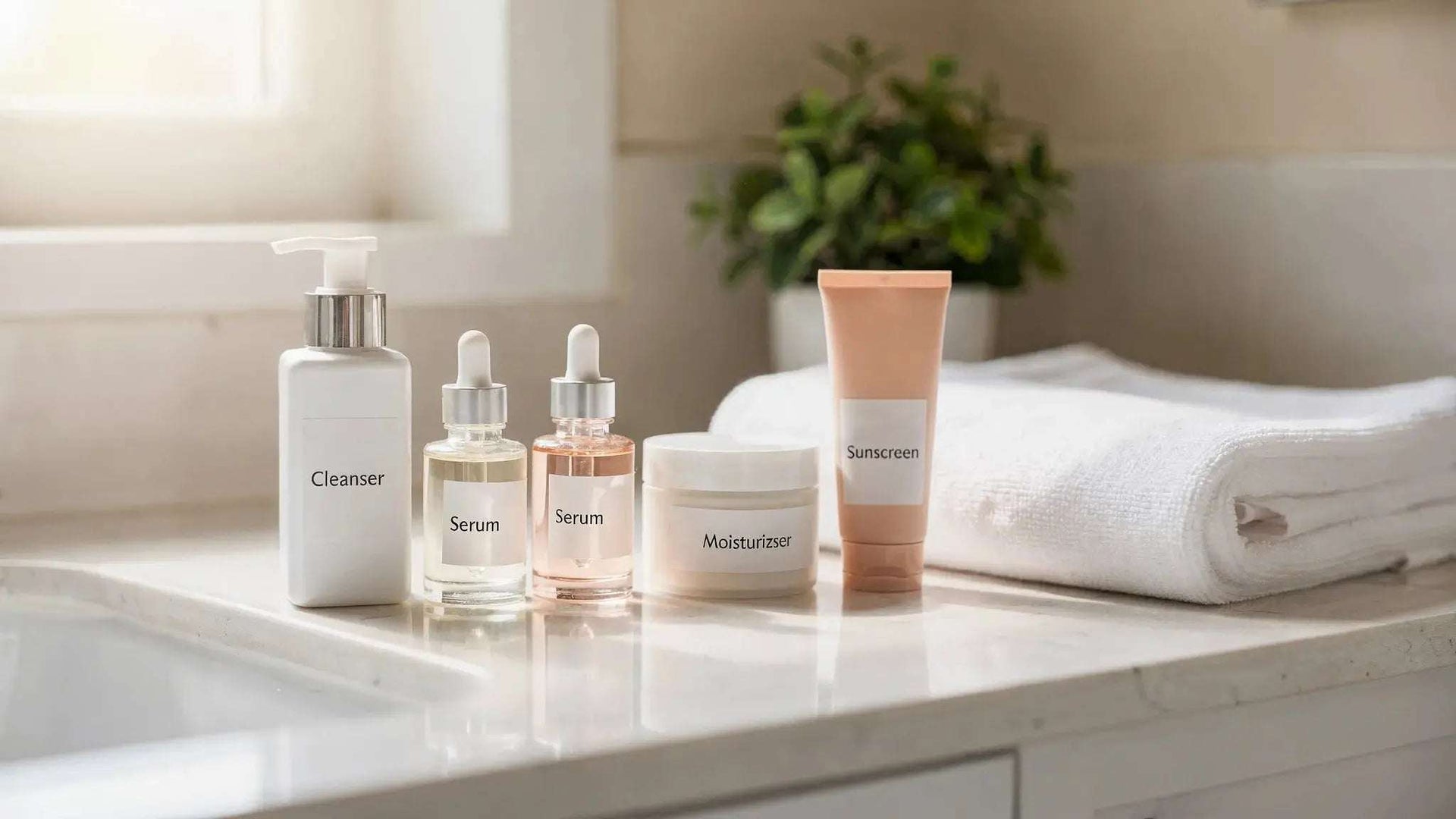
If you remember nothing else, remember this sequence:
- Cleanse (remove what does not belong)
- Treat (target a goal with the right active)
- Seal + Protect (moisturize, then sunscreen in the morning)
A practical rule that usually works is thin to thick. Apply watery products first so they can contact the skin, then finish with creams and oils that slow water loss.
Two common exceptions:
- Sunscreen is always last in the morning (it needs to form an even film to protect you).
- Some treatments require dry skin (notably many retinoids) to reduce irritation.

Simple AM skincare routine (morning)
Your morning routine is about prevention: protecting your barrier, limiting oxidative stress (pollution and UV), and keeping hydration balanced.
Step 1: Cleanser (or rinse if you are very dry/sensitive)
- If you wake up oily, congested, or you used heavy products at night, use a gentle cleanser.
- If your skin is very dry or reactive, a lukewarm rinse can be enough.
Avoid “squeaky clean.” That feeling usually means your barrier lipids were stripped.
Step 2 (optional): Hydrating toner/essence
This step is optional, but it can reduce tightness and help makeup sit better. Look for barrier-friendly hydrators (like glycerin, panthenol, beta-glucan, or hyaluronic acid).
Step 3: Antioxidant serum (most commonly vitamin C)
If brightening and anti-aging are goals, AM is a great time for antioxidants.
- Apply after cleansing (and toner if you use one).
- Let it absorb, then continue.
If vitamin C stings, you may be using too strong a formula, too often, or on an impaired barrier.
Step 4: Moisturizer
Moisturizer is not just for “dry skin.” It supports barrier function and can reduce irritation from actives.
In humid climates, many people do well with lighter gel-creams in the morning. If you are acne-prone, choose non-comedogenic textures and keep layers minimal.
Step 5: Sunscreen (SPF 30 or higher)
Sunscreen is your most important morning step for preventing premature aging and uneven pigmentation. The American Academy of Dermatology recommends broad-spectrum, water-resistant sunscreen with SPF 30+ for daily use and reapplication during sun exposure.
- Apply sunscreen last.
- Use enough (most adults need about a “two-finger” amount for face and neck).
- Reapply when outdoors, sweating, or after water exposure.
If you only do two morning steps, do these: cleanse + sunscreen.
Simple PM skincare routine (night)
Your evening routine is about repair: removing buildup, supporting the barrier, and using targeted treatments that can be more irritating in daylight.
Step 1: Cleanse (often double cleanse)
If you wore makeup, water-resistant sunscreen, or had a sweaty day, consider a double cleanse:
- First cleanse: oil/balm to dissolve sunscreen and makeup
- Second cleanse: gentle water-based cleanser to remove residue
Double cleansing is not “required,” but it is one of the easiest ways to reduce congestion without harsh scrubbing.
Step 2: Treatment (choose one main active)
Night is typically where you place your “power” product. Choose one primary treatment and run it consistently.
Common options:
- Retinoid (texture, fine lines, acne, uneven tone)
- Exfoliant like AHA/BHA (congestion, rough texture, dullness)
- Acne treatment (benzoyl peroxide, salicylic acid, etc.)
- Barrier-support serum (ceramides, peptides, soothing ingredients) if you are in a sensitive phase
If you are new to actives, start 2 to 3 nights per week, then increase slowly.
Step 3: Moisturizer (and optional occlusive)
Moisturizer seals in hydration and reduces irritation from treatments.
If you are very dry or using a retinoid, you can “sandwich” it:
- Moisturizer
- Retinoid
- Moisturizer
An occlusive (like petrolatum) can be helpful on very dry areas, but avoid trapping it over strong actives if that increases irritation.
Where do common products go? (Quick layering guide)
Use this table as a simple reference point. Product labels vary, so if the directions on your prescription or clinician-dispensed product differ, follow those.
| Product type | Best time | Typical order | Notes to avoid irritation |
|---|---|---|---|
| Cleanser | AM/PM | First | Gentle beats “deep cleansing” for long-term barrier health |
| Hydrating toner/essence | AM/PM | After cleanser | Optional step, helpful for tightness |
| Vitamin C (ascorbic acid) | AM (often) | After cleansing | If sensitive, start every other morning |
| Niacinamide | AM/PM | After cleansing | Generally compatible with many routines |
| AHA (glycolic/lactic) | PM (often) | After cleansing | Do not overuse, start 1 to 2 nights/week |
| BHA (salicylic acid) | AM or PM | After cleansing | Great for pores/oil, can be drying if layered too much |
| Retinoid (retinol/retinal/adapalene) | PM | After cleansing, often on dry skin | Introduce slowly, moisturize generously |
| Benzoyl peroxide | AM or PM | After cleansing | Commonly alternated with retinoids if irritation occurs |
| Moisturizer | AM/PM | After serums/treatments | Adjust texture to season and skin feel |
| Sunscreen | AM | Last | Broad-spectrum SPF 30+ and adequate amount |
Ingredient pairing: what to combine, what to separate
A lot of “bad reactions” are really just too many exfoliating steps stacked together.
Usually fine together (for most people)
- Niacinamide + most ingredients (a good stabilizing, barrier-support option)
- Hyaluronic acid + everything (hydration support)
- Vitamin C + sunscreen (a classic AM pairing)
Often better to separate (especially if sensitive)
- Retinoid + strong AHA/BHA in the same routine (try alternating nights)
- Benzoyl peroxide + retinoid (some people tolerate it, many do better separating AM/PM or alternating)
- Multiple leave-on acids at once (for example, AHA toner plus BHA serum plus exfoliating pads)
If you are chasing results quickly, the fastest route is usually the most boring: one main active, consistent sunscreen, and enough moisturizer.
Common mistakes that sabotage results
Putting sunscreen before moisturizer
Moisturizer goes first, sunscreen goes last. If sunscreen sits under other products, its protective film can become uneven.
Using harsh cleansers to “fix” oiliness
Stripping cleansers can increase rebound oil production and make acne and redness harder to manage.
Starting three actives at once
If irritation appears, you will not know what caused it. Add new products one at a time, spaced by at least a week or two.
Ignoring pilling
Pilling is usually a sign of too many layers, incompatible textures, or not letting products set. Reduce steps, use less product, and wait 30 to 60 seconds between layers.
A note on buying discounted skincare (and what to avoid)
It is tempting to “stock up” on trending skincare through discount channels. If you are buying home spa supplies (like storage organizers, towels, headbands, or even empty pump bottles), liquidation marketplaces can be useful. For example, some shoppers browse distributors like American Bulk Pallets for general merchandise deals.
But for skincare products themselves, especially actives and sunscreen, prioritize authorized retailers and professional providers. You want confidence in:
- Authenticity
- Storage conditions (heat matters)
- Expiration dates
Your skin is not the place to gamble on unknown supply chains.
When a professional facial helps your home routine work better
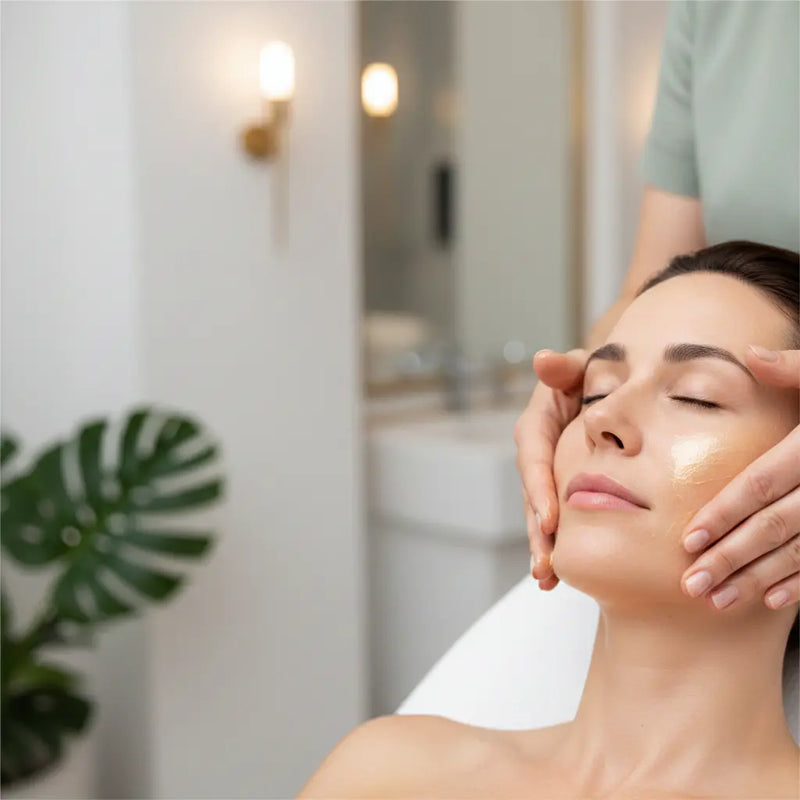
If you are consistent with the basics and still feel stuck, a professional facial can help by addressing things your home routine struggles to do safely, like deep congestion management, guided exfoliation, and barrier-support protocols.
At Lumina Skin Sanctuary in Babcock Ranch, the focus is on customized, clinically informed skincare that supports long-term skin health, not just a one-day glow. If you are unsure which active to use or why your skin keeps reacting, an in-person consult can prevent months of trial and error.

Frequently Asked Questions
What is the correct skincare steps order? Cleanse first, then apply treatment products (serums/actives), then moisturize. In the morning, sunscreen is always the final step.
Do I apply moisturizer before or after serum? After serum. Serums are typically thinner and designed to contact skin directly, while moisturizer seals hydration and reduces water loss.
Do I need toner in my skincare routine? Not always. Toner is optional. If your skin feels tight after cleansing or you want extra hydration, a gentle, hydrating toner can help.
What goes first, vitamin C or hyaluronic acid? Usually vitamin C first (after cleansing), then hyaluronic acid if you use it, then moisturizer and sunscreen. If your vitamin C is irritating, simplify and focus on moisturizer + SPF.
Should I use retinol every night? Many people cannot tolerate nightly use at first. Start 2 to 3 nights per week and increase gradually as your skin adjusts.
Can I use retinol and exfoliating acids in the same routine? Some experienced users can, but it often increases irritation. A safer approach is alternating nights (retinoid nights and exfoliant nights).
Why does my skincare pill? Common causes include applying too much product, layering too many steps, or mixing silicone-heavy formulas. Use less, wait between layers, and simplify.
What are the minimum skincare steps for healthy skin? At minimum: gentle cleanse, moisturize as needed, and daily broad-spectrum sunscreen (SPF 30+). Add one treatment product only after the basics are consistent.
Want a routine that is customized to your skin (and your Florida lifestyle)?
If you want help choosing the right active, building a realistic AM/PM routine, or resetting an irritated barrier, book a personalized consultation with Lumina Skin Sanctuary in Babcock Ranch.
Explore services and skincare at Lumina Skin Sanctuary.


