


TL;DR:
- Post-facial care involves gentle protection, hydration, and sun protection within 24 to 48 hours after treatment. Proper aftercare supports skin barrier recovery, prevents irritation, and enhances treatment results. Less product and stricter hygiene foster healthier skin and longer-lasting benefits.
Post-facial care is defined as the deliberate, gentle practice of protecting, hydrating, and calming your skin during the critical 24–48 hour healing window immediately after a professional facial treatment. This practice prevents irritation, breakouts, sun sensitivity, and hyperpigmentation by shielding the temporarily compromised skin barrier from stressors. Skipping or mishandling this recovery phase can undo the benefits of even the most effective treatment. Lumina Skin Sanctuary in Fort Myers, Florida, builds personalized aftercare protocols into every client consultation, recognizing that what you do after a facial matters as much as the treatment itself.
What does post-facial care mean for your skin’s recovery?
Post-facial care is the structured recovery process that begins the moment your facial ends. During a facial, exfoliation and extractions temporarily thin and open the skin barrier, making it more permeable to irritants and bacteria for 24–48 hours. That increased permeability works both ways. Your skin absorbs beneficial ingredients more readily, but it also absorbs harmful ones faster.

The standard industry term for this recovery phase is “post-treatment skin management.” The core goal is barrier restoration: keeping the skin clean, calm, and protected while it repairs itself naturally. Treatments involving alpha-hydroxy acids (AHAs), chemical peels, or extractions create the longest vulnerability window. Gentle hydrating facials produce a shorter one.
Photosensitivity is another key concern. Post-facial skin is highly photosensitive for up to a week after AHA-based or peel treatments. UV exposure during this window accelerates aging and raises the risk of hyperpigmentation, particularly in deeper skin tones. Sun protection is not optional during this period.
What skin reactions are normal after a facial?
A reactive purge is common after extractions and deep cleansing facials. A purge differs from a breakout in a specific way: purge blemishes appear in your typical breakout zones, resolve quickly, and are not red, itchy, or spreading. An inflammatory breakout caused by improper aftercare looks different. It appears in unusual areas, feels irritated, and lingers. Knowing the difference helps you respond correctly instead of panicking or over-treating.
What are the essential post-facial care tips to follow?
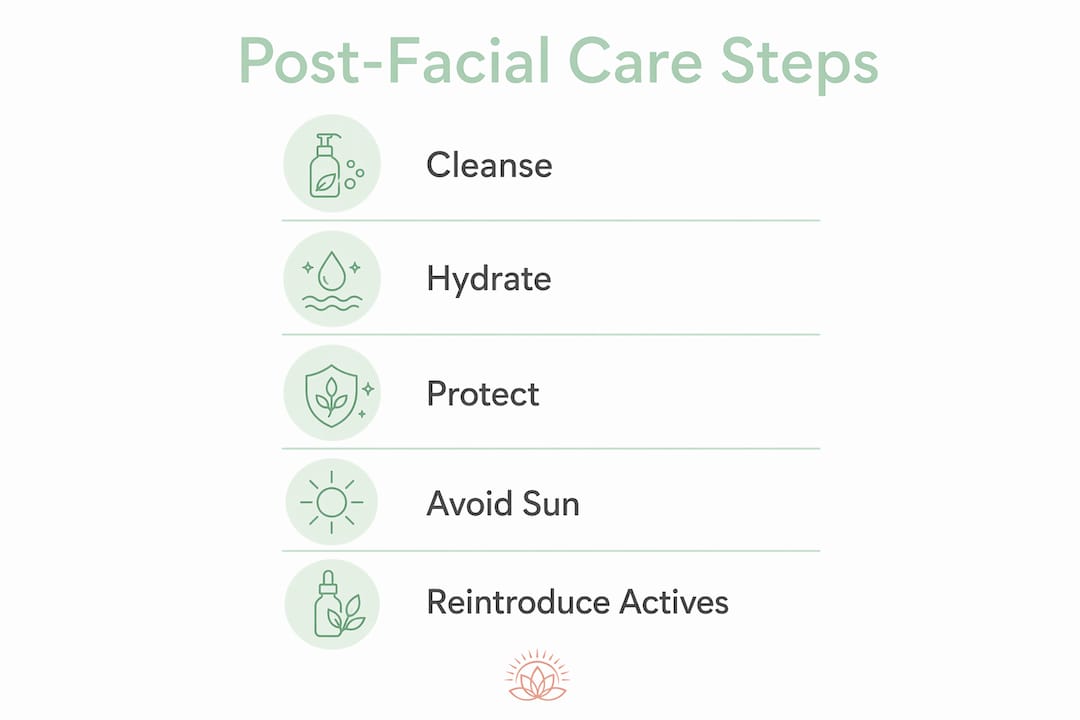
The most effective post-facial skincare routine is a minimal one. Excessive product application disrupts the compromised skin barrier and triggers inflammation. A bland, three-step routine covers everything your skin needs during the healing phase.
Follow these steps in order for the first 24–48 hours after your facial:
- Cleanse gently. Use a fragrance-free, non-foaming cleanser with lukewarm water. Avoid scrubbing or using a cleansing brush.
- Moisturize simply. Apply a plain, barrier-supporting moisturizer. Hyaluronic acid serums work well because they hydrate without adding actives or occlusive layers that trap bacteria.
- Apply broad-spectrum SPF 30+. Mineral SPF with UVA/PA+++ ratings is the standard recommendation. Reapply every two hours if you are outdoors. This step is mandatory, not optional.
- Skip makeup for at least 24 hours. Foundation and concealer introduce bacteria and block the skin’s natural repair process.
- Avoid heat and sweat. Skip strenuous exercise, hot showers, saunas, and steam rooms for 24–48 hours. Heat raises core temperature and blood flow, trapping sweat and bacteria in open pores.
- Do not touch, pick, or exfoliate. Hands carry bacteria. Picking at any purge blemishes extends healing time and increases scarring risk.
- Drink water consistently. Cellular repair depends on hydration from the inside. Aim for at least eight glasses of water per day during recovery.
- Sleep on a clean pillowcase. Dirty pillowcases transfer bacteria directly to healing skin. Change your pillowcase the night of your facial and again within two days.
- Reintroduce active ingredients gradually. Wait 5–7 days before returning to retinol, AHAs, BHAs, or vitamin C for intensive treatments. Gentle facials may allow reintroduction after 2–3 days.
Pro Tip: Set a phone reminder for day five or seven to reintroduce your actives. Clients who track this window avoid the most common post-facial setback: premature product use.
How does aftercare vary by treatment type and skin sensitivity?
Not all facials create the same recovery demands. The right facial treatment type determines how strict your aftercare needs to be. Matching your recovery routine to your specific treatment prevents unnecessary restrictions and protects your results.
| Treatment type | Recovery window | Key restrictions |
|---|---|---|
| Hydrating or gentle facial | 24 hours | Avoid makeup; use gentle cleanser and SPF |
| Extraction-heavy facial | 24–48 hours | No touching; strict hygiene; no actives for 5 days |
| Chemical peel | 5–7 days or until peeling resolves | No actives, no exfoliation, strict SPF, no heat |
| Microdermabrasion | 48–72 hours | Fragrance-free products only; no retinol for 5 days |
| LED light therapy | Minimal downtime | Standard SPF and gentle cleanser sufficient |
Sensitive or reactive skin requires stricter avoidance of irritants across all treatment types. Darker skin tones carry a higher risk of post-inflammatory hyperpigmentation, making consistent sun avoidance especially important. Lumina Skin Sanctuary provides individualized aftercare instructions based on each client’s skin tone, treatment intensity, and local Fort Myers climate conditions, including the area’s high UV index and humidity levels.
The timing for reintroducing actives like retinol also depends on treatment intensity. Gentle facials allow retinol after 2–3 days, while chemical peels or extraction-heavy sessions require waiting 5–7 days or until any peeling fully resolves. Always follow the specific guidance from your esthetician over general timelines.
Common mistakes that undermine post-facial recovery
The most damaging post-facial mistake is product overload. Clients often assume that applying more serums, masks, or treatments after a facial will extend the glow. The opposite is true. Doing less protects the skin barrier and produces better outcomes during the healing window.
- Using active ingredients too soon. Retinoids, AHAs, and BHAs applied before the skin barrier recovers cause inflammation, redness, and breakouts. The post-facial glow peaks at 48–72 hours post-treatment. Actives applied before this window resolves can reverse that progress.
- Skipping sun protection. UV exposure after a peel or AHA facial accelerates photoaging and triggers hyperpigmentation. This is the single most preventable post-facial complication.
- Resuming exercise too early. Sweat contains salt and bacteria. Both irritate open pores and extend recovery time when introduced within the first 24–48 hours.
- Confusing purge with breakout. Treating a normal reactive purge with harsh spot treatments or acids worsens the skin’s condition. Identify the type of reaction before responding.
- Neglecting hygiene basics. Bacterial infection is the most frequent cause of post-facial complications. Unclean makeup brushes, unwashed hands, and dirty pillowcases are the primary sources of that bacteria.
Pro Tip: For the first 48 hours, treat your skin like it just had a minor procedure. Less contact, less product, more water, and more sleep.
How to maintain your facial results long-term
The post-facial glow is not a permanent state. It is a stage of controlled recovery that transitions into lasting skin health only when supported by consistent daily habits. The goal after the initial healing window is to protect what the facial accomplished and build on it over time.
- Transition to a hydration-focused daily routine. After day seven, return to your regular routine gradually. Keep a gentle cleanser, a barrier-supporting moisturizer, and SPF as the foundation.
- Use sunscreen every day without exception. Fort Myers receives intense UV exposure year-round. Daily broad-spectrum SPF 30+ protects against photoaging and preserves the results of any brightening or resurfacing treatment.
- Schedule regular facials every 4–6 weeks. Consistent professional treatments produce cumulative benefits. Each session builds on the last when aftercare is followed correctly between appointments.
- Support skin health with lifestyle habits. Adequate sleep, consistent water intake, a diet low in processed sugar, and avoiding smoking all directly affect skin repair speed and overall tone.
- Avoid harsh exfoliation between sessions. Physical scrubs and high-strength chemical exfoliants used too frequently between facials strip the barrier your treatment worked to restore.
- Monitor your skin’s response. If redness, breakouts, or sensitivity persist beyond seven days, consult your esthetician. Lumina Skin Sanctuary offers follow-up consultations to adjust aftercare protocols based on how your skin responds.
A morning skincare routine built around three to four core products is sufficient for most clients between professional treatments. Complexity does not equal effectiveness in post-facial maintenance.
Key Takeaways
Post-facial care is the single most controllable factor in how long your facial results last and how well your skin recovers.
| Point | Details |
|---|---|
| Healing window is 24–48 hours | Skin barrier is most vulnerable immediately after treatment; restrict products and heat during this period. |
| Minimal routine outperforms complex ones | A gentle cleanser, plain moisturizer, and SPF 30+ cover all post-facial needs during recovery. |
| Sun protection is mandatory | Broad-spectrum mineral SPF prevents hyperpigmentation and photoaging after any exfoliating treatment. |
| Active ingredients need a waiting period | Wait 5–7 days after intensive treatments before reintroducing retinol, AHAs, or BHAs. |
| Hygiene prevents the most common complications | Clean pillowcases, washed hands, and sanitized tools stop bacterial infection before it starts. |
Why less is always more after a facial
I have seen the same pattern repeat across hundreds of client interactions at Lumina Skin Sanctuary. Clients leave a facial feeling great, go home, and immediately reach for their full product lineup because they want to “lock in” the results. Within 48 hours, they are dealing with redness, clogged pores, or a breakout they blame on the treatment.
The treatment did not cause that reaction. The products did.
Post-facial care is not a maintenance phase. It is a continuation of the treatment itself. The skin is actively repairing during those first 48–72 hours, and the best thing you can do is stay out of its way. A bland cleanser, a simple moisturizer, and a mineral SPF are genuinely all that is needed. Everything else can wait.
The clients who see the most dramatic long-term results are not the ones using the most products. They are the ones who follow a consistent professional treatment schedule and respect the recovery window every single time. Patience and discipline after a facial produce better skin than any product stack.
— Kira Tia
Lumina Skin Sanctuary: facials and aftercare in Fort Myers, FL
Lumina Skin Sanctuary offers a full range of professional facial treatments designed for Fort Myers skin, including the humidity, UV exposure, and sun damage that come with living in Southwest Florida. Every treatment includes a personalized consultation and specific aftercare guidance so you leave knowing exactly what to do next.

For clients focused on hydration and recovery, the Lumina Essential Radiance Treatment is a strong starting point. Clients managing sun damage or uneven tone can explore the Sun Damage Eraser and Galvanic Glow Series for targeted results. Book a consultation at Lumina Skin Sanctuary in Fort Myers to receive a post-facial care plan built around your skin type and treatment goals.
FAQ
What does post-facial care mean exactly?
Post-facial care is the practice of protecting and hydrating your skin during the 24–48 hour healing window after a professional facial. The goal is to support barrier recovery and prevent irritation, breakouts, or sun damage.
How long should I wait to wear makeup after a facial?
Wait at least 24 hours before applying makeup after any facial treatment. Makeup introduces bacteria to open pores and slows the skin’s natural repair process.
Can I exercise after getting a facial?
Avoid strenuous exercise for 24–48 hours after a facial. Sweat and heat raise the risk of bacterial infection and breakouts in freshly opened pores.
When can I use retinol or acids after a facial?
After a gentle facial, retinol can typically be reintroduced after 2–3 days. Chemical peels and extraction-heavy treatments require a 5–7 day wait, or until any peeling fully resolves.
Is it normal to break out after a facial?
A short-lived purge in your typical breakout zones is a normal response to deep cleansing and extractions. A prolonged, red, or itchy breakout in unusual areas signals a reaction that may need professional attention.


