





If your skin seems to behave for a week and then flare all over again, you are not failing your routine. More often, the routine is either too aggressive, too inconsistent, or simply not matched to what your skin actually needs. A real acne care routine success example usually looks much less dramatic than people expect - fewer products, steadier habits, and enough patience to let the skin barrier recover while breakouts are being treated.
For many adults, acne is not just about clogged pores. It is also tied to inflammation, stress, hormones, dehydration, irritation, and the temptation to keep switching products the moment progress slows down. That is why the most useful way to talk about results is not through a miracle product story, but through a routine that is realistic enough to maintain.
An Effective Acne Care Routine proves success in real life
Picture a client in her early 30s with persistent chin and jawline breakouts, a few clogged pores across the forehead, and lingering post-acne marks that make the skin look uneven even when the active blemishes calm down. She has tried exfoliating scrubs, strong spot treatments, and a few social media favorites. Some worked for two weeks, then her skin became tight, flaky, and more reactive.
What changed her skin was not doing more. It was doing less, but doing it with intention.
Her starting routine had too many active ingredients layered together. She was cleansing with a foaming wash twice a day, using an exfoliating toner nightly, adding a retinol serum every other night, and applying benzoyl peroxide on top of any blemish she saw. On paper, that sounds proactive. In practice, it left her skin dehydrated and irritated, which made healing slower and inflammation more obvious.
The revised routine focused on four priorities: keeping pores clear, calming inflammation, supporting the skin barrier, and staying consistent for at least eight to twelve weeks.
What made this acne care routine success example work
Morning: simple protection and balance
In the morning, she switched to a gentle cleanser that removed overnight oil without stripping the skin. That one change mattered more than expected. When skin feels overly clean and squeaky, it is often already moving toward imbalance.
After cleansing, she used a lightweight treatment serum with acne-friendly ingredients chosen for her skin type. For some people, that may be niacinamide. For others, a carefully chosen salicylic acid formula fits better. The point was not to stack every active ingredient available. The point was to choose one daily treatment that supported clearer skin without creating a cycle of redness and peeling.
She followed with a non-comedogenic moisturizer. This is where many acne-prone clients hesitate, especially if they already feel oily. But oily and dehydrated can exist at the same time. When the skin lacks water and support, it often becomes more reactive and less comfortable.
The last step was sunscreen every single day. This protected her skin from added inflammation and helped prevent post-breakout marks from lingering longer. If acne leaves discoloration behind, skipping SPF can quietly slow visible progress.
Evening: targeted treatment without overload
At night, she cleansed again, this time taking extra care if she had worn makeup or sunscreen throughout the day. A clean surface helped treatment products work more effectively, but there was no harsh scrubbing involved.
Instead of using several active products every evening, she alternated. On treatment nights, she used either a retinoid or another acne-focused product recommended for her skin concerns. On barrier-support nights, she kept it very simple with hydration and moisturizer only. That rhythm gave her skin room to improve without being pushed too hard.
This is one of the biggest reasons acne routines fail. People assume faster results require stronger, more frequent treatment. Often, the opposite is true. Skin that is inflamed and over-treated tends to stay in a constant state of recovery.
Weekly support: thoughtful, not aggressive
She also stopped using grainy scrubs and random masks. Instead, she used one gentle weekly exfoliating step when her skin tolerated it well. The goal was to support cell turnover, not to chase instant smoothness.
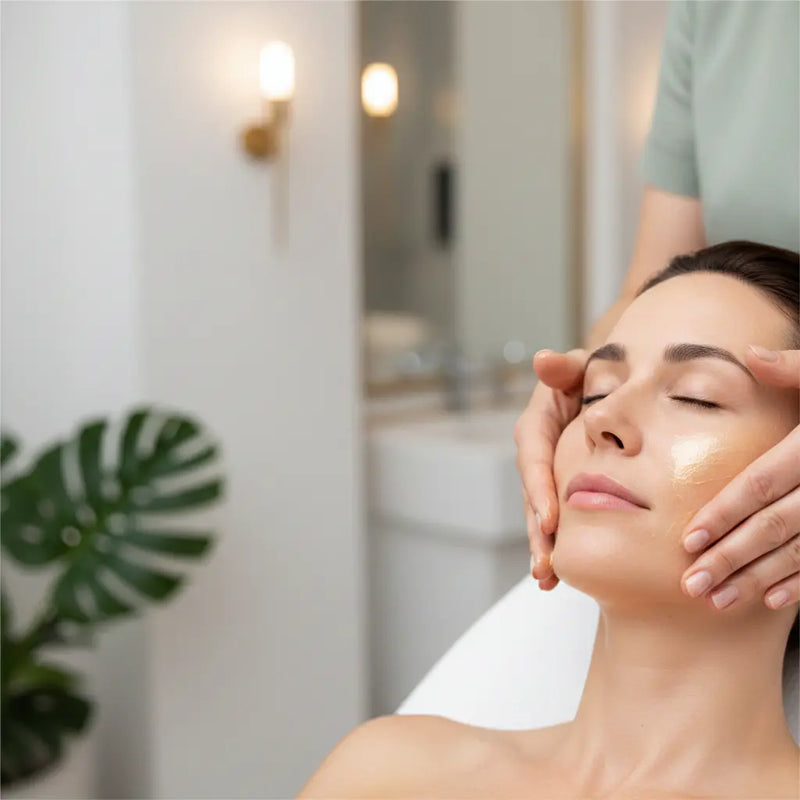
For clients with frequent congestion, a professional acne-focused facial can also help by pairing extractions, calming care, and guidance that fits the skin’s current condition. At-home products matter, but they work best when the routine is clear and the skin is being evaluated honestly.
The timeline most people need to hear
In week one, her skin did not look transformed. It looked calmer. Redness was reduced, and the tight, uncomfortable feeling after cleansing was gone.
By weeks three to four, she noticed fewer angry breakouts. She still had clogged pores and still got hormonal blemishes, but they were healing a little faster and were less inflamed.
Around weeks eight to ten, the difference became much easier to see. Her skin texture looked smoother, active acne was more controlled, and the marks left behind from older breakouts began to fade more steadily because she was no longer inflaming the area with overuse of treatments.
This matters because a good routine often improves skin in layers. First comfort, then control, then clarity. If you expect all three overnight, you may abandon a routine that is actually working.
Why consistency beats intensity
A strong routine is not the one with the most steps. It is the one you can repeat even on busy mornings, tired evenings, travel days, and stressful weeks. That is especially true for adult women balancing work, family, hormones, and limited time.
The most effective acne care routines usually share a few qualities. They cleanse without stripping, treat breakouts with purpose, moisturize without heaviness, and protect the skin daily. They also avoid the common trap of introducing too many new products at once.
If you change cleanser, serum, toner, moisturizer, and treatment all in the same week, it becomes almost impossible to tell what is helping and what is causing irritation. A more thoughtful approach gives the skin a fair chance to respond.
When an acne routine needs adjusting
Even a strong routine may need refinement. If breakouts are mostly deep and hormonal around the jawline, your skin may need a different strategy than someone dealing with congestion across the forehead and nose. If your skin is very sensitive, even excellent acne ingredients may need to be used less often.
There is also a difference between purging and irritation, and people often confuse the two. Purging tends to happen in areas where you already break out and usually improves with time. Irritation often shows up as burning, widespread redness, rash-like texture, or breakouts in places that are not typical for you. If your skin is becoming more uncomfortable rather than gradually more balanced, the routine may be too harsh.
Climate and lifestyle can play a role too. In warm, humid conditions like Southwest Florida, heavier formulas may feel uncomfortable for some acne-prone skin types, while lightweight hydration can be easier to stick with. Stress, sleep habits, and picking at blemishes can also interfere with progress, even when your products are well chosen.
The biggest lesson from any acne care routine success example
The real lesson is not that one exact set of products works for everyone. It is that successful acne care tends to be calm, consistent, and customized. Skin usually improves when it feels supported, not punished.
That is why professional guidance can make such a difference. A customized routine helps you avoid buying five products for one problem and accidentally creating three new ones. At Lumina Skin Sanctuary, that balance between in-treatment care and simple at-home support is what helps routines feel sustainable instead of overwhelming.
If your acne has been frustrating you for months or years, start by making your routine gentler and more intentional, not more complicated. Clearer skin often begins when you stop chasing quick fixes and give your skin a steady plan it can actually respond to. That kind of progress may look quiet at first, but it is usually the kind that lasts.


