


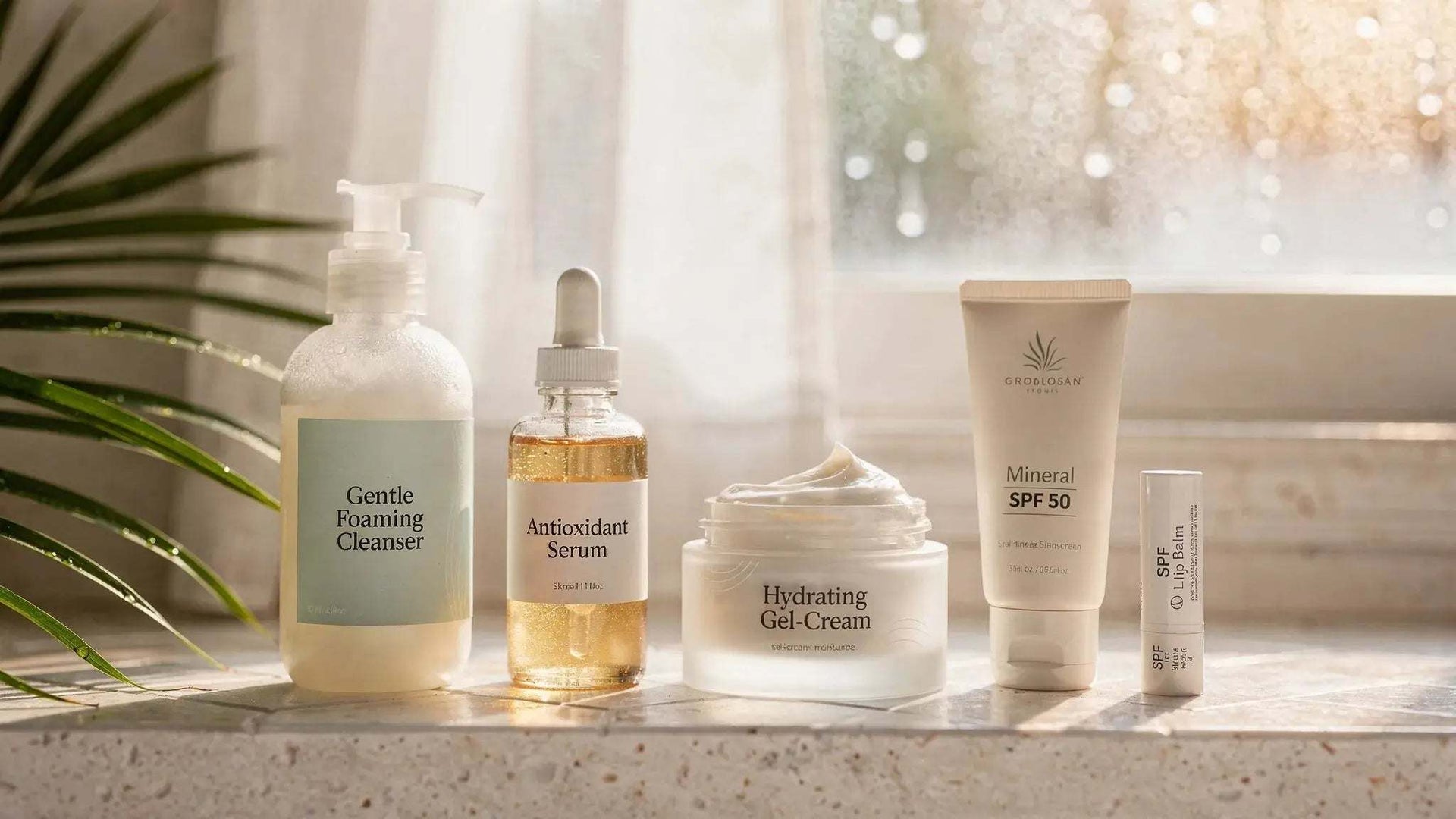
Florida weather is not “normal skin” weather. Between high UV exposure, frequent sweating, and air-conditioned dehydration, even people with a simple, mostly natural routine can end up with clogged pores, redness, or that frustrating combination of surface shine and tightness.
A natural skin care routine for Florida heat and humidity works best when it is lightweight, barrier-supportive, and consistent about sun protection. Below is a practical routine you can actually stick with, plus climate-specific swaps for common Florida skin issues.
What Florida heat and humidity really do to your skin
Heat and humidity change how your skin behaves day to day.
- More sweat and sebum: Heat increases sweat, and many people also see more oil production. Sweat mixed with sunscreen, makeup, and environmental debris can lead to congestion and breakouts.
- More friction and inflammation: Hats, sunglasses, workout clothes, and even mask-wearing for travel can create rubbing, leading to irritation or folliculitis-like bumps.
- More UV exposure year-round: Florida’s UV index is often high, and UVA (the aging rays) is present even on cloudy days. The EPA UV Index guidance is a helpful reminder that “not sunny” does not mean “low UV.”
- The “AC dehydration” effect: Indoors, air conditioning can dry the skin, increasing water loss and making skin feel tight while still looking shiny.
The goal is not to fight Florida. It is to support your skin barrier, prevent sun damage, and keep pores clear with minimal irritation.
“Natural” in Florida: what to aim for (and what to avoid)
In a humid climate, “natural skincare” is most effective when it means simple, skin-identical, and anti-inflammatory, not heavy oils or harsh DIY acids.
Look for natural-friendly, barrier-supportive ingredients (often found in both holistic and medical-grade lines):
- Glycerin (excellent lightweight hydrator)
- Aloe vera (soothing after heat exposure)
- Colloidal oatmeal (calming, great for sensitivity)
- Green tea (antioxidant support)
- Centella asiatica (soothing)
- Ceramides and cholesterol (barrier support, not “natural” in the marketing sense, but skin-native)
- Squalane (lightweight emollient that tends to feel better than heavier oils in humidity)
Be cautious with:
- Citrus oils and fragranced essentials (can irritate, and some can increase photosensitivity)
- Heavy occlusives all over the face in summer (may feel suffocating and increase congestion)
- Over-exfoliation (humidity already primes many people for irritation and inflamed breakouts)
If you love “clean” or organic labeling, keep it grounded in performance and safety. Lumina’s article on organic skincare products and what’s hype is a good companion read for making smart, non-fear-based choices.
Your AM routine for Florida heat and humidity (natural, lightweight, effective)
Step 1: Cleanse lightly (or rinse) based on your morning skin
If you wake up oily or you worked out early, use a gentle, low-foaming cleanser. If you wake up comfortable and not greasy, a rinse with lukewarm water can be enough.
What to avoid in the morning: harsh scrubs or strong acids “to feel clean.” In Florida, that often backfires into more sensitivity and more oil.
Step 2: Add an antioxidant layer (thin, fast-absorbing)
Florida sun exposure is the big variable. A morning antioxidant helps support your routine.
Options that tend to play well in humidity:
- Vitamin C (if your skin tolerates it)
- Green tea or other antioxidant serums
- Niacinamide (helps with oil balance and barrier support)
If you are already using multiple actives, simplify. One well-chosen antioxidant is usually enough.
Step 3: Moisturize, but keep it breathable
In high humidity, many people do best with a gel-cream or lightweight lotion featuring humectants (like glycerin) and barrier helpers (like ceramides). If you get mid-day shine, moisturize anyway, just choose a lighter texture and apply less.
A helpful “Florida rule”: moisturize where you get tightness (often cheeks), and apply a thinner layer on the T-zone.
Step 4: Sunscreen is non-negotiable (and it must be wearable)
Daily broad-spectrum SPF is the anchor of any Florida routine, natural or not.
For guidance on application and reapplication, the American Academy of Dermatology sunscreen recommendations are worth following.
Florida-friendly sunscreen tips:
- Choose a broad-spectrum SPF 30+ you will apply every day.
- If you sweat a lot, prioritize water resistance.
- If sunscreen stings your eyes, try a different filter system or a dedicated eye-area formula.
- Reapply when outdoors, especially after sweating or swimming.
Don’t forget lip SPF. Lips sunburn easily, and chronic UV exposure can contribute to premature aging around the mouth.

Your PM routine (designed for sweat, sunscreen, and clogged pores)
Step 1: Cleanse like you mean it (but keep it gentle)
At night, your job is to remove:
- Sunscreen (often water-resistant)
- Sweat and oil
- Makeup (if worn)
If you wear heavier sunscreen or makeup, consider a two-step cleanse (an oil/balm cleanser first, then a gentle water-based cleanser). This is not about being “extra,” it is about removing residue so your leave-on products work better and your pores stay clearer.
Step 2: Choose one targeted treatment (not five)
In Florida humidity, irritation and over-exfoliation are common. Pick one “main” treatment based on your goal:
- Congestion and breakouts: a BHA (salicylic acid) product used a few nights per week can help keep pores clear.
- Redness and sensitivity: azelaic acid is often a good option to discuss with a professional.
- Fine lines and texture: a retinoid can be helpful, but start slowly and protect your barrier.
- Dark spots or uneven tone: gentle brighteners paired with strict sunscreen habits.
If you are not sure what to use and when, Lumina’s order of skincare products guide can help you layer without pilling or irritation.
Step 3: Seal in hydration without feeling greasy
Night moisturizer should prevent that “AC tightness” while staying comfortable.
- If you are acne-prone, choose a light, non-greasy texture.
- If you are dry or sensitive, look for ceramides, panthenol, glycerin, and soothing botanicals.
- If you love facial oils, consider using them only on dry zones (often outer cheeks), not necessarily all over.
Smart “Florida swaps” (how to keep it natural without clogging pores)
| If your skin does this in humidity… | Try this swap | Why it helps |
|---|---|---|
| Gets shiny by lunch but feels tight after showering | Use a lighter moisturizer, not no moisturizer | Dehydrated skin can still overproduce oil |
| Breaks out after sunscreen | Switch texture (gel, fluid) or simplify layers under SPF | Too many layers can trap sweat and oil |
| Gets little bumps along hairline or jaw after workouts | Cleanse soon after sweating, avoid heavy occlusives pre-workout | Sweat + friction + residue can clog pores |
| Looks dull even though you’re “hydrated” | Add gentle exfoliation 1 to 2x weekly (not daily) | Helps remove buildup without barrier damage |
| Feels stinging or burning with actives | Pause actives, focus on barrier support for 1 to 2 weeks | Irritation in heat can spiral quickly |
The “sweat reset”: a midday mini-routine that won’t wreck your barrier
When you’re outside (walks, kids’ sports, golf, beach errands), the most common issue is sweat plus residue.
A simple approach:
- Blot sweat (don’t aggressively wipe)
- If needed, rinse with water or use a gentle cleansing option you tolerate
- Reapply sunscreen
If you are prone to breakouts, avoid layering more makeup on top of sweat and sunscreen. In Florida, “less on the skin” is often the glow secret.
Weekly routine add-ons (optional, but helpful in Florida)
Gentle exfoliation (1 to 2 times per week)
In humidity, you want exfoliation that is controlled and predictable.
- Choose one exfoliation method at a time (enzyme, AHA, or BHA).
- Skip exfoliation the day after heavy sun exposure.
A calming hydration mask
Look for soothing ingredients like aloe, oatmeal, centella, or glycerin-based hydration. This is especially helpful if you are outdoors often, or you spend long hours in AC.
Clay, only where you need it
If you are oily or congested, apply clay just to the T-zone instead of the whole face, and follow with moisturizer.
Don’t forget the “natural” lifestyle factors that show up on your skin
A routine is not only products.
- Laundry and workout gear: sweat-soaked fabric can irritate facial and body skin. Clean hats, pillowcases, and sports bras regularly.
- Hair products in humidity: heavy pomades and sprays can trigger forehead and hairline breakouts.
- Heat exposure: hot showers and saunas can worsen redness for some people.
- Whole-face harmony: many clients notice that when they refine skin health, they start paying attention to other elements of facial balance, including their smile. If you are exploring that side of wellness too, this resource on digital orthodontics in Bucharest explains how 3D planning can support natural-looking results.
When your at-home routine isn’t enough (and what to do next)
If you are consistent for 6 to 8 weeks and still dealing with:
- Persistent acne or painful breakouts
- Dark spots that keep returning (especially after sun)
- Frequent irritation, burning, or redness
- Texture that won’t improve despite gentle care
…it is worth getting a professional plan. Florida skin often needs customization more than intensity, especially in a high-UV, high-sweat environment.
At Lumina Skin Sanctuary in Babcock Ranch, the focus is on results-driven, customized care that blends medical-grade aesthetics with a holistic approach. If you need help choosing treatments or building a simple routine you will actually follow, a consultation can save you months of trial and error.

Frequently Asked Questions
Is a natural skin care routine enough protection for Florida sun? A natural routine can be great for barrier support and calming inflammation, but daily broad-spectrum sunscreen is still essential for Florida UV exposure.
Should I wash my face more often in humidity? Not necessarily. Cleanse at night, and in the morning cleanse only as needed. Over-cleansing can irritate the barrier, which often triggers more oil and redness.
What moisturizer texture works best in Florida heat and humidity? Most people do best with a lightweight gel-cream or lotion with glycerin and barrier-support ingredients. Heavy creams can feel occlusive and contribute to congestion.
Why do I feel oily and dry at the same time in Florida? It is common to be dehydrated from air conditioning while still producing oil due to heat and irritation. Hydration and barrier support can reduce that “tight but shiny” cycle.
How often should I exfoliate in a humid climate? For many people, 1 to 2 times per week is plenty. Daily exfoliation plus heat and sun often leads to irritation and rebound oil.
What is the biggest mistake with skincare in Florida? Skipping or under-applying sunscreen, then trying to “fix” the resulting texture, redness, and spots with too many strong products.
Build your personalized Florida-proof routine with Lumina Skin Sanctuary
If you want a routine that feels clean and natural but still delivers real results in Florida heat and humidity, the fastest path is personalization. Explore customized facials and curated skincare designed for life in Southwest Florida.
Book a consultation with Lumina Skin Sanctuary to get a climate-smart plan for clearer pores, a stronger barrier, and a healthier, more resilient glow.


