

How to Choose the Right Facial Treatment Type
Kira Tia
Choosing the right facial treatment type means matching your skin type and specific concerns to professional options that deliver safe, effective, and personalized results. Skin types fall into five categories: dry, oily, combination, sensitive, and mature. Each responds differently to treatments ranging from classic hydrating facials and HydraFacials to chemical peels, microneedling, LED light therapy, and laser resurfacing. Getting this match right determines whether you see real improvement or risk irritation, wasted money, and setbacks.
How to choose the right facial treatment type for your skin
Before selecting any facial, you need to identify your skin type. Each type presents distinct physical signs that guide treatment decisions.
- Dry skin feels tight after cleansing, shows flaking or rough patches, and lacks visible pores.
- Oily skin appears shiny within hours of washing, has enlarged pores, and is prone to blackheads.
- Combination skin shows oiliness in the T-zone (forehead, nose, chin) with dryness or normal texture on the cheeks.
- Sensitive skin reacts quickly to products, weather, or stress with redness, stinging, or breakouts.
- Mature skin shows fine lines, loss of firmness, uneven tone, and slower cell turnover.
Skin type directly affects treatment tolerance. Oily or acne-prone skin responds well to chemical peels or LED blue light therapy, while dry skin benefits from hydrating infusions like HydraFacials, and sensitive skin requires gentle, barrier-restorative approaches. This is not a preference issue. It is a clinical reality that determines whether a treatment helps or harms.
Skin barrier health is a separate but related factor. The barrier is the outermost layer of skin that controls moisture retention and blocks irritants. Barrier damage signs like persistent redness and irritation call for non-exfoliating, barrier-supportive treatments before any aggressive resurfacing is considered. Skipping this step is one of the most common reasons clients experience prolonged inflammation after clinical treatments.

A professional skin assessment removes the guesswork. Aestheticians and dermatologists use tools like skin analyzers and visual assessments to classify your skin accurately. If a clinic visit is not immediately possible, a basic self-check under natural light after gentle cleansing and no product application for 30 minutes gives a reliable starting point.
Pro Tip: Before your appointment, write down every active ingredient in your current skincare routine, including retinoids, vitamin C, and acids. Share this list with your provider. Combining these ingredients improperly with professional treatments can cause unexpected peeling or sensitivity.
What are the main types of facial treatments?
Facial treatments divide into two broad categories: classic facials and clinical facials. Classic facials focus on cleansing, exfoliation, and hydration with minimal risk and no downtime. Clinical facials use professional-grade technologies to address deeper concerns like scarring, pigmentation, and wrinkles.
| Treatment Type | Best For | Session Duration | Downtime |
|---|---|---|---|
| Classic facial | General maintenance, dullness | 45–60 min | None |
| Hydrating facial / HydraFacial | Dry, dehydrated skin | 30–45 min | None |
| Chemical peel | Acne, pigmentation, texture | 30–60 min | 1–3+ days |
| LED light therapy | Acne (blue), anti-aging (red) | 20–30 min | None |
| Microneedling | Scars, wrinkles, firmness | 45–60 min | Mild to moderate |
| Laser resurfacing | Deep wrinkles, sun damage | 30–90 min | Moderate to significant |
| Microdermabrasion | Dullness, mild texture | 30–45 min | Minimal |
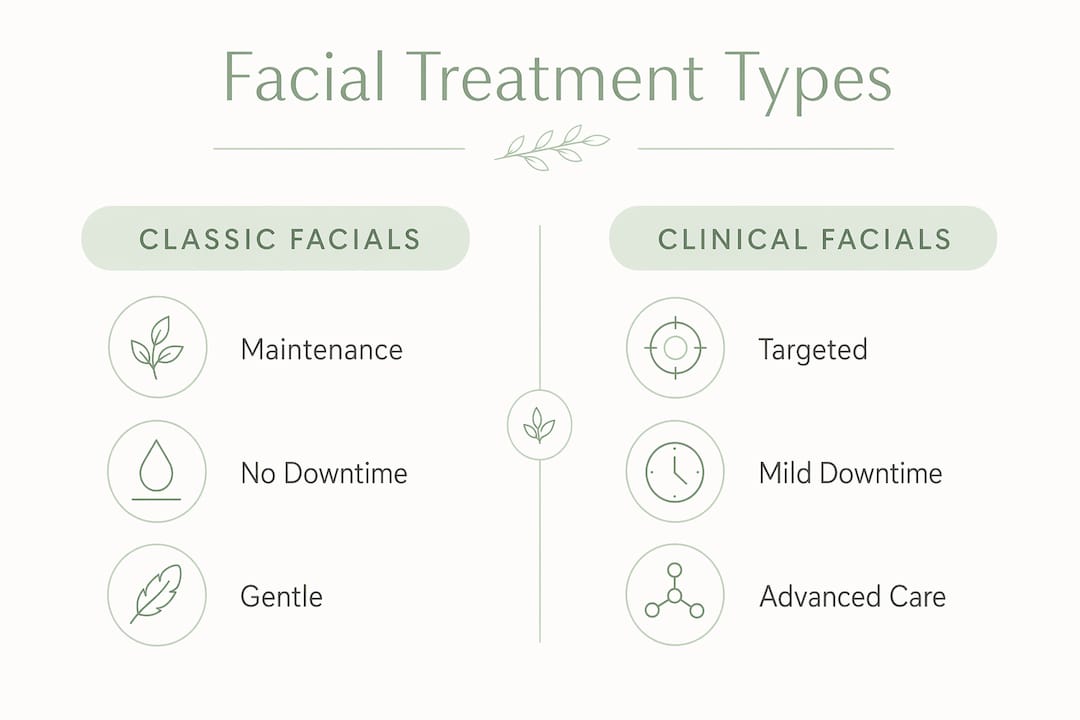
Classic facials carry zero downtime, while chemical peels may require one to three days of mild redness recovery, and laser resurfacing can involve moderate to significant downtime. This matters for anyone with a busy schedule or public-facing work. Clinical treatments like microneedling and laser resurfacing target deeper issues such as scars and wrinkles but require multiple sessions to achieve full results.
Hydrating facials and infusion treatments like HydraFacials restore water balance before texture correction, boosting elasticity and smoothness. They are the right starting point for dry or dehydrated skin before any exfoliating or resurfacing treatment is introduced.
Pro Tip: If you are new to clinical treatments, start with LED light therapy or a mild chemical peel. Both offer measurable results with low risk, making them good entry points for building treatment tolerance.
Step-by-step guide to selecting your facial treatment
A structured approach removes guesswork and reduces the risk of choosing a treatment that does not fit your skin or schedule.
- Assess your skin type and primary concerns. Use the criteria above to identify whether your skin is dry, oily, combination, sensitive, or mature. Note your top one or two concerns: acne, dullness, pigmentation, fine lines, or dehydration.
- Define your goals clearly. Effective treatments aligned with goals save time and money. Mixing up treatments without a clear goal wastes resources. Decide whether you are targeting hydration, anti-aging, acne control, or brightening before booking anything.
- Factor in your lifestyle. Downtime is a real constraint. A chemical peel before a major event or work presentation is a poor choice. LED therapy or a hydrating facial fits a busy schedule. Budget also matters: clinical treatments like laser resurfacing cost significantly more and require multiple sessions.
- Book a professional consultation and disclose everything. Professional consultations require full disclosure of medications, allergies, and pregnancy due to the risk of complications even with gentle treatments. Tell your provider about retinoids, antibiotics, blood thinners, and any recent procedures.
- Match your profile to a treatment. Oily, acne-prone skin with no barrier damage: consider a chemical peel or LED blue light session. Dry, dehydrated skin: start with a HydraFacial or hydrating infusion. Sensitive skin with redness: request a barrier-repair facial before any exfoliation. Mature skin with wrinkles: discuss microneedling or a series of mild peels with your provider.
Common mistakes to avoid:
- Over-treating. Booking aggressive treatments back to back without recovery time damages the skin barrier and delays results.
- Ignoring aftercare. Sunscreen, gentle cleansing, and avoiding active ingredients for 48 to 72 hours post-treatment are non-negotiable.
- Following trends blindly. A treatment that works for someone else’s skin type may be wrong for yours. Viral skincare trends do not account for individual skin profiles.
“Choosing a facial treatment based on a trend or a friend’s recommendation without a skin assessment is the fastest way to waste money and irritate your skin.” — Lumina Skin Sanctuary
How to prepare for your facial and what to expect
Preparation directly affects how well a treatment performs and how your skin recovers.
- Stop retinoids and acids 48 to 72 hours before your appointment. These ingredients increase skin sensitivity and can cause adverse reactions when combined with professional treatments.
- Disclose all medications and health conditions. Detailed knowledge of your skincare products with active ingredients is critical to avoid adverse reactions during professional treatments. This includes prescription topicals, oral medications, and supplements.
- Avoid sun exposure for 24 to 48 hours before clinical treatments. Sunburned or recently tanned skin reacts poorly to peels and laser treatments.
- Arrive with clean skin. No makeup, heavy moisturizer, or SPF on the day of your appointment.
During a classic or hydrating facial, expect cleansing, steam, gentle exfoliation, a mask, and moisturizer. The session is relaxing with no discomfort. During a chemical peel, expect a mild tingling or burning sensation that subsides quickly. Microneedling involves a numbing cream applied beforehand, followed by a mild prickling sensation across the treatment area.
After your session, the aftercare rules are consistent across most treatments: apply SPF 30 or higher daily, use a gentle fragrance-free cleanser, keep skin hydrated, and avoid active ingredients like retinoids and exfoliating acids for at least 48 to 72 hours. For laser or microneedling, follow your provider’s specific recovery protocol.
Pro Tip: At the end of your session, ask your provider to note which products and techniques they used. This gives you a reference point for future appointments and helps you track what works for your skin over time.
Key takeaways
Choosing the right facial treatment type requires matching your skin type, specific concerns, and lifestyle to the appropriate clinical or classic option.
| Point | Details |
|---|---|
| Skin type drives treatment choice | Oily, dry, sensitive, and mature skin each require different treatment approaches to avoid harm. |
| Barrier health comes first | Compromised skin barriers need repair before any aggressive resurfacing treatment is introduced. |
| Define goals before booking | Treatments aligned with clear goals (hydration, acne, anti-aging) deliver better outcomes than trend-based choices. |
| Downtime is a real factor | Classic and LED facials have zero downtime; chemical peels and laser treatments require recovery planning. |
| Professional consultation is mandatory | Full disclosure of medications, allergies, and health conditions is required for safe treatment selection. |
What I’ve learned from watching clients choose the wrong treatment
The most consistent pattern I see is clients arriving with a treatment in mind based on something they read online or saw on social media, rather than on what their skin actually needs. A client with a compromised barrier books a glycolic peel because it worked for a friend. The result is two weeks of redness and peeling that sets their skin back further than where they started.
Less intensive treatments are more effective for reactive skin. Aggressive resurfacing without a healthy skin barrier causes prolonged inflammation rather than improvement. This is not a conservative opinion. It is what the clinical evidence consistently shows.
The other mistake I see regularly is underestimating downtime. Someone books a medium-depth peel on a Thursday expecting to look fine by Monday. They do not. Planning around recovery is as important as the treatment itself.
My practical advice: treat your skin as a long-term project, not a quick fix. A series of well-chosen, appropriately timed treatments will outperform one aggressive session every time. Patience and consistency, guided by a professional who knows your skin history, produce the results that last.
— David
Explore personalized facial treatments at Lumina Skin Sanctuary
Lumina Skin Sanctuary offers personalized facial treatments designed for every skin type and concern, from hydration and brightening to acne control and anti-aging. Every client starts with a professional skin assessment to match the right treatment to their specific profile.

The team at Lumina Skin Sanctuary uses professional-grade technologies including LED light therapy and chemical peels, with clean skincare products suited to Florida’s demanding climate. Whether you are starting with a professional-grade facial or exploring targeted options for sun damage and humidity-related concerns, the focus is on results without unnecessary complexity. Contact Lumina Skin Sanctuary to schedule a consultation and get a treatment plan built around your skin.
FAQ
What facial treatment is best for oily, acne-prone skin?
Chemical peels and LED blue light therapy are the most effective options for oily or acne-prone skin. Both target excess sebum, bacteria, and clogged pores without over-drying the skin.
How do I know if my skin barrier is damaged?
Persistent redness, stinging after applying basic products, and unusual dryness or flaking are the primary signs of a compromised skin barrier. Barrier-supportive treatments should be completed before any exfoliating or resurfacing facial is scheduled.
Can I get a facial if I use retinoids?
Stop retinoid use 48 to 72 hours before your appointment and disclose this to your provider. Combining retinoids with professional treatments like peels or microneedling increases the risk of irritation and adverse reactions.
How many sessions does microneedling require?
Microneedling typically requires multiple sessions to achieve full results for concerns like scarring and wrinkles, with each session lasting approximately 45 minutes. Your provider will recommend a session schedule based on your skin’s response.
What is the difference between a classic facial and a clinical facial?
A classic facial focuses on cleansing, exfoliation, and hydration with no downtime and is suited for general maintenance. A clinical facial uses professional-grade technologies to address deeper concerns and may involve recovery time depending on the treatment type.
Recommended
- News
- Lumina Express Hydrating Facial
- Lumina Skin Sanctuary - Signature Glow Facial for All Skin Types
- Skincare Services Transform Your Skin With Expert Care in Fort Myers
Article generated by BabyLoveGrowth
Ready to treat this in person? Book the Signature Glow Facial with Personalized Consultation
Not sure what your skin needs? Start with a personalized skin consultation and a fully customized glow facial.
View treatment & book →