

What Is a Professional Teen Facial? A Parent's Guide
Kira TiaTL;DR:
- A professional teen facial is a licensed treatment designed to address excess oil, acne, and hormonal changes in adolescents. It uses gentle, non-comedogenic products and techniques tailored to adolescent skin, improving clarity and preventing long-term damage. Regular sessions every 4 to 6 weeks help maintain skin health and manage breakouts effectively.
A professional teen facial is a licensed skincare treatment designed specifically for adolescents aged 12–19, targeting hormonal oil production, clogged pores, and acne-prone skin. Unlike a standard adult facial, it uses age-appropriate, non-comedogenic products and gentler techniques suited to skin that is still developing. Sessions typically run 45–60 minutes and are recommended on a maintenance schedule of every 4–6 weeks. For parents in Fort Myers, Florida, understanding what this treatment involves helps you make a confident, informed decision for your teen’s skin health.
What is a professional teen facial and what happens during one?
A professional teen facial follows a structured, step-by-step process that a licensed esthetician performs in a clinical setting. Each step serves a specific purpose for adolescent skin, and the sequence matters.
- Skin analysis. The esthetician examines your teen’s skin type, pore size, active breakouts, and sensitivity level. This assessment shapes every product choice and technique used in the session.
- Deep cleansing. A gentle, non-stripping cleanser removes surface oil, makeup, and environmental debris. This step prepares the skin for deeper treatment without disrupting the moisture barrier.
- Mild exfoliation. A light enzyme or low-concentration acid exfoliant loosens dead skin cells. This improves product absorption and reduces the buildup that contributes to blackheads and whiteheads.
- Controlled steaming. Warm steam softens the skin and opens pores. This makes the next step, extractions, safer and more effective.
- Professional extractions. A licensed esthetician maintains follicle wall integrity during extractions, which prevents the deep inflammation and permanent pitted scarring that DIY blemish popping causes. The discomfort is brief and minor.
- Corrective mask. A mask formulated for oily, acne-prone, or sensitive skin is applied to calm redness and draw out remaining impurities.
- Moisturizer and SPF. The session closes with a lightweight, non-comedogenic moisturizer and broad-spectrum sun protection. Fort Myers sun exposure makes this step especially relevant year-round.
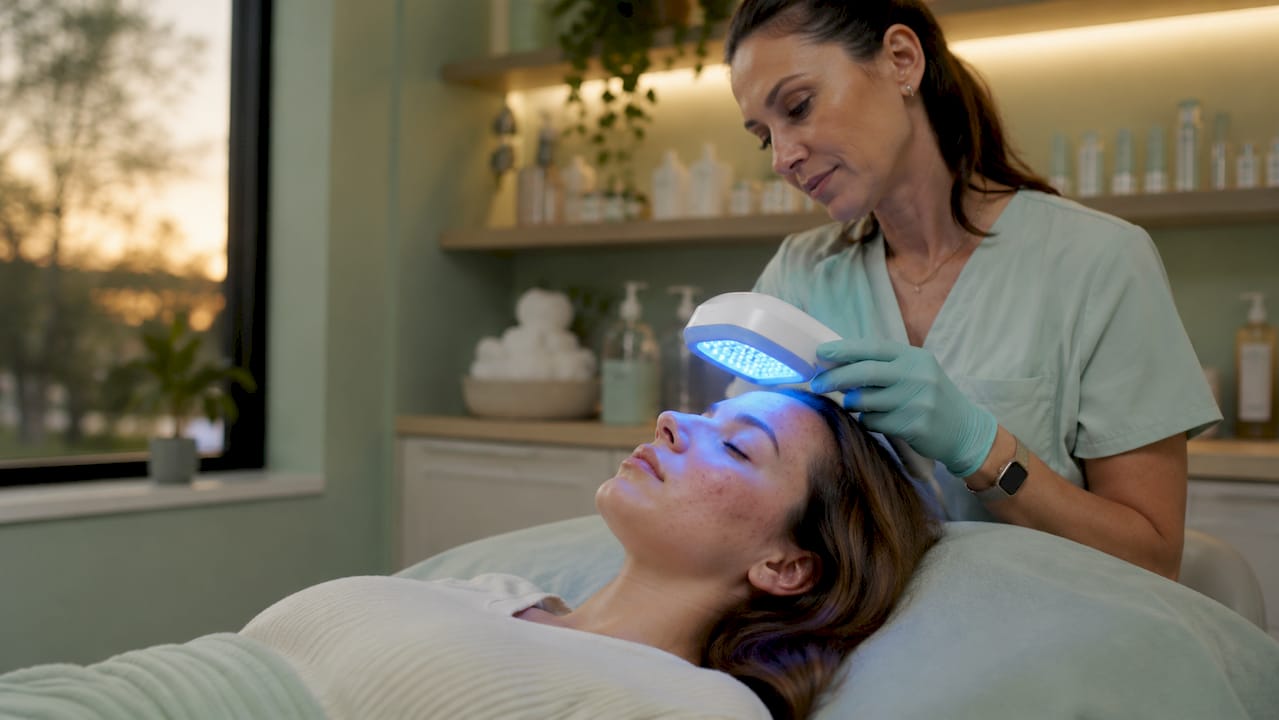
Optional add-on: Blue light therapy targets acne-causing bacteria beneath the skin surface and reduces inflammation without heat or chemicals. It is a safe, well-tolerated option for teens with persistent breakouts.
Pro Tip: Ask the esthetician to walk your teen through each step as it happens. This builds skin literacy and makes teens far more likely to follow their home care routine.
How teen facials differ from adult facials
Teen facials and adult facials share the same basic structure but serve completely different goals. Understanding this difference explains why a standard adult treatment is not appropriate for adolescent skin.
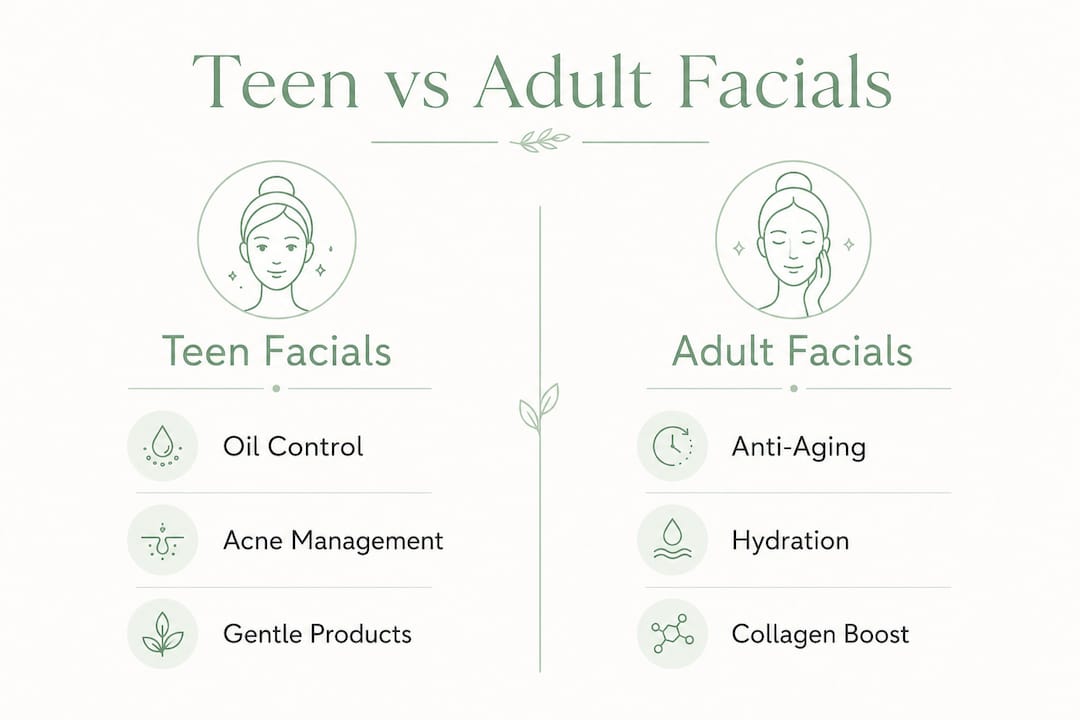
Adult facials focus on anti-aging concerns: collagen loss, fine lines, dehydration, and uneven pigmentation. They often use stronger actives like retinol, glycolic acid, and peptide serums. Teen skin does not need any of that. Teen facials focus on oil balance, acne control, and barrier protection.
Professional facials use non-stripping, age-appropriate products that are safe for sensitive adolescent skin. This matters because many over-the-counter acne products marketed to teens are actually too harsh. They strip the skin’s moisture barrier, triggering more oil production and worsening breakouts. A professional teen facial corrects that cycle rather than reinforcing it.
| Feature | Teen facial | Adult facial |
|---|---|---|
| Primary goal | Oil control, acne management | Anti-aging, hydration |
| Product strength | Gentle, non-comedogenic | Stronger actives (retinol, AHA) |
| Extraction technique | Soft, follicle-safe method | Standard extraction |
| Skin concern focus | Hormonal breakouts, sensitivity | Fine lines, pigmentation |
| SPF emphasis | High, daily use reinforced | Standard finish |
Pro Tip: If your teen has been using harsh drugstore acne washes and their skin is red or flaky, mention this at the consultation. Rebalancing a compromised skin barrier is often the first priority in early sessions.
How often should teens get professional facials?
Frequency depends on your teen’s skin condition at the start of treatment. For general maintenance and acne prevention, the standard recommendation is every 4–6 weeks. For teens with severe or cystic acne, more frequent sessions every 2 weeks may be advised until the condition stabilizes.
A few key points parents should know about safety and scheduling:
- Licensed estheticians only. Always confirm the provider holds a current state license. In Florida, estheticians are licensed through the Department of Business and Professional Regulation.
- Age-appropriate products. Every product used should be formulated for adolescent skin. Ask for a product list if you are unsure.
- Gentle extraction methods. Safe extractions cause only brief, minor discomfort. If your teen reports significant pain, that is worth flagging with the provider.
- Barrier protection. Avoid scheduling facials within 48 hours of a school event or photo. Mild post-treatment redness is normal and resolves quickly.
- Avoid harsh products between sessions. Strong benzoyl peroxide or alcohol-based toners used at home can undo the barrier repair achieved during a professional session.
Starting treatment early in puberty, around ages 12–13, significantly reduces breakout severity and lowers the risk of long-term scarring. Early, regular sessions help control the oil and bacteria cycles before they become entrenched patterns.
How to support your teen’s skincare routine at home
Professional facials deliver the best results when paired with a consistent, simple home routine. The esthetician’s recommendations after each session are the foundation of that routine.
- Keep it simple. Teens follow 2–3 step routines far more consistently than complex multi-product regimens promoted on social media. A gentle cleanser, lightweight moisturizer, and SPF cover the essentials.
- Avoid influencer-driven products. Many trending skincare products contain actives that are too strong for adolescent skin. Retinol, high-concentration niacinamide, and exfoliating toners are adult products. A simple teen skincare routine built on esthetician guidance outperforms any social media recommendation.
- Reinforce sun protection. Fort Myers averages high UV exposure throughout the year. Daily SPF 30 or higher is non-negotiable for teens receiving professional treatments, since exfoliation increases sun sensitivity.
- Watch for signs that treatment frequency needs adjustment. If your teen’s breakouts worsen between sessions, or if new cystic lesions appear, consult the esthetician about moving to a more frequent schedule.
- Create a non-judgmental environment. Skin issues affect teen confidence significantly. A parent-friendly, transparent approach at home mirrors the supportive atmosphere of a professional setting and improves your teen’s willingness to follow through.
Pro Tip: Have your teen attend the consultation with you. When teens hear the esthetician’s reasoning directly, they take ownership of the routine. Compliance improves substantially when the advice comes from a professional rather than a parent.
The educational component of professional teen facials is one of its most underrated benefits. Building skin literacy during sessions, by debunking myths and simplifying home care, sets habits that carry into adulthood. Teens who understand why they cleanse, moisturize, and apply SPF are far more consistent than those who follow a routine without context.
Key Takeaways
A professional teen facial is the most effective way to manage adolescent acne, balance oil production, and prevent long-term scarring through licensed, age-appropriate care.
| Point | Details |
|---|---|
| Designed for teen skin | Sessions target hormonal oil, acne, and sensitivity using gentle, non-comedogenic products. |
| Safe extractions matter | Licensed estheticians preserve follicle wall integrity, preventing permanent scarring from DIY picking. |
| Start early for best results | Beginning treatment at ages 12–13 reduces breakout severity and long-term skin damage. |
| Every 4–6 weeks is standard | Severe acne may require sessions every 2 weeks until the condition stabilizes. |
| Home routine reinforces results | A simple 2–3 step routine recommended by the esthetician delivers the best outcomes between sessions. |
Why I think parents underestimate professional teen facials
Working with teen clients in Fort Myers has shown me one consistent pattern: parents wait too long. By the time a teen arrives for a first facial, they have often spent months using harsh drugstore products that have stripped their skin barrier and made the breakouts worse. The acne is more entrenched, and the first few sessions are largely about undoing that damage before real progress begins.
The other thing I see regularly is parents treating a teen facial as a luxury or a one-time treat. It is neither. It is a clinical intervention that works best as a consistent practice. The teens who see the most dramatic improvements are the ones whose parents commit to a regular schedule and reinforce the home routine without turning it into a daily argument.
One more thing worth saying directly: the confidence shift is real. Teens who get their skin under control carry themselves differently. That outcome is not cosmetic. It is psychological, and it matters. If your teen is struggling with breakouts in Fort Myers, the time to act is now, not after the next school year starts.
— Kira Tia
Lumina Skin Sanctuary teen facial services in Fort Myers
Lumina Skin Sanctuary in Fort Myers offers teen facial treatments built around the specific skin challenges of adolescents in Southwest Florida, including humidity-driven breakouts and year-round sun exposure.
The Express Hydrating Facial is a strong starting point for teens new to professional skincare. It combines gentle exfoliation with deep hydration using clean, age-appropriate products. For teens managing persistent acne, the high-frequency facial add-on targets bacteria and reduces inflammation between deeper sessions. Every treatment at Lumina begins with a personalized consultation, so your teen receives a plan matched to their actual skin condition, not a generic protocol. Parents are welcome to attend and ask questions throughout.
FAQ
What is a professional teen facial?
A professional teen facial is a licensed skincare treatment tailored for adolescents aged 12–19, addressing excess oil, acne, and hormonal skin changes using age-appropriate products and gentle techniques. Sessions typically run 45–60 minutes.
How is a teen facial different from a regular facial?
Teen facials focus on oil control and acne management using gentler, non-comedogenic products, while adult facials target anti-aging concerns with stronger actives like retinol and glycolic acid.
How often should my teen get a professional facial?
Most teens benefit from a session every 4–6 weeks for maintenance. Teens with severe acne may need sessions every 2 weeks until the condition improves.
Are professional extractions safe for teen skin?
Yes. Licensed estheticians use techniques that maintain follicle wall integrity, preventing the inflammation and permanent scarring that results from picking at home. Discomfort is brief and minor.
What age should a teen start getting professional facials?
Starting around ages 12–13, at the onset of puberty, produces the best outcomes. Early treatment controls oil and bacteria cycles before breakouts become severe or cause lasting skin damage.