



Bad advice is often given on dehydrated skin treatment. It suggests drinking more water, buying a richer cream, and hoping the tightness goes away.
That approach misses the core issue. A common myth suggests increasing water intake is the primary treatment for dehydrated skin, but clinical reviews confirm skin can remain dehydrated despite normal water intake if the barrier is compromised. Hydration depends on barrier integrity and the right topical products, not just systemic fluid volume, as noted by The INKEY List's guidance on dehydrated skin.
In Fort Myers, I see this confusion all the time. Southwest Florida gives people two opposite environments in one day: heavy outdoor heat and humidity, then aggressive indoor air conditioning, strong sun exposure, salt air, and routines that often include over-cleansing after sweat and sunscreen. Skin ends up looking oily on the surface but feeling papery underneath. That's classic dehydration, and it needs a climate-adaptive plan.
Table of Contents
- Is Your Skin Thirsty or Dry You Need to Know the Difference
- Immediate First Aid for Dehydrated Skin
- Your Daily AM and PM Hydration Routine
- Weekly Rituals and Florida Climate Care
- Elevate Your Results with Professional Treatments
- Lock In Moisture and Maintain Your Glow
Is Your Skin Thirsty or Dry You Need to Know the Difference
If your skin feels tight and looks flaky, don't assume it's dry skin. That mistake leads a lot of people straight into heavy oils and thick occlusives they don't need, especially in Florida where congestion can build fast.
Dehydrated skin lacks water. Dry skin lacks oil. One is a condition that can affect any skin type, including oily and acne-prone skin. The other is a skin type.
A simple way to think about it is this: dehydrated skin is a grape that needs water. Dry skin is a raisin that needs oil support. They can overlap, but they aren't the same problem.

Signs that point to dehydration
Dehydrated skin often shows up as a mismatch between how your skin looks and how it feels.
- Tight after cleansing: Even if your face gets shiny later, it feels stretched right after washing.
- Dull surface: Skin can look tired, flat, or less reflective.
- Fine lines that appear suddenly: These often show more when skin is pinched or when makeup settles oddly.
- Oil with discomfort: You may still produce oil, but your skin doesn't feel balanced.
Signs that point to dry skin
Dry skin behaves differently and usually asks for more lipids, not just water-binding ingredients.
| Skin concern | Dehydrated skin | Dry skin |
|---|---|---|
| Main lack | Water | Oil |
| Typical feel | Tight, stressed, easily creased | Rough, itchy, persistently uncomfortable |
| Typical look | Dull, tired, fine dehydration lines | Flaky, scaly, visibly dry patches |
| Can oily skin have it | Yes | No, dry skin is its own skin type |
| Wrong move | Heavy oils without water support | Using only watery serums without enough emollients |
Practical rule: If your skin is shiny by noon but feels tight by morning, think dehydration first.
That distinction matters in Fort Myers because rich, lipid-heavy products can feel suffocating in heat and humidity. They may soften surface roughness for a day while doing very little to correct the water deficit underneath. In acne-prone clients, that often leads to more congestion and frustration.
If you're unsure what triggered the problem in the first place, this overview of what causes dehydrated skin is a useful starting point. In practice, the biggest culprits I see locally are over-cleansing, stripping exfoliants, sun exposure, and indoor cooling that dries the skin out more than people expect.
Immediate First Aid for Dehydrated Skin
When skin feels hot, tight, stingy, or rough, don't jump straight into a complicated routine. Start with basic barrier rescue.

What to do right now
-
Switch your cleanser tonight
Use a gentle, milky, or cream cleanser instead of anything foaming and squeaky. If your face feels stripped after washing, the cleanser is part of the problem. -
Apply hydration to damp skin
Don't wait until your skin is fully dry. Press on a hydrating serum or essence while a little water is still on the surface so humectants have something to hold onto. -
Seal it in with a barrier-supportive moisturizer
The goal is to slow water loss, not just add a wet layer that evaporates. Look for textures that feel cushioning but not greasy. -
Pause the aggressive extras
Skip strong scrubs, acid stacking, retinoids if your skin is visibly irritated, and alcohol-heavy toners until the tightness settles.
Why this works
Dehydrated skin loses water too easily. Estheticians and dermatology professionals often refer to that escape as transepidermal water loss, or TEWL. You don't need to memorize the term. What matters is understanding the pattern: skin takes in some hydration, then loses it too quickly because the barrier isn't sealing properly.
When skin is dehydrated, the fastest relief usually comes from reducing irritation first, then layering water-binding products under a barrier-supportive cream.
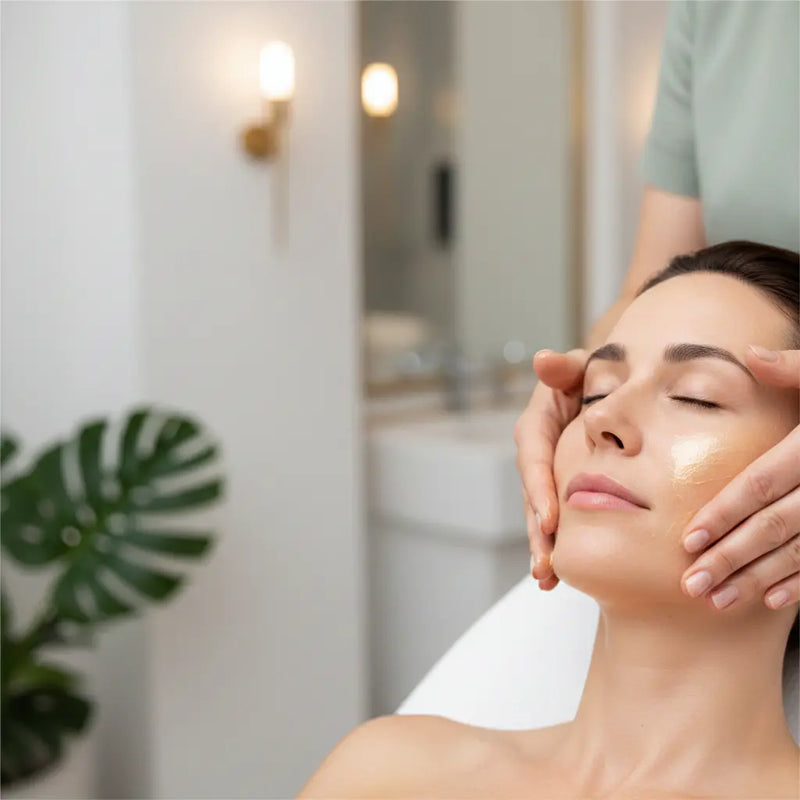
For clients who want that same logic in a professional setting, The Express Hydration Facial and Polish Treatment uses a factual sequence built around double cleansing under ozone steam, ultrasonic exfoliation, a deep hydration cream mask, pure hyaluronic acid mist, ceramide barrier cream, and SPF 50+ protection. It's one example of how clinical dehydration care combines exfoliation, water infusion, and barrier support instead of relying on a single heavy moisturizer.
Your Daily AM and PM Hydration Routine
Daily consistency fixes more dehydrated skin than product collecting ever will. The routine doesn't need to be long, but it does need the right order and the right texture for Florida weather.
A validated clinical methodology for treating dehydrated skin includes a gentle, non-alkaline cleanser at pH ~5.5, followed immediately by a hygroscopic serum such as 2 to 5% glycerin or hyaluronic acid, then a moisturizer containing niacinamide at 2 to 4% and ceramides to reduce water loss, according to this clinical methodology for dehydrated skin care.
For readers who want a simple sequence reference, this AM and PM skincare order guide helps keep layering practical.
AM routine for protection and water retention
Morning care in Southwest Florida isn't just about hydration. It's about defending the hydration you apply.
-
Cleanse lightly
If you wake up oily or sweaty, use a gentle cleanser. If your skin is sensitive or very depleted, a simple rinse may be enough on some mornings. -
Apply a humectant serum immediately
Glycerin and hyaluronic acid are useful here. They pull water into the upper layers of skin and help skin look smoother and less creased. -
Use a lightweight moisturizer with barrier support
In humid weather, many people do better with a lotion or gel-cream that contains ceramides and niacinamide rather than a thick balm. You want comfort without the sticky, overloaded feel that makes people skip moisturizer altogether. -
Finish with SPF 50+
Sun exposure is one of the fastest ways to undo hydration progress in Florida. If you spend time driving, walking, boating, or doing school pickup, sunscreen isn't optional.
If you also struggle with uneven tone from sun exposure, The Sun-Damage Eraser and Galvanic Glow Series is a professional option formulated specifically for Southwest Florida's climate and built around cleansing, Wood's Lamp analysis, ultrasonic exfoliation, galvanic infusion of a 15% Vitamin C plus ferulic acid serum, hydration spray, barrier support cream, and mineral SPF 50+.
PM routine for repair and replenishment
Night is when dehydrated skin usually responds best, because you're not fighting UV, sweat, and reapplication issues.
Start with a proper cleanse. If you wore sunscreen, makeup, or spent the day outdoors, remove buildup thoroughly but gently. Overwashing at night is common in Florida because people want to get rid of sweat and sunscreen, but stripping the skin sets up the same tightness again by morning.
Then layer in hydration with intention:
-
Hydrating serum first
Apply your glycerin or hyaluronic acid product right away. -
Barrier-focused cream second
Choose a moisturizer that supports the skin with ceramides and niacinamide. -
Adjust texture to the season
Use lighter textures when heat is intense and richer textures when indoor cooling or winter fronts leave the skin feeling more fragile.
Skin that's dehydrated doesn't usually need more products. It needs fewer irritating ones and better layering.
Internal hydration still matters for overall health, but it doesn't replace topical care. If you're trying to improve your general hydration habits too, this guide to proper hydration with trace minerals gives broader wellness context without confusing systemic hydration with skin barrier repair.
Weekly Rituals and Florida Climate Care
A strong daily routine does most of the work. Weekly care is where you fine-tune texture, improve comfort, and adapt to the strange reality of Florida skin, humid outside and artificially dry inside.

Weekly resets that help hydration sink in
If dead, compacted cells are sitting on the surface, your hydrating products won't perform as well as they should. That doesn't mean scrubbing harder. It means exfoliating more intelligently.
A practical weekly rhythm looks like this:
-
Use gentle exfoliation once or twice weekly
Enzyme exfoliants or mild acids are usually a better fit than grainy scrubs for dehydrated skin. -
Add a hydrating mask after exfoliation
This is when skin is often most receptive to water-binding ingredients. -
Watch your response, not trends
If your skin stings, reddens easily, or looks shiny and thin after exfoliation, scale back.
How to adapt to Southwest Florida air
People assume Fort Myers weather protects them from dehydration because the air outside often feels moist. The catch is indoor living. Air conditioning changes the equation completely.
Environmental control is as important as product selection. Indoor humidity below 40% can impair humectant efficacy, and patients using humidifiers in AC-dominated environments achieved 30% faster barrier recovery, according to the summary cited in this discussion of humidity and dehydrated skin behavior.
That matters locally because many clients spend long hours in cooled homes, cars, offices, and bedrooms.
- Run a humidifier at night if your AC is constant
- Choose gel-creams or fluid moisturizers in the daytime
- Use richer textures only where your skin needs them
- Reapply a barrier-supportive moisturizer after sun, saltwater, or long pool days
Florida skin rarely responds well to routines copied from cold, dry climates without adjustment. Here, the smartest dehydrated skin treatment plan is usually lighter in texture, stricter about sunscreen, and more aware of how indoor air changes skin behavior.
Elevate Your Results with Professional Treatments
Home care can correct a lot. But sometimes it stalls. That usually happens when the surface is too built up, the barrier has been stressed for too long, or the skin is dehydrated and congested at the same time.

When home care stops being enough
If your skin keeps cycling through tightness, dullness, irritation, and rough texture no matter how many serums you try, the issue often isn't motivation. It's that you need a controlled professional reset.
This is especially true when you have two concerns at once:
| Situation | Why home care may struggle |
|---|---|
| Dehydration plus congestion | Heavy creams clog you, but lightweight products don't feel like enough |
| Sun exposure plus barrier stress | Skin needs both repair and ongoing protection |
| Chronic roughness | Surface buildup can block better absorption of hydrating products |
Clinical success data indicates over 80% of patients who followed a consistent regimen of a once-daily mild cleanser and twice-daily glycerin-rich moisturizer for two weeks reported objective and subjective improvement. The same review notes that for chronic dehydration, a series of 4 to 6 professional facial sessions can create sustained baseline hydration improvements that home care maintains, while a single session is usually less durable, as described in this clinical review on skin dryness and treatment adherence.
A good facial shouldn't replace home care. It should make home care work better.
People comparing treatment formats sometimes look at broader categories first, and this overview of express Hydrafacial options can help clarify what a fast hydration-focused service is designed to do. The important part is not the label. It's whether the protocol exfoliates gently, infuses hydration, and supports the barrier instead of overstimulating it.
If you want a deeper primer on treatment logic, this guide to hydrating facial treatments explains what to expect from professional hydration work.
What professional hydration work can do
In the treatment room, the biggest advantage is control. I can adjust exfoliation depth, choose barrier-supportive finishing steps, and avoid the trial-and-error that often keeps clients stuck at home.
Professional dehydrated skin treatment often works best when it combines:
- Gentle resurfacing to remove the layer that keeps skin dull and less receptive
- Targeted hydration infusion with humectants such as hyaluronic acid and glycerin
- Barrier repair finishing steps so the hydration doesn't disappear immediately
- Supportive modalities such as LED, gentle peels, or galvanic techniques when appropriate to the skin condition
Here's a closer look at how that type of treatment flow works in practice:
For clients in Fort Myers, Babcock Ranch, Punta Gorda, and nearby areas, this is usually where results become more stable. The right series improves the starting point of the skin. Your home routine then has something healthy to maintain, instead of trying to fix everything from scratch every day.
Lock In Moisture and Maintain Your Glow
The most effective dehydrated skin treatment plan is simpler than people expect. It comes down to three actions repeated consistently.
Hydrate
Layer water-based support where it belongs. Gentle cleansing, humectant serums, and smart texture choices do more for dehydrated skin than piling on random rich products.
Protect
Keep the barrier intact and defend it from Florida conditions. That means moisturizer matched to your environment, fewer stripping products, and daily SPF without excuses.
Support
Use professional care when your skin has stopped responding, when dehydration and congestion overlap, or when you want more durable progress than home care can create on its own.
Healthy-looking skin in Southwest Florida usually isn't the result of doing more. It's the result of doing the right things in the right climate.
If your skin still feels confusing, that's normal. Oily and dehydrated can happen together. So can sun damage and barrier weakness. With the right routine and the right professional guidance, skin can look smoother, calmer, and more resilient without feeling greasy or overworked.
If you're in Fort Myers or nearby and want a personalized plan instead of guessing, Lumina Skin Sanctuary offers climate-aware facial care and practical home routine guidance designed for Southwest Florida skin.


